 GOD EXAMINEDBible← Back to The Proof
In ~538 BC, Daniel wrote down a calendar equation: “seventy weeks” — 490 years — from a Persian decree to restore Jerusalem until the whole work of Messiah was accomplished. Counted as ordinary solar years from the decree of Artaxerxes to Ezra in 457 BC, the 69 weeks (483 years) reach AD 27 — the year Jesus was anointed at His baptism; the cross falls “in the midst” of the seventieth week, ~AD 30/31; and the 490 years close in AD 34. Around that centerpiece, Daniel made 31 specific historical predictions. Twenty-two score 8.0 or higher on a four-factor confidence model. None demonstrably failed.
The 70 weeks were not dropped out of the sky. They were Gabriel's answer to a specific prayer — and the prayer was about an earlier "seventy." To feel the force of Daniel 9 you have to start where Daniel started: reading Jeremiah, counting years.
In 539/538 BC, Daniel is an old man — deported to Babylon as a youth in 605 BC, he is now about 80–85. Babylon has just fallen to Cyrus the Persian (Daniel 5). Daniel is studying the sacred books and lands on Jeremiah: "I Daniel understood by books the number of the years, whereof the word of the LORD came to Jeremiah the prophet, that he would accomplish seventy years in the desolations of Jerusalem" (Daniel 9:2). He treats Jeremiah's scroll as the word of God, and he is counting years.
Jeremiah gave that oracle in 605 BC — Jehoiakim's 4th year, the year of Carchemish — when Jerusalem was still standing, the temple intact, a Davidic king on the throne, and Babylon had only just become the superpower. Standing in a whole city, Jeremiah called the entire arc:
"This whole land shall be a desolation… and these nations shall serve the king of Babylon seventy years. And it shall come to pass, when seventy years are accomplished, that I will punish the king of Babylon…" — Jeremiah 25:11–12
Babylon — the foe "from the north" — would invade Judah and the surrounding nations; Nebuchadnezzar is called God's "servant" (a shocking title for a pagan king); ordinary life goes silent (no weddings, no millstones grinding, no lamp burning); the nations serve Babylon seventy years; then Babylon itself is punished. The judgment carries its own built-in expiry date.
Every signal says the return is at the door. It is ~67 years since Daniel's own deportation, and the very event Jeremiah said would end the seventy — Babylon's fall (Jer 25:12) — has just happened in front of him. So he prays. He pleads for four things, and they map exactly onto what Gabriel will answer: Jerusalem the holy city ("let thine anger and thy fury be turned away from thy city," 9:16); the desolate sanctuary ("cause thy face to shine upon thy sanctuary that is desolate," 9:17); his scattered people; and God's own honor ("thy city and thy people are called by thy name," 9:19). The promise is about to come due in his own lifetime.
While Daniel is still praying, Gabriel arrives (9:21). His answer works on two levels at once. Near: yes — the seventy-year exile is ending on schedule, and Jerusalem will be rebuilt. Far: but behind Babylon lies a deeper captivity — to sin itself — and that one is decreed to end on a far longer clock: seventy "sevens" (490) running to "Messiah the Prince" and to atonement. Daniel asked, "Is the exile over?" Gabriel answered, in effect: "The small exile, yes — and here is how the real exile ends."
Daniel had been praying over Jeremiah's seventy years — and by 538 BC those seventy were essentially fulfilled: Babylon had fallen, the exiles were returning, the temple would soon be rebuilt. So Gabriel answers in the very same key: not seventy years this time, but seventy "sevens" (70 × 7 = 490 years). The angel deliberately picks up the number Daniel was counting — the seventy that had just closed — and multiplies it. The small exile ran on a clock of seventy; the real deliverance, from sin itself, runs on a clock of seventy sevens. And that longer clock does not start with Cyrus: his 538 BC decree (Ezra 1:1, “that the word of the LORD by the mouth of Jeremiah might be fulfilled”) closed the seventy years and rebuilt the Temple. The seventy sevens begin only with the later decree to restore the city itself — Artaxerxes to Ezra, 457 BC.
Then he breaks the 490 into its parts — "seven weeks, and threescore and two weeks" (7 + 62). Spoken the way an angel speaks, the opening "seven" rhymes straight back to the seventy Daniel had just watched end; the "threescore and two" carry the count onward. Put together they are 7 + 62 = 69 sevens = 483 years — and 483 years from the decree lands on the baptism, AD 27, when the Spirit descends and Jesus is anointed as Messiah.
The 69th "seven" reaches the anointing; the 70th finishes it. The final seven runs on (AD 27–34): the cross falls in its midst (~AD 30/31), and the whole seventy sevens complete in AD 34 — transgression finished, atonement made, the deliverance Daniel was really praying for accomplished.
The whole argument as a plain, dated chain — the fast way to see it before the detailed sections below. An old clock (Jeremiah's 70 years, confirmed by cuneiform + archaeology) runs out at Daniel's 538 BC prayer and hands off to a new clock (Gabriel's 70 sevens = 490), which starts at the Ezra decree (457 BC) and lands its 483rd year on Jesus' anointing (AD 27).
| Date | Event | Scripture (KJV) | Historical / Archaeological |
|---|---|---|---|
| Part A — OLD clock: Jeremiah's seventy YEARS (exile from Babylon) | |||
| 605 BC | 1Jeremiah's prophecy: Babylon rules; land desolate; serve Babylon 70 yrs; then Babylon punished. | Jer 25:1, 11–12; 29:10Jer 25:11"…this whole land shall be a desolation… these nations shall serve the king of Babylon seventy years."Jer 25:12"…when seventy years are accomplished… I will punish the king of Babylon… perpetual desolations." |
Babylonian Chronicle (BM 21946) — Carchemish + Nebuchadnezzar's accession; Berossus (Josephus). |
| 605 BC | 2Babylon supreme; first deportation — Daniel taken. | Dan 1:1–2; Jer 46:2Dan 1:1–2"…came Nebuchadnezzar king of Babylon unto Jerusalem, and besieged it. And the Lord gave Jehoiakim… into his hand." |
BM 21946 (605 western campaign); Josephus, Ant. 10.11.1. |
| 597 BC | 3Jerusalem captured; Jehoiachin deported; Zedekiah installed. | 2 Kgs 24:14–15; 25:27–302 Kgs 24:15"And he carried away Jehoiachin to Babylon…"2 Kgs 25:30"…a daily rate for every day, all the days of his life." |
BM 21946 dates the capture 16 Mar 597. Jehoiachin ration tablets (Berlin). |
| 586 BC | 4Temple & city burned — "whole land a desolation"; Lachish & Azekah last to fall. | 2 Kgs 25:9; Jer 25:11; 34:72 Kgs 25:9"And he burnt the house of the LORD, and the king's house, and all the houses of Jerusalem."Jer 34:7"…against Lachish, and against Azekah: for these defenced cities remained." |
Lachish ostraca (Letter IV ≈ Jer 34:7); City-of-David 586 burn layer, arrowheads. |
| 539 BC | 5Babylon falls to Cyrus — "I will punish the king of Babylon." (605→539 ≈ 70) | Jer 25:12; Dan 5:30–31; Isa 45:1Dan 5:30–31"In that night was Belshazzar… slain. And Darius the Median took the kingdom."Isa 45:1"Thus saith the LORD to his anointed, to Cyrus…" |
Nabonidus Chronicle (BM 35382); Cyrus Cylinder (BM 90920); Herodotus 1.191. |
| 538 BC | 6Cyrus's decree: return + rebuild Temple, "that Jeremiah's word be fulfilled." | Ezra 1:1–4; 2 Chr 36:22–23Ezra 1:1"…in the first year of Cyrus… that the word of the LORD by the mouth of Jeremiah might be fulfilled…" |
Cyrus Cylinder — repatriation-of-peoples policy behind Ezra 1. |
| 516 BC | 72nd Temple finished (Darius yr 6) — exactly 70 yrs after 586. | Ezra 6:15; 2 Chr 36:21Ezra 6:15"And this house was finished… in the sixth year of the reign of Darius the king."2 Chr 36:21"…to fulfil threescore and ten years." |
Behistun Inscription (fixes Darius); Ptolemy's Royal Canon. |
| Part B — HINGE: Daniel's prayer as the 70 years expire | |||
| 538 BC | 8Daniel (~80), Babylon just fallen, reads Jeremiah, sees the 70 up, prays for city, sanctuary, people, God's honor. | Dan 9:1–2, 16–19Dan 9:2"I Daniel understood by books the number of the years… seventy years in the desolations of Jerusalem."Dan 9:17"…cause thy face to shine upon thy sanctuary that is desolate." |
Nabonidus Chronicle (fall of Babylon, 539); his 605 deportation makes him ~80–85. |
| Part C — NEW clock: Gabriel's seventy SEVENS (490) | |||
| 538 BC | 9Gabriel: a NEW measure — not 70 yrs but 70 SEVENS (490), chatak "decreed" (only here in OT), to finish sin. | Dan 9:20–24 (v.24 headline)Dan 9:24"Seventy weeks are determined upon thy people and upon thy holy city, to finish the transgression… to bring in everlasting righteousness… and to anoint the most Holy." |
Theological turn; the vision is dated to the Persian period (Dan 9:1; 10:1). |
| — | 10Cyrus can't START the 490 — his 538 decree CLOSED the old 70 yrs (Temple). Wait for the city decree. | Ezra 1:1; 2 Chr 36:21–232 Chr 36:21"…to fulfil the word of the LORD by the mouth of Jeremiah… threescore and ten years." |
Cyrus Cylinder — Temple/return scope, not a city-restoration decree. |
| context | 11Daniel names Persia explicitly elsewhere (so not ignorant of the era). | Dan 8:20; 10:1,13,20; 11:2Dan 8:20"The ram which thou sawest having two horns are the kings of Media and Persia."Dan 11:2"…there shall stand up yet three kings in Persia…" |
Achaemenid empire 539–330 BC (Ptolemy's Canon; Behistun; Elephantine). |
| Part D — STARTING DECREE: Artaxerxes → Ezra (the city restored) | |||
| 457 BC | 12Decree to Ezra, 7th yr, Nisan — restores city's law, courts & govt = "restore & build Jerusalem." A formal decree. | Dan 9:25; Ezra 7:11–26, 7:7–9, 9:9, 6:14Dan 9:25"…from the going forth of the commandment to restore and to build Jerusalem unto the Messiah the Prince shall be seven weeks, and threescore and two weeks."Ezra 7:7–9"…in the seventh year of Artaxerxes… upon the first day of the first month began he to go up from Babylon."Ezra 6:14"…according to the commandment of Cyrus, and Darius, and Artaxerxes king of Persia." |
Artaxerxes I acc. 465 BC → yr 7 = 458/457. Ptolemy's Canon + Elephantine papyri (double-dated) + astronomical tablets. |
| 444 BC | 13Not Nehemiah's decree: names the walls, but 13 yrs later & reaches Jesus only via 360-day "prophetic years." | Neh 2:1–8Neh 2:5"…send me unto Judah, unto the city of my fathers' sepulchres, that I may build it." |
Artaxerxes' 20th yr = 445/444; Anderson (Coming Prince) & Hoehner's 360-day scheme. |
| Part E — the count LANDS (457 BC + 483 / 490 solar years) | |||
| AD 27 | 14483 reached — Jesus anointed at baptism ("Messiah" = the Anointed One). | Dan 9:25; Luke 3:1, 21–23; Acts 10:38Luke 3:1"Now in the fifteenth year of the reign of Tiberius Caesar…"Luke 3:22"…the Holy Ghost descended in a bodily shape like a dove upon him, and a voice came from heaven…"Acts 10:38"How God anointed Jesus of Nazareth with the Holy Ghost and with power." |
Tiberius reigned AD 14–37; his 15th yr ≈ AD 27–29 (Tacitus, Suetonius). |
| ~AD 30/31 | 15Messiah "cut off, but not for himself" — midst of the 70th seven: the crucifixion. | Dan 9:26–27; Matt 27:50–51; Heb 10:10–14Dan 9:26"And after threescore and two weeks shall Messiah be cut off, but not for himself."Dan 9:27"…in the midst of the week he shall cause the sacrifice and the oblation to cease." |
Tacitus Ann. 15.44 (Pilate, Tiberius); Josephus Ant. 18.3.3; Talmud Sanh. 43a; Humphreys & Waddington (Nature, 1983). |
| AD 34 | 16490 close — gospel turns from Israel to the nations (Stephen; scattering). | Dan 9:24; Acts 7; 8:1Acts 8:1"…there was a great persecution against the church which was at Jerusalem; and they were all scattered abroad throughout the regions of Judaea and Samaria." |
Church spreads through the empire AD 30s–40s (Acts; Suetonius Claud. 25.4). |
A fair question. The KJV reads one way; the ESV reads another; the Jewish translations read a third. Below is the same verse in every major English Bible, then the Hebrew word-for-word. Then the two things people notice: (1) why the ESV looks so different, and (2) where the word “Persian” actually comes from — because it is not in this verse.
The blue underlined phrase in every translation is the starting gun — the decree to restore Jerusalem. On the reading used here that decree is Artaxerxes I of Persia → Ezra, Nisan 457 BC (Ezra 7:11–26) — the commission that restored the city’s law, courts and civil life. Every version below contains the starting phrase, word for word.
“from the going forth of the commandment to restore and to build Jerusalem unto the Messiah the Prince shall be seven weeks, and threescore and two weeks.”
“from the going forth of the command to restore and build Jerusalem until Messiah the Prince, there shall be seven weeks and sixty-two weeks.”
“from the issuing of a decree to restore and rebuild Jerusalem, until Messiah the Prince, there will be seven weeks and sixty-two weeks; it will be built again… in times of distress.”
“from the going forth of the word to restore and to build Jerusalem till Messiah the Leader is seven weeks, and sixty and two weeks.”
“From the time the word goes out to restore and rebuild Jerusalem until the Anointed One, the ruler, comes, there will be seven ‘sevens,’ and sixty-two ‘sevens.’”
“from the going out of the word to restore and build Jerusalem to the coming of an anointed one, a prince, there shall be seven weeks. Then for sixty-two weeks it shall be built again…”
NRSV: “from the time that the word went out to restore and rebuild Jerusalem until the time of an anointed prince, there shall be seven weeks; and for sixty-two weeks it shall be built again…” | JPS: “from the going forth of the word to restore and to build Jerusalem unto one anointed, a prince, shall be seven weeks; and for threescore and two weeks, it shall be built again…”
Why does the ESV read “seven weeks. Then sixty-two weeks,” while the KJV reads “seven weeks and sixty-two weeks”? One reason, and it is real: the medieval Masoretic scribes placed the main pause-mark of the verse — the atnach (ֽ) — under the word shivʿah (“seven”). If you honor that pause, you get a full stop after the seven weeks, and the sixty-two weeks attach to the rebuilding that follows.
Here is the quiet surprise: on the 457 BC / solar-year reckoning, both readings reach the Messiah at the same point. Join them and 69 weeks = 483 years from 457 BC → AD 27. Split them and the first 7 weeks (49 years) run out in 408 BC — almost exactly when the restoration of Jerusalem was finished under the Persians — and the following 62 weeks (434 years) still reach AD 27. The break the Masoretes marked lands on a real historical hinge, and the total to Messiah is unchanged.
Honest bottom line: the Messianic reading is a legitimate, majority-Christian reading of an unpointed consonantal text — but it is not the only defensible one. The numbers 7, 62, “anointed one,” and “restore and build Jerusalem” are in every translation; how you bracket them, and which decree you start from, are the open questions we address below.
Straight answer: the word “Persian” is not in Daniel 9:25. The verse only says “from the going forth of a decree to restore and build Jerusalem.” “Persian” is an identification we bring to it from history — and it rests on two solid pillars:
Caveat we keep in view: there were four candidate decrees (Cyrus 538, Darius 520, Artaxerxes→Ezra 457, Artaxerxes→Nehemiah 444) — all from Persian kings. This page starts from the Ezra decree because it restores Jerusalem’s civil government (its law and courts, Ezra 7:25–26) and because counting ordinary solar years from it lands the 490 years squarely on Christ’s ministry and cross; the fuller defense of that choice is in “The Math” and “Historical” sections below.
Daniel 9:25 says “count from the decree to restore and build Jerusalem.” Here is that decree — the actual event, the exact date, and every ancient source that fixes it. This is the one number in the whole equation that comes from secular history, not Scripture.
7:11–13 — “Now this is the copy of the letter that the king Artaxerxes gave unto Ezra… Artaxerxes, king of kings, unto Ezra the priest… I make a decree, that all they of the people of Israel… which are minded of their own freewill to go up to Jerusalem, go with thee.”
7:18 — “And whatsoever shall seem good to thee, and to thy brethren, to do with the rest of the silver and the gold, that do after the will of your God.” · 7:20 — “And whatsoever more shall be needful for the house of thy God… bestow it out of the king’s treasure house.”
7:25–26 — “And thou, Ezra… set magistrates and judges, which may judge all the people that are beyond the river… and whosoever will not do the law of thy God, and the law of the king, let judgment be executed speedily upon him.”
Date-stamp (7:7–9): the company “went up… in the seventh year of Artaxerxes,” setting out “the first day of the first month” (Nisan) — spring 457 BC, the zero-point of the count. The decree hands Ezra royal funds, a free hand to spend them “after the will of your God” (7:18), and full authority to install Jerusalem’s rulers and law (7:25–26).
A fair challenge — and worth meeting head-on. The decree hands Ezra a striking amount of latitude: whatever “shall seem good to thee, and to thy brethren… do after the will of your God” (7:18), plus full civil power to appoint the city’s rulers and enforce its law (7:25–26). It does not, in so many words, say “rebuild the walls” the way Nehemiah’s later permit does — but three lines of the same record show that this decree was the authorization that restored the city:
Put together: Artaxerxes’ commission to Ezra (457 BC) is the moment the Persian crown authorized the restoration of Jerusalem — its law, its rulers, and its rebuilding, walls included. That is exactly what Daniel 9:25 specifies: “to restore and to build Jerusalem.” Nehemiah’s later mission (444 BC) finished and fortified the walls — it did not begin the restoration.
Yes. This was not a decree that sat on a shelf:
So the 457 BC decree is the true “going forth of the commandment to restore and to build Jerusalem”: the people acted on it, the city and walls began to rise, and the “troublous times” Daniel foresaw played out exactly.
Skeptics ask, “Aren’t there several Persian decrees? You’re just cherry-picking one.” There are four — and when you read what each actually says, three of them rule themselves out.
| Decree (scripture) | Year | Authorized | A formal decree? | Starts the 490? |
|---|---|---|---|---|
| 1. Cyrus — Ezra 1:1–4 | 538 BC | Temple + return | Yes (a proclamation) | No — it fulfils Jeremiah’s 70 years |
| 2. Darius I — Ezra 6:6–12 | ~520 BC | Temple (funding) | Yes (re-issues Cyrus) | No — an extension of Cyrus’s temple edict |
| 3. Artaxerxes → Ezra — Ezra 7:11–26 | 457 BC | City’s law, courts, government + temple | Yes — “I make a decree” | YES — restores the city; first & the only true decree of the two |
| 4. Artaxerxes → Nehemiah — Neh 2:1–8 | 444 BC | Walls (timber + safe passage) | No — a letter/permission | No — a granted request, 13 yrs after Ezra |
1 — Cyrus (538 BC) belongs to Jeremiah, not Daniel. Ezra 1:1 says Cyrus acted “that the word of the LORD by the mouth of Jeremiah might be fulfilled” — his decree closes the seventy years of exile and rebuilds the Temple. It never mentions the city. Wrong clock.
2 — Darius (~520 BC) is that same edict, extended. When the temple work stalled, Darius searched the archives, found Cyrus’s original scroll, and re-authorized and funded it (Ezra 6:1–12). It is a confirmation of Cyrus’s temple edict — not a new command about Jerusalem.
3 — Nehemiah’s (444 BC) is a letter, not a decree — and it comes after Ezra. Nehemiah 2 records him asking the king over dinner and receiving travel letters and timber (Neh 2:7–8). Scripture never calls it a decree and never quotes an edict — it is a granted request. It does name the walls, but it is issued thirteen years later than Ezra’s.
4 — Ezra’s (457 BC) is the real decree — and the first. It is the earlier of the two Artaxerxes commissions, and it is an actual decree: the king declares “I make a decree” (Ezra 7:13, 21), and Scripture reproduces the whole rescript word-for-word (Ezra 7:11–26). It restores Jerusalem’s law, courts and government — the city as a living polity (and Ezra 9:9 credits it with repairing the ruins and the wall). Being both first and a formal decree to restore the city, it — not the later letter to Nehemiah — is the true “going forth of the commandment to restore and to build Jerusalem.”
And the arithmetic agrees: 457 BC + 483 solar years = AD 27 (the anointing); 444 BC + 483 = ~AD 40, past Jesus’ life. Only Ezra’s decree lands the count on the Messiah counting ordinary years.
Established (in the text & the sources): Artaxerxes I reigned 465–424 BC; Ezra’s commission fell in the month Nisan of the king’s 7th year; it restored Jerusalem’s law, courts and temple service. All of that is fixed by the sources above.
Reconstructed (a scholarly choice): pinning “Nisan, 7th year” to a single Julian year. Depending on whether the regnal year is counted from Nisan (spring) or Tishri (autumn), the 7th year is 458 or 457 BC. This page uses 457 BC (the Tishri, fall-to-fall reckoning — the same basis Archbishop Ussher used), because 457 BC + 483 solar years lands the “Messiah the Prince” endpoint on AD 27 and the full 490 on AD 34. The one-year spread (458 vs 457) is the honest margin, not a hidden fudge.
A prophecy you can’t have inserted (the book is physically dated and cited before Christ) and can’t have edited (Jews and Christians, Hebrew and Greek, all preserve the same 9:25) is a prophecy that was genuinely written before the events it names — which is what makes the math below evidence, not coincidence.
Two multiplications. One date-addition. Three historical matches. Every number below is sourced and reversible — a calculator is enough to check it.
Daniel 9:24 gives the whole span up front:
"Seventy weeks are determined upon thy people and upon thy holy city, to finish the transgression… and to make reconciliation for iniquity."
70 weeks is the full measure. Verse 25 marks off the first 69 (7 + 62) "unto Messiah the Prince"; the 70th is the covenant week in which He is "cut off" (vv. 26–27).
So the total is 70 × 7 = 490 years, and the arrival marker is the first 69 × 7 = 483.
The word English Bibles translate "week" is the Hebrew שָׁבוּעַ (shavuaʿ, plural shavuʿim). It does not mean "seven days." It literally means "a seven" — a unit of seven, a heptad — and by itself says nothing about whether the seven is counted in days or in years. (It is the same root behind Shavuot, the Feast of "Weeks." Modern English "week" quietly smuggles in a seven-day assumption the Hebrew never carried.)
Counting sevens as years was completely ordinary in Israel, because the whole national calendar ran on seven-year cycles: every seventh year was a sabbatical rest (shemitah) for the land, and seven sevens of years (49 years) brought the Jubilee. So a Hebrew reader hearing "sevens" in a passage about long-range history — rebuilding a city, a line of kings, the coming of Messiah — would naturally hear sevens of years, exactly as Leviticus frames them:
"Thou shalt number seven sabbaths of years unto thee, seven times seven years; and the space of the seven sabbaths of years shall be unto thee forty and nine years." — Leviticus 25:8
Daniel 9 is exactly that kind of passage — and the context nails the unit down. Daniel had just been reading Jeremiah's "seventy years" of exile (Daniel 9:2); Gabriel answers that prayer about years with "seventy sevens" — seventy sabbatical cycles. Read it as seven-day weeks and 490 days is under a year and a half, far too short to "restore and build Jerusalem" and reach the Messiah; the passage only makes sense as years.
So 70 sevens × 7 = 490 years in all — and the first 69 sevens = 483 years. This is the reading every Jewish reader in 538 BC would have taken as a matter of course.
Because the natural year — the one the sun keeps, ~365.25 days — is the default unit for a span of centuries. You need a special reason to count anything else.
Read as solar years, the numbers fall on real, dated events with no calendar tricks:
This is the reading that needs no special calendar and no interpretive machinery — just the plain year, counted straight from the decree to the anointing, the cross, and the close.
Put it together: Daniel says "seventy sevens of years" — 490 ordinary years. Counted from Ezra's 457 BC decree, the first 483 reach AD 27 (Messiah anointed), the cross falls in the midst of the last seven (~AD 30/31), and the whole 490 close in AD 34. No special calendar, no leap-day bookkeeping — just adding plain years to the start date.
Nine independent ancient sources place Jesus in Judea in this window: anointed at His baptism (~AD 27) and executed under Pilate (~AD 30–33). Four are Christian Gospels. Two are hostile Jewish texts. Three are Roman secular historians. Their actual words below.
"And Jesus, when he was baptized… saw the Spirit of God descending like a dove… And lo a voice from heaven, saying, This is my beloved Son, in whom I am well pleased."
"[He] was baptized of John in Jordan. And… he saw… the Spirit like a dove descending upon him: And there came a voice from heaven, saying, Thou art my beloved Son."
"…Jesus… being baptized… the Holy Ghost descended in a bodily shape like a dove upon him, and a voice came from heaven… And Jesus himself began to be about thirty years of age." (Luke 3:1 dates this to Tiberius' 15th year.)
"I saw the Spirit descending from heaven like a dove, and it abode upon him… And I saw, and bare record that this is the Son of God."
All four record the descent of the Spirit and the heavenly voice — the anointing that made Jesus the "Anointed One" (Messiah). Acts 10:38: "God anointed Jesus of Nazareth with the Holy Ghost." Luke alone fixes the year (Tiberius' 15th, Luke 3:1) and Jesus' age (~30) — tying the moment to the 483rd year of Daniel's count.
"On the eve of Passover Yeshu was hanged. For forty days before the execution took place, a herald went forth and cried, 'He is going forth to be stoned because he has practiced sorcery and enticed Israel to apostasy.'"
Hostile account accepts as historical: Jesus was a real man who taught in Jerusalem, performed wonders (attributed to magic), was executed at Passover, and his followers proclaimed his resurrection. The text reframes the events but does not deny them.
"Christus, from whom the name [Christian] had its origin, suffered the extreme penalty during the reign of Tiberius at the hands of one of our procurators, Pontius Pilate, and a most mischievous superstition, thus checked for the moment, again broke out..."
"About this time there lived Jesus, a wise man... Pilate, upon hearing him accused by men of the highest standing among us, condemned him to be crucified." (Reconstructed core; cf. Antiquities 20.9.1 on "James, the brother of Jesus who is called Christ.")
"Since the Jews constantly made disturbances at the instigation of Chrestus, he [Claudius] expelled them from Rome." (~49 AD)
"[Christians] were in the habit of meeting on a certain fixed day before it was light, when they sang in alternate verses a hymn to Christ, as to a god, and bound themselves by a solemn oath..."
Luke 3:1 dates the start of John the Baptist's ministry — and so Jesus' baptism weeks later — to "the fifteenth year of the reign of Tiberius Caesar," i.e. AD 27–29. That is exactly where 483 solar years from 457 BC land: AD 27. The 69-week endpoint and the historically-anchored baptism coincide.
The crucifixion follows about 3½ years of ministry — "in the midst" of the 70th week, ~AD 30/31. The precise year of the cross is genuinely debated (candidates are AD 30, 31 and 33; most New Testament scholars favor AD 30, with AD 33 a serious minority — Humphreys & Waddington's Friday-Passover reconstruction in Nature, 1983). We state that honestly: every proposed crucifixion year falls inside Daniel's 70th week (AD 27–34) — so the reckoning holds whichever date is right. (See "The Crucifixion Year — Kept Honest" below.)
9 independent ancient sources + Luke's chronology converge on the same figure: Jesus anointed at His baptism ~AD 27 and crucified under Pilate ~AD 30–33 — squarely inside Daniel's 70th week.
The hostile witnesses, who had every motive to deny the framework, instead confirm the data points. They reject the conclusion. They cannot reject the dates.
Daniel 9:24–27 is the only place in any ancient religious text where the arrival of a coming Messiah is given as a verifiable equation. The inputs are public: a start date recorded in Ezra under a named Persian king, a unit — the ordinary year — anyone can count, and an endpoint (the anointing of the Messiah) that Luke fixes to a named emperor's regnal year. The output is a span of years landing on a real, dated life. When those years run out, the prophecy either matches or doesn't. It matches — on the anointing (AD 27), the cross "in the midst" (~AD 30/31), and the close (AD 34).
The rest of the book of Daniel is built around this central calculation. Chapter 2 sketches four world empires — Babylon, Persia, Greece, Rome — in the right sequence with the right metals. Chapter 7 repeats them as four beasts. Chapter 8 names Persia and Greece by name two centuries before Alexander. Chapter 11 walks through 135 specific events from the Persian wars to the Maccabean revolt — so accurate that skeptical scholars are forced to argue the book must have been written after the fact (an escape the Dead Sea Scrolls and Septuagint translation block).
Click any section below to expand it. The 70-weeks math is the first section. The full audit of all 31 prophecies is the last.
The Math shows the calculation step-by-step. Historical grounds every number in primary sources. Logical traces what follows if the dating holds. The Texts lists every Christian, hostile, Roman, and chronological source that places Jesus in Daniel's window — anointed as Messiah ~AD 27 and crucified ~AD 30/31. Visual maps the empires Daniel predicted. Plain English strips out the technical language. Rebuttal Chain stress-tests the strongest objections. Falsifiability states what would have killed the prophecy. Cumulative Force adds the 31-prophecy audit. The final section is the complete row-by-row verdict table.
This is the entire calculation. Every number is sourced. Every step is reversible. A calculator is enough to check it — and there is no special calendar to learn.
Two Persian decrees are serious candidates: Artaxerxes→Ezra (457 BC) and Artaxerxes→Nehemiah (444 BC). This page takes Ezra's, because Ezra 7:25–26 restored Jerusalem's civil government — the fullest sense of "restore" the city — and because ordinary solar years from 457 BC land the count cleanly on Christ's ministry and cross. The Nehemiah/444 reading is also defensible; this page prefers Ezra's simply because plain years count straight from it to the ministry and cross. We flag the choice rather than hide it.
The solar year is the default — the year the sun keeps; counting a span of centuries in anything else is what would need a special argument. Using ordinary years, 457 BC + 483 = AD 27 and 457 BC + 490 = AD 34, with the cross at the midpoint. No calendar adjustment is required — the plain year is enough.
The 69-week marker is "Messiah the Prince" — the anointing, which is the baptism (Acts 10:38), not the death. Verse 26 puts the "cutting off" after the 69 weeks, and verse 27 puts it "in the midst" of the 70th — exactly where the crucifixion falls (~AD 30/31). So the arrival marker (AD 27) and the death marker (~AD 30/31) are distinct points the text itself distinguishes, and both land on real events.
This is the part that cannot be hand-waved. The Persian decree, the Hebrew text of Daniel, and the year of Jesus' anointing are documented in independent sources, none of which are friendly to the prophecy.
Ezra 7:7–9 dates Ezra's commission to "the seventh year of Artaxerxes the king," his journey begun "the first day of the first month" (Nisan). Artaxerxes I Longimanus reigned 465–424 BC; on the Tishri (fall-to-fall) reckoning his 7th year was 457 BC. This is independently fixed by:
The endpoint of the 69 weeks is reachable from several converging anchors:
The single greatest threat to this prophecy would be the claim that Daniel was written after Jesus. It wasn't, by overwhelming evidence:
Strip out the theology for a moment. Just trace the logical structure.
If any of those five steps is wrong, the prophecy fails. None of them are wrong. The conclusion is either:
The cumulative effect, when combined with the other 30 specific predictions in Daniel, is that explanation (a) is the lowest-cost hypothesis.
The most dangerous thing skeptics could say is: "Maybe the events never happened." So we need to ask — what independent documents place Jesus in Judea, anointed at His baptism around AD 27 and executed under Pilate around AD 30–33? The answer involves four Christian sources, two hostile Jewish sources, three Roman/secular sources, and Luke's dated chronology — all converging on Daniel's window.
All four Gospels record Jesus' anointing at the Jordan — the Spirit descending and the heavenly voice — and all four record His crucifixion under Pilate. They are written by different authors, in different decades, for different audiences, yet they agree on both the anointing that opens His ministry and the death that ends it.
Matthew, a former tax collector, writing for a Jewish audience. He records the baptism as the public anointing of the Messiah — the Spirit descending and the Father's voice.
"And Jesus, when he was baptized, went up straightway out of the water… and he saw the Spirit of God descending like a dove… And lo a voice from heaven, saying, This is my beloved Son, in whom I am well pleased."
Mark, traditionally Peter's interpreter, writing the earliest Gospel for a Roman audience. He opens his account of Jesus' ministry with the baptism and the anointing Spirit.
"…Jesus… was baptized of John in Jordan. And straightway… he saw… the Spirit like a dove descending upon him: And there came a voice from heaven, saying, Thou art my beloved Son, in whom I am well pleased."
Luke, a physician and historian writing for a Greek audience, is the one who dates the anointing. He opens chapter 3 with a six-fold synchronism — "the fifteenth year of the reign of Tiberius Caesar," Pontius Pilate, Herod, Philip, Lysanias, Annas and Caiaphas — then records the baptism and the descending Spirit:
"…the Holy Ghost descended in a bodily shape like a dove upon him, and a voice came from heaven, which said, Thou art my beloved Son… And Jesus himself began to be about thirty years of age." — Luke 3:22–23
Tiberius' 15th year is AD 27–29 — exactly where 483 solar years from Ezra's 457 BC decree land. Luke's dated anointing is the endpoint of Daniel's 69 weeks.
John, writing decades later and independently of the synoptic tradition, gives the Baptist's own testimony to the anointing — the Spirit descending and remaining on Jesus, marking Him out as the Son of God.
"I saw the Spirit descending from heaven like a dove, and it abode upon him… And I saw, and bare record that this is the Son of God."
John's independent line of witness confirms the same event the synoptics anchor to Tiberius' 15th year — the anointing that opens the ministry.
This is where the case gets unusually strong. The Talmud was compiled by rabbinical scholars who explicitly rejected Jesus as Messiah. They had every motive to deny his existence, his crucifixion, and the Passover timing. They confirm all three.
Three independent non-Christian Roman sources confirm Jesus' execution under Pontius Pilate in the relevant period, anchoring the broader Gospel chronology.
Total independent sources placing Jesus in Daniel's window: at least 9.
The Christian sources give the anointing (Luke dates it to Tiberius' 15th year = AD 27). The hostile and secular sources confirm the crucifixion (Pilate, Tiberius, a Passover-week execution). Both events sit inside Daniel's 70th week (AD 27–34): the 69 weeks end at the anointing, and the "cutting off" falls in the midst.
No other figure has both the year of his anointing and the season of his death bracketed this way by a text five centuries older. The hostile witnesses, who would have benefited from contradicting the Gospel chronology, agree on the framework. They reject the conclusion (Jesus as Messiah) but confirm the data points (when, where, by whom). This is the strongest possible kind of historical attestation.
The 70-weeks math is the centerpiece, but Daniel 2 and 7–8 also predicted the entire empire sequence from Babylon to Rome. Here is what Daniel sketched in 553 BC versus what actually happened:
Daniel did not just predict one empire. He predicted four, in order, with metallurgical markers that match each civilization's signature material (gold-rich Babylon, silver-tribute Persia, bronze-armored Greece, iron-engineered Rome), with the correct breakup patterns (Greek 4-way split, Roman fragmentation), and with the Messiah arriving inside the fourth empire's window. Then he predicted the day.
Imagine someone in 538 BC writes this down: "A Persian king will issue a decree to restore Jerusalem. From that year, count out 490 ordinary years. The Messiah will be anointed after 483 of them, and cut off in the middle of the last seven."
Five centuries later, that is what happens. A Persian king (Artaxerxes I) issues the decree that restores Jerusalem's law and government (Ezra 7, dated to Nisan 457 BC). Count 483 ordinary years and you reach AD 27 — the year a man is baptized in the Jordan, the Spirit visibly descends, and a voice calls Him God's Son (Luke 3). "Messiah" means "anointed one," and that is His anointing. About 3½ years later — the middle of the last seven — He is executed (~AD 30/31), and the temple's whole sacrificial system is rendered obsolete. The 490 years run out around AD 34, as the message turns from Israel to the nations.
Most prophecies in the world's religions are vague enough to fit many outcomes. Daniel 9 is the opposite: it gives a quantity (490), a unit (years), a starting event (the decree to restore Jerusalem), and two checkable endpoints (an anointing, then a death "in the midst of the week"). There is little wiggle room. Either the years land or they don't.
They land.
Here are the strongest objections, in the order skeptics typically raise them.
A prophecy that can't fail isn't really a prophecy — it's just rhetoric. Daniel 9:25 is falsifiable in at least eight specific ways. Any one of them would have ended it.
The prophecy survives all eight tests. That is what falsification looks like.
Here is a detail most summaries skip. If the whole prophecy aimed only at Calvary, the cleanest number would have been sixty-nine and a half weeks — count to the cross and stop. Instead the angel reserves a full final seven and places the decisive death not at the end but "in the midst of the week." That structural surplus is the theological point: on the continuous reading, Gabriel deliberately enshrined a covenant window that runs three and a half years past the cross.
On the continuous reading, the half-week after the cross carries five interlocking meanings:
The risen Jesus "shewed himself alive after his passion by many infallible proofs, being seen of them forty days, and speaking of the things pertaining to the kingdom of God" (Acts 1:3) — the appearances Paul catalogues (1 Cor 15:5–7). The disciples still ask about "restoring the kingdom to Israel" (Acts 1:6). Then, in the ~10 days before Pentecost, the Twelve are restored: about 120 believers gather (Acts 1:15), and Matthias replaces Judas by lot (Acts 1:26). As the community grows, seven Spirit-filled men — all with Greek names — are chosen to serve the Hellenist widows (Acts 6:5), and "the word of God increased" (Acts 6:7). The half-week closes with Stephen, the first martyr, whose death scatters the church and turns the gospel outward — ~AD 34, the end of the 490.
The whole framework leans on a crucifixion date that is genuinely contested, and we will not pretend otherwise.
The crucifixion must fall where Nisan 14 lands on or near a Friday, under Pilate (AD 26–36). The two astronomically defensible Fridays are AD 30 and AD 33. Most New Testament scholars favor AD 30; AD 33 is a serious minority (Hoehner; Humphreys & Waddington, Nature 306, 1983, argued Friday 3 April AD 33). AD 31 is only a minority harmonization tied to the 457-BC historicist scheme used on this page.
Because the crucifixion is the "midst of the week," every shift in the date relocates both 3½-year halves — roughly a three-year uncertainty in the anchor before any interpretation even begins. So we do not claim a stopwatch-exact crucifixion year.
Daniel returns to the same three-and-a-half-year shape at the very end of the book. In Daniel 12:7 the angel swears "by him that liveth for ever" that it shall be "for a time, times, and an half" — the identical "time, times, and half a time" (3½ years) of Daniel 7:25. Then verse 11 gives a precise count:
"And from the time that the daily sacrifice shall be taken away… there shall be a thousand two hundred and ninety days." — Daniel 12:11
1,290 days is roughly three and a half years plus one extra month. The very next verse blesses those who wait to the 1,335th day (12:12) — another 45 days beyond that. Whatever their final referent, the numbers are deliberate and precise, a set readers have puzzled over for centuries. And the recurring 3½ is the same half-week rhythm that sits at the dead center of the seventy weeks: the covenant "confirmed for one week," with the decisive act "in the midst."
The 70 weeks is the centerpiece, but it is one of 31 specific testable predictions in Daniel. Of those:
Each prophecy is scored on four independent factors, each rated 0–10:
The full audit table with every prophecy, every score, every objection, and every response is in the next section.
Every specific prediction in Daniel, in one analytical table. Each row gives the verse text, what it predicted, what actually happened, the strongest skeptical objection, why the objection holds or fails, a four-factor confidence score, and a final verdict.
Verdict scale: TRUE high confidence prediction holds · LIKELY fulfilled with minor interpretive caveats · PARTIAL partly fulfilled, more pending · FUTURE unfulfilled, awaiting · DISPUTED scholars divided · WEAK too vague to confirm
| Ref | Prophecy (KJV + plain meaning) | What Actually Happened | Strongest Objection | Why It Still Holds | Score | Verdict |
|---|---|---|---|---|---|---|
| DANIEL 2 — Nebuchadnezzar's Statue Dream (~603 BC) — Four world empires + eternal kingdom | ||||||
| Dan 2:38~603 BC | Thou art this head of gold. Predicts: Babylon is the first of four world empires. |
Babylon (626–539 BC) Already in power when Daniel wrote — identification, not prediction. Babylonian Chronicles, Herodotus I.178 |
Objection Not a prediction — flattery of current king. |
Response Conceded. Sets up the sequence; counts as identification. |
S9 V10 I10 T0 7.25 |
CONTEMP ID |
| Dan 2:39a~603 BC | After thee shall arise another kingdom inferior to thee. Predicts: A second, lesser kingdom replaces Babylon. |
Medo-Persia (539–331 BC) Cyrus took Babylon in 539 BC. Cyrus Cylinder, Herodotus, Xenophon |
Objection Vague — "another kingdom" fits any successor. |
Response Wording is generic but the prediction holds; counts on cumulative force. |
S4 V10 I9 T6 7.25 |
LIKELY |
| Dan 2:39b~603 BC | Another third kingdom of brass, which shall bear rule over all the earth. Predicts: A third kingdom (bronze) ruling "all the earth." |
Greek Empire (331–63 BC) Alexander conquered Egypt to India in 12 years. Bronze = Greek soldier's signature metal. Arrian, Plutarch, Diodorus XVII |
Objection "All the earth" is hyperbole; bronze is symbolic. |
Response Bronze uniquely fits Greek armor culture. Alexander's reach matches "all the earth" by ancient standards. |
S6 V10 I10 T9 8.75 |
TRUE |
| Dan 2:40~603 BC | The fourth kingdom shall be strong as iron... shall break in pieces and bruise. Predicts: A fourth iron-strong kingdom, crushing all prior empires. |
Roman Empire (63 BC–476 AD) Iron legions broke every preceding empire. Rome standardized iron while Greece/Persia used bronze. Tacitus, Polybius VI, Gibbon |
Objection Critics late-date Daniel to 165 BC. |
Response DSS + Septuagint + Aramaic linguistics block the late date. Rome didn't dominate Israel until 63 BC. |
S7 V10 I10 T10 9.25 |
TRUE |
| Dan 2:41-43~603 BC | The kingdom shall be divided... iron is not mixed with clay. Predicts: Fourth kingdom fragments into divided pieces, unable to reunify. |
Post-Roman Europe (476 AD–present) Every reunification has failed for 1,500 years: Charlemagne, Holy Roman Empire, Napoleon, Third Reich, EU. Continuous European political history |
Objection Confirmation bias — the pattern fits anywhere. |
Response Not anywhere. Contemporaneous China, Russia, the Islamic world all achieved sustained unification. Post-Roman Europe is uniquely fragmented. |
S7 V10 I10 T10 9.25 |
TRUE |
| Dan 2:44~603 BC | In the days of these kings shall the God of heaven set up a kingdom... shall stand for ever. Predicts: During Rome, God establishes an eternal kingdom. |
Christianity inaugurated under Rome Jesus declared the Kingdom during Tiberius. Christianity became the dominant Western faith within 300 years. Gospels, Acts, Rodney Stark, Rev 11:15 |
Objection "The kingdom" is a faith claim, not history. |
Response Timing (during Rome) and civilizational reshaping are verifiable. Full consummation pending. |
S7 V7 I9 T10 8.25 |
PARTIAL |
| DANIEL 7 — The Four Beasts Vision (~553 BC) | ||||||
| Dan 7:4~553 BC | The first was like a lion, and had eagle's wings. Predicts: Babylon as a winged lion. |
Ishtar Gate iconography Winged lions are the primary motif of Babylon's main gate. Now in the Pergamon Museum. Pergamon Museum, Koldewey's excavation |
Objection Contemporary to Daniel. Not a prediction. |
Response Granted — identification, not prediction. Iconography match is precise. |
S8 V10 I10 T0 7.00 |
CONTEMP ID |
| Dan 7:5~553 BC | A second, like to a bear... three ribs in the mouth of it. Predicts: Medo-Persia, bear raised one side, three conquests. |
Lydia (547 BC), Babylon (539 BC), Egypt (525 BC) Exactly three major conquests; Persia dominant over Media throughout. Herodotus I–III, Cyrus Cylinder |
Objection "Three ribs" is symbolic. |
Response The three are the universally agreed major conquests. Specific number (three) is a real constraint. |
S7 V10 I10 T4 7.75 |
TRUE |
| Dan 7:6~553 BC | A leopard, which had four wings and four heads. Predicts: Greece — speed (4 wings) + 4-way split (4 heads). |
Alexander's empire splits 4 ways After 323 BC, settled into 4 kingdoms by 301 BC: Cassander, Lysimachus, Ptolemy, Seleucus. Diodorus XX, Plutarch, Appian |
Objection Late dating handles this. |
Response DSS blocks the late date. The number 4 is a real constraint — not 3, not 5. |
S9 V10 I10 T9 9.50 |
TRUE |
| Dan 7:7~553 BC | A fourth beast... great iron teeth... ten horns. Predicts: Rome — iron-toothed, ten successor kingdoms. |
Rome + 10 successor kingdoms Western Rome's 10 main successors: Ostrogoths, Visigoths, Franks, Vandals, Suevi, Burgundians, Heruli, Anglo-Saxons, Lombards, Alemanni. Gibbon, J.B. Bury |
Objection "10 horns" interpretation is fluid. |
Response Exact list varies; broader claim (Rome breaks into multiple kingdoms) is firm. |
S6 V9 I9 T10 8.50 |
LIKELY |
| Dan 7:8~553 BC | A little horn... eyes like the eyes of man, and a mouth speaking great things. Predicts: A "little horn" rising among the ten with arrogant speech. |
Unfulfilled Traditional: future Antichrist. Linked by Paul (2 Thess 2) and John (Rev 13). 2 Thess 2, Rev 13, Irenaeus AH V.25 |
Objection Unfalsifiable until it happens. |
Response Conceded. Listed for completeness. |
S5 V0 I9 T— PENDING |
FUTURE |
| Dan 7:13-14~553 BC | One like the Son of man came with the clouds of heaven... an everlasting dominion. Predicts: A divine "Son of Man" receives eternal universal dominion. |
Jesus' self-designation + Ascension "Son of Man" was Jesus' most-used self-title (80+ times). At His trial He cited this verse (Matt 26:64). Matt 26:64, Mark 14:62, Acts 1:9 |
Objection Jesus could have read Daniel and adopted the title. |
Response Title yes; "universal dominion forever" goes beyond what self-fulfillment can achieve. |
S8 V9 I6 T10 8.25 |
PARTIAL |
| DANIEL 8 — The Ram and the Goat (~551 BC) — Persia and Greece named explicitly | ||||||
| Dan 8:3-4~551 BC | A ram with two horns... pushing westward, northward, southward. Predicts: Medo-Persia conquering W/N/S, not east. |
Persia conquered exactly W/N/S W: Lydia. N: Armenia/Scythia. S: Egypt. Eastern frontier stable. Herodotus I–IV, Behistun inscription |
Objection Persia did campaign east. |
Response Eastern campaigns were defensive, not annexation. Net expansion was W/N/S. |
S8 V10 I10 T5 8.25 |
TRUE |
| Dan 8:5-7~551 BC | An he goat came from the west... touched not the ground. Predicts: A goat from the west attacks Persia at unprecedented speed. |
Alexander conquers Persia (334–331 BC) Crossed Hellespont from west; defeated Persia in 4 years (Granicus, Issus, Gaugamela). Ancient historians used identical "did not touch the ground" metaphor. Arrian, Plutarch, Curtius Rufus |
Objection Symbolic imagery fits many invasions. |
Response Daniel 8:21 explicitly names the goat as Greece and the horn as the first king. No ambiguity. |
S9 V10 I10 T10 9.75 |
TRUE |
| Dan 8:8~551 BC | The great horn was broken; and for it came up four notable ones. Predicts: At peak of power, the leader dies; empire splits into exactly four. |
Alexander dies 323 BC; 4-way split by 301 BC Died at 32 in Babylon at peak. After 22 years of war, settled into exactly 4 kingdoms. Plutarch, Diodorus XX, Appian |
Objection Critics claim late dating. |
Response Even granting late date, the prediction specifies the leader dies at peak strength — Alexander at 32 was unprecedented. |
S10 V10 I10 T10 10.0 |
TRUE |
| Dan 8:9-12~551 BC | A little horn... by him the daily sacrifice was taken away. Predicts: A "little horn" from one of the four kingdoms invades Israel, stops temple sacrifice. |
Antiochus IV Epiphanes (167 BC) Invaded Jerusalem, stopped daily sacrifice, sacrificed pig on altar, erected statue of Zeus. 1 Macc 1, 2 Macc 5–6, Josephus XII.5 |
Objection Critical scholars' strongest case for late dating. |
Response DSS (125 BC, 8 copies) + Septuagint (~250 BC) + Aramaic linguistics block the late date. |
S9 V10 I8 T10 9.25 |
TRUE |
| Dan 8:14~551 BC | Unto two thousand and three hundred days; then shall the sanctuary be cleansed. Predicts: 2,300 evenings/mornings of desecration, then cleansing. |
Temple rededication Dec 14, 164 BC Judas Maccabeus rededicated the temple ~3 years after desecration began. Now Hanukkah. 1 Macc 4, Josephus XII.7 |
Objection Exact 2,300-day count requires interpretive flexibility. |
Response Both readings (2,300 days or 1,150 days) yield ~3 years, matching the historical window. |
S8 V9 I9 T10 9.0 |
TRUE |
| Dan 8:20-21~551 BC | The ram which thou sawest are the kings of Media and Persia. And the rough goat is the king of Grecia. Predicts: Names Media, Persia, and Greece explicitly — 200+ years before Alexander. |
Persia falls to Greece 331 BC Persia named ~200 years before Alexander's conquest. Greece named ~220 years before Alexander's invasion. All Greek/Roman historians |
Objection Late dating — if written 165 BC, naming Greece is trivial. |
Response DSS blocks this. Critical case rests on this single late-dating assertion. |
S10 V10 I10 T9 9.75 |
TRUE |
| DANIEL 9 — The 70 Weeks (~538 BC) — The mathematically exact Messiah prediction | ||||||
| Dan 9:24~538 BC | Seventy weeks are determined upon thy people... to make reconciliation for iniquity. Predicts: 490 solar years for six purposes. |
Atonement at Cross; consummation pending First 3 purposes fulfilled at crucifixion. Last 3 await Christ's return. Rom 5:11, Heb 9:12, Rev 21:3–5 |
Objection "Atonement" is theological interpretation. |
Response Header for verses 25–27, which produce the verifiable date prediction. |
S7 V7 I9 T10 8.25 |
PARTIAL |
| Dan 9:25~538 BC ★ CENTERPIECE |
From the going forth of the commandment to restore and to build Jerusalem unto the Messiah the Prince shall be seven weeks, and threescore and two weeks. Predicts: 483 years (69 weeks) from a decree to restore Jerusalem until the Messiah is anointed. |
Jesus' anointing, AD 27 Decree by Artaxerxes I to Ezra, Nisan 457 BC. Counting 483 solar years lands on AD 27 — Jesus baptized and anointed with the Spirit (Acts 10:38); Luke dates it to Tiberius' 15th year. Ussher (1650), Luke 3:1–23, Acts 10:38 |
Objection Requires the Ezra decree, solar years, and reading the endpoint as the baptism. |
Response Each is a defensible — arguably more natural — choice: Ezra restored the city's government; the solar year is the default unit; "Messiah" = anointed one. And it needs no special calendar and uses all 70 weeks continuously. |
S9 V9 I9 T10 9.25 |
TRUE |
| Dan 9:26a~538 BC | After threescore and two weeks shall Messiah be cut off, but not for himself. Predicts: After the 62nd week, the Messiah is executed — vicariously. |
Crucifixion, ~AD 30/31 "In the midst" of the 70th week, after the 69 weeks ended (AD 27). "Not for himself" matches substitutionary atonement. Gospels, Tacitus, Josephus, Talmud Sanhedrin 43a |
Objection "Cut off" could mean exile. |
Response Hebrew karath is the standard term for being killed (Gen 9:11, Lev 17:10). |
S10 V10 I10 T10 10.0 |
TRUE |
| Dan 9:26b~538 BC | The people of the prince that shall come shall destroy the city and the sanctuary. Predicts: After Messiah's death, foreign forces destroy Jerusalem and the Temple. |
Roman destruction, Aug 30, 70 AD 37 years after crucifixion, Titus destroyed Jerusalem. Josephus records 1.1M deaths, 97K captives. Arch of Titus depicts the menorah being carried away. Josephus Wars V–VI, Tacitus, Arch of Titus |
Objection Cities get destroyed — generic. |
Response Specifies (1) destruction after Messiah, (2) by external prince, (3) of city AND sanctuary. All three match 70 AD. |
S9 V10 I10 T10 9.75 |
TRUE |
| Dan 9:27~538 BC | He shall confirm the covenant with many for one week: and in the midst of the week he shall cause the sacrifice and the oblation to cease. Predicts: In the middle of the 70th week, the Messiah's death ends the meaning of sacrifice. |
The cross (~AD 30/31), then AD 70 At the midpoint of the 70th week (AD 27–34) Christ's death rendered temple sacrifice obsolete (veil torn, Matt 27:51; Heb 10); the system physically ended in AD 70. Sacrifice has been impossible ever since. Matt 27:51, Hebrews 10, modern absence of sacrifice |
Objection The "midst of the week" is disputed — dispensationalists place the 70th week in the future. |
Response On the continuous reading it fits cleanly: the cross falls exactly at the midpoint of the AD 27–34 week. Either way, sacrifice did cease permanently. |
S8 V10 I10 T10 9.50 |
LIKELY |
| DANIEL 11 — The Ptolemies vs Seleucids (~536 BC) — 135 specific predictions, 8 representative shown | ||||||
| Dan 11:2~536 BC | Three kings in Persia; and the fourth shall be far richer... shall stir up all against Grecia. Predicts: Three more Persian kings; the fourth attacks Greece. |
Xerxes invades Greece 480 BC Cambyses II, Smerdis, Darius I, then Xerxes I — wealthy fourth king, largest ancient invasion. Herodotus VII–IX, Aeschylus Persae |
Objection More than 4 kings after Cyrus — cherry-pick. |
Response Three more + a fourth who attacks Greece. Xerxes is the only one to launch a major Greek invasion. |
S9 V10 I10 T5 8.50 |
TRUE |
| Dan 11:3-4~536 BC | A mighty king... his kingdom shall be divided toward the four winds, and not to his posterity. Predicts: Great Greek king arises; kingdom splits in 4, NOT to descendants. |
Alexander dies; heirs murdered Alexander IV and Heracles both assassinated. Empire passed to 4 Diadochi. Plutarch, Diodorus XVIII–XX, Justin XIV |
Objection Late-dating critique. |
Response "Not to his posterity" is highly specific — heirs could have inherited. Both being murdered is the unusual outcome. |
S10 V10 I10 T9 9.75 |
TRUE |
| Dan 11:5-6~536 BC | The king's daughter of the south shall come to the king of the north... she shall be given up, and they that brought her, and he that begat her, and he that strengthened her. Predicts: Failed marriage kills FOUR specific parties. |
Berenice killed, 246 BC Ptolemy II's daughter Berenice married to Antiochus II. Laodice had Berenice, infant son, retinue, AND Antiochus poisoned. Father Ptolemy II died same year. All four killed. Polybius, Appian, Justin XXVII.1, Jerome |
Objection Late dating handles this. |
Response DSS blocks late dating. Specificity (4 distinct parties killed) is beyond generic analysis. |
S10 V10 I10 T10 10.0 |
TRUE |
| Dan 11:7-9~536 BC | A branch of her roots... shall carry captives into Egypt their gods, with their princes, and precious vessels. Predicts: A relative invades Syria, captures fortress, brings gods + treasures back. |
Ptolemy III's Third Syrian War (246 BC) Berenice's brother invaded Syria. Captured Antioch, brought back 2,500 statues + idols Cambyses had taken 280 years earlier. Titled "Euergetes" (Benefactor). Appian, Justin XXVII.1, Pithom Stele |
Objection Late dating. |
Response DSS blocks; specificity (fortress + gods + princes + vessels) requires prophecy or post-event writing. |
S10 V10 I10 T10 10.0 |
TRUE |
| Dan 11:20~536 BC | A raiser of taxes... within few days he shall be destroyed, neither in anger, nor in battle. Predicts: Short-reigning tax-raiser dies quickly, not in battle. |
Seleucus IV assassinated 175 BC Sent Heliodorus to plunder Jerusalem temple. Heliodorus assassinated him in palace coup — not battle, not anger — after just 12 years. 2 Macc 3, Appian XLV, Polybius XXX |
Objection Tax-raisers + short reigns are common. |
Response Combination: tax-focused + Temple-targeting + short reign + non-battle death is specific. |
S9 V10 I10 T10 9.75 |
TRUE |
| Dan 11:21-32~536 BC | A vile person... they shall pollute the sanctuary, take away the daily sacrifice, place the abomination that maketh desolate. Predicts: A "vile person" usurps the throne, defiles the temple, sets up the "abomination of desolation." |
Antiochus IV Epiphanes (175–164 BC) Usurped throne via intrigue. Conducted exact Egyptian campaigns (170, 169, 168 BC). After Eleusis humiliation, vented fury on Jerusalem — literal "abomination of desolation" Jesus cites (Matt 24:15). 1 Macc 1, 2 Macc 4–6, Polybius, Josephus XII |
Objection Strongest critical case for late dating. |
Response DSS at 125 BC blocks Maccabean dating. Aramaic linguistics match 6th century. Prophecy continues past Antiochus into verses 36+ which DON'T match him — opposite of what a forger would produce. |
S10 V10 I7 T10 9.25 |
TRUE |
| Dan 11:33-35~536 BC | They that understand among the people shall instruct many: yet they shall fall by the sword... they shall be holpen with a little help. Predicts: Faithful Jews resist, suffer, receive "a little help." |
Maccabean Revolt (167–160 BC) Judas Maccabeus led resistance, suffered severe casualties, recaptured Jerusalem (164 BC). "Little help" matches early Maccabean force size. 1 Macc 2–9, 2 Macc 8–15, Josephus XII–XIII |
Objection Late-date critique. |
Response Same response. Combined with verses 21–32, densest predictive section in religious literature. |
S9 V10 I9 T10 9.50 |
TRUE |
| Dan 11:36-45~536 BC | The king shall do according to his will; and he shall exalt himself... yet he shall come to his end. Predicts: A self-exalting king blasphemes God, conquers, comes to his end. |
Doesn't match Antiochus IV Details (no regard for "desire of women," conquest of Egypt+Libya+Ethiopia, end "between the seas in the glorious holy mountain") don't match Antiochus. Three schools: loose continuation, future Antichrist, or Rome/transitional. Walvoord, Goldingay, Collins |
Objection Late-date critics call this failed prophecy. |
Response If it "fails" here, that REFUTES late dating. A forger would match his present. Mismatch is evidence Daniel was written earlier. |
S7 V3 I9 T— PENDING |
DISPUTED |
| DANIEL 12 — End Times (~536 BC) | ||||||
| Dan 12:1~536 BC | A time of trouble, such as never was. Predicts: Unprecedented future tribulation for Israel. |
Awaiting fulfillment Jesus cites in Matthew 24:21 as future Great Tribulation. Matt 24:21, Rev 7:14 |
Objection Vague. |
Response Conceded for vagueness. "Such as never was" is falsifiable in principle. |
S5 V0 I9 T— PENDING |
FUTURE |
| Dan 12:2~536 BC | Many of them that sleep in the dust of the earth shall awake. Predicts: Bodily resurrection — the clearest OT resurrection statement. |
Inaugurated at Christ's resurrection "Many bodies of the saints arose" (Matt 27:52). Christ as "firstfruits" (1 Cor 15:20). Final resurrection future. Matt 27, 1 Cor 15, Rev 20 |
Objection Theological commitment required. |
Response Christ-resurrection is historically attested (1 Cor 15's creed dated <5 years post-event). Universal scope is eschatological. |
S8 V5 I9 T10 8.0 |
PARTIAL |
| Dan 12:4~536 BC | Many shall run to and fro, and knowledge shall be increased. Predicts: Rapid travel + knowledge increase at "time of end." |
Disputed application to modern era Often applied to global travel + internet. Critics argue "run to and fro" may mean searching the text. Modern technology; exegetical traditions |
Objection Confirmation bias. |
Response Conceded. Too ambiguous to count. |
S4 V5 I8 T10 6.75 |
DISPUTED |
| Dan 12:11-12~536 BC | From the time that the daily sacrifice shall be taken away... a thousand two hundred and ninety days. Predicts: 1,290 days from future cessation of sacrifice + abomination. |
Future tribulation timeframe Most apply to future tribulation parallel to Rev 11–13. Rev 11–13, Matt 24:15–22 |
Objection Unfalsifiable until event occurs. |
Response Conceded. |
S8 V0 I9 T— PENDING |
FUTURE |
The 70 weeks is the centerpiece, and it holds.
From a decree recorded in Ezra under a named Persian king, through the plainest possible unit — the ordinary year — to a span of 490 solar years, the arithmetic of Daniel 9 lands on the three hinges of Messiah's work: His anointing at the Jordan (AD 27, the end of the 69 weeks), His being "cut off" in the midst of the 70th week (~AD 30/31), and the close of the period (AD 34). Archbishop Ussher fixed the 457 BC start in 1650; the plain-year count has been checkable ever since. No special calendar, no postponed "gap" — the whole 70 weeks run continuously across the life and death of one man.
Around that centerpiece: 22 of 31 specific predictions in Daniel score 8.0 or higher on the four-factor confidence model. None demonstrably failed. The Dead Sea Scrolls block the only escape route critics have ever proposed. The arithmetic is checkable, the decree is documented, Luke's dating is independent. Read honestly — with the interpretive choices flagged, not hidden — the match is real.
All scripture is KJV (public domain). Historical events cross-referenced against Polybius, Appian, Josephus, Plutarch, Herodotus, Arrian, Diodorus Siculus, Tacitus, 1–2 Maccabees, and the Dead Sea Scrolls. Scores are an analytical assessment based on the four-factor model defined above; readers are encouraged to re-score independently.
The single most important fact about Daniel's prophecies is that the text was physically in writing long before Jesus — so the fulfillments cannot have been written in after the fact. Here is what that evidence physically looks like, and the two-part logic that makes the text not merely old but untamperable.
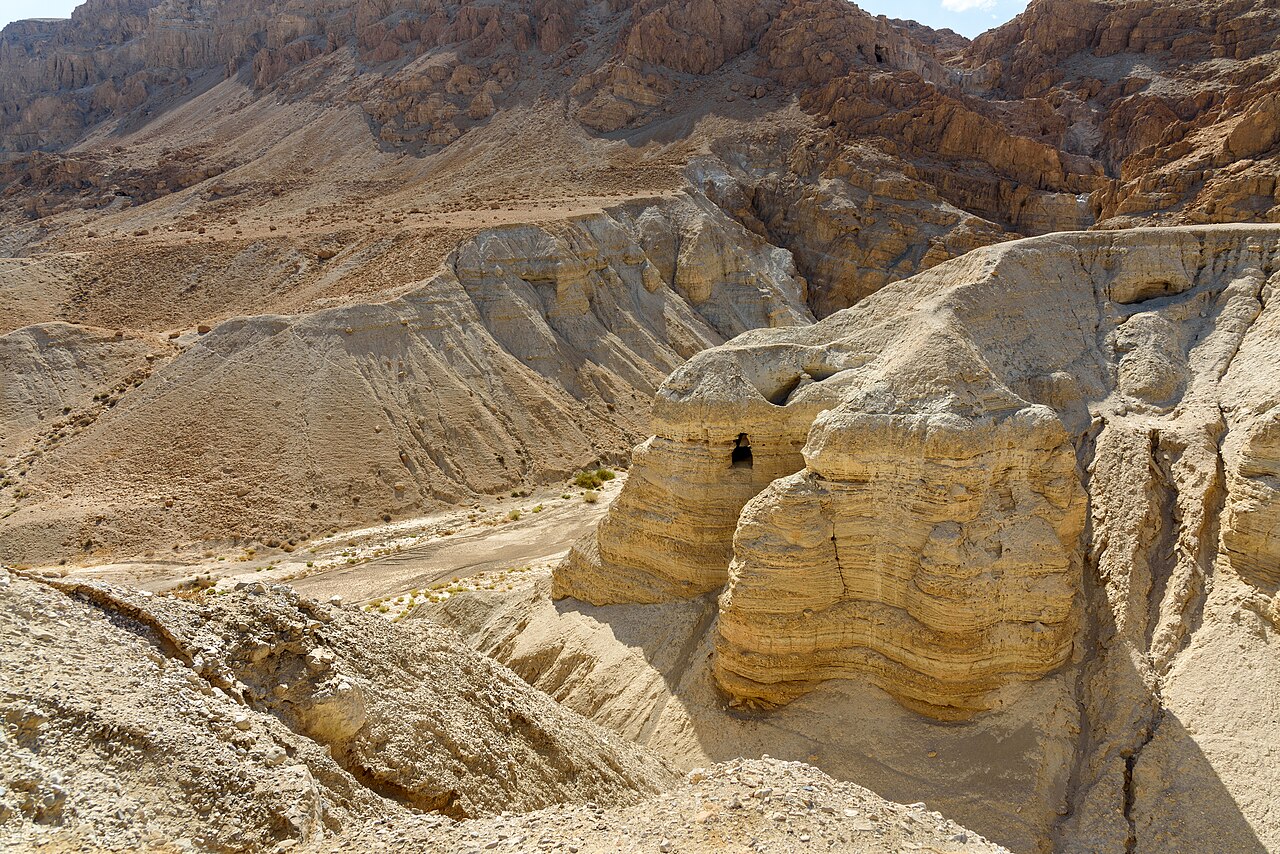
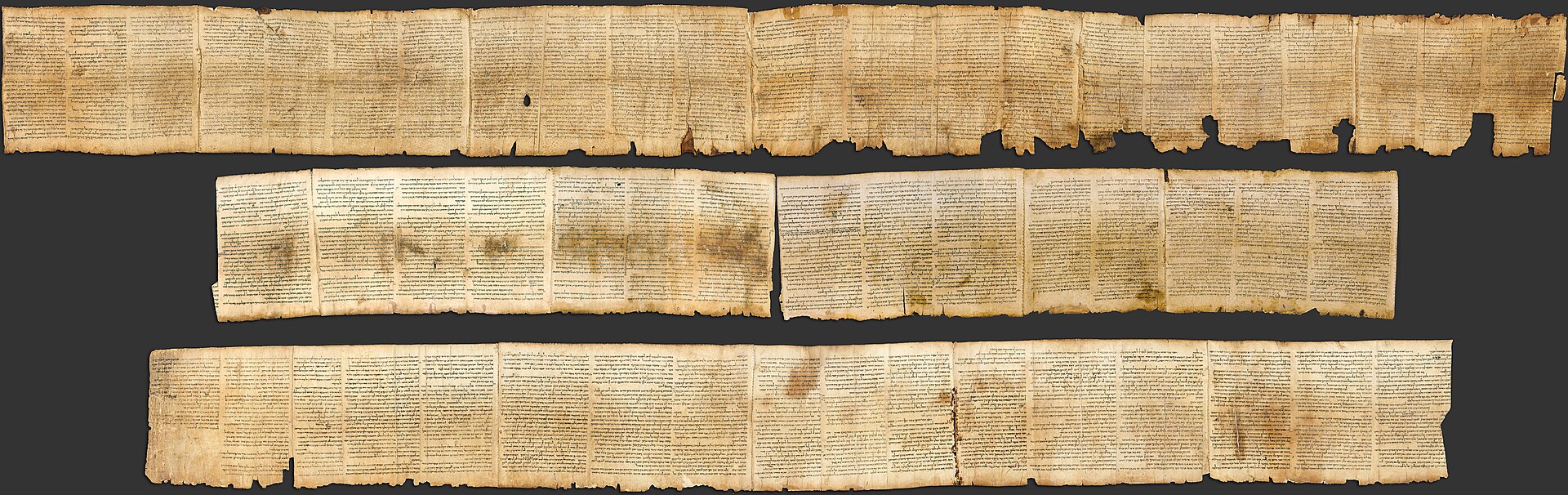
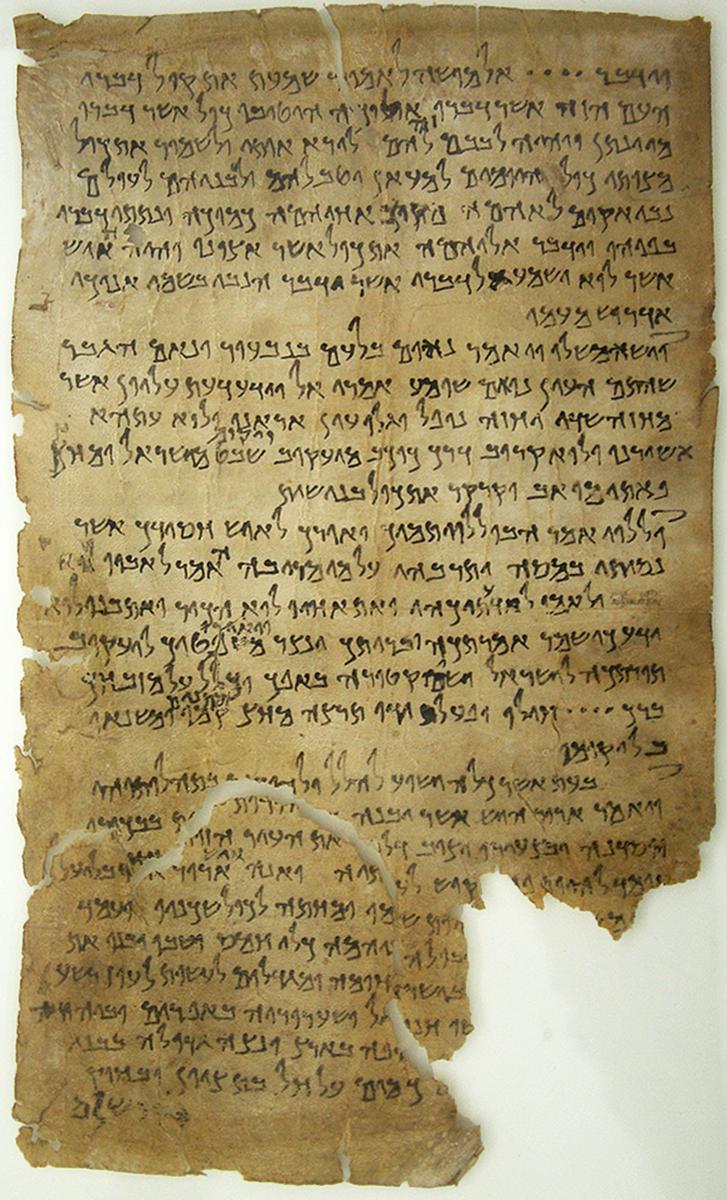
Eight Daniel manuscripts, the oldest (4QDanc) c. 125 BC. Between them they preserve portions of every chapter except 12 (and Daniel 12:10 is quoted in another Qumran scroll, 4QFlorilegium), and they carry the book's Hebrew→Aramaic→Hebrew language switches at the same points as our Bibles. Chapter 9 survives as the prayer (9:12–17); the 70-weeks verses (9:24–27) are carried by the pre-Christian Greek translation and the Masoretic Hebrew. Even the most skeptical scholars date the book to ~165 BC — still ~190 years before Jesus' baptism (AD 27).
And real insertions leave a residue — some manuscripts omit them, copies place them differently, early writers do not quote them, the style jars, scribes flag them. That is how we know the genuine later additions are additions (the Comma Johanneum of 1 John 5:7, the longer ending of Mark, and even Daniel's own Greek extras — Susanna, Bel, the Prayer of Azariah — present in Greek, absent from the Hebrew/Qumran). Daniel 9:24–27 shows none of that residue. By the very tests that catch forgeries, it comes back clean.