 GOD EXAMINED
Daniel 9 at Qumran דָּנִיֵּאל ט׳ · תְּפִלַּת דָּנִיֵּאל
Abstract — The book of Daniel was among the most-copied scriptures at Qumran — eight manuscripts survive, more than for most books of the Hebrew Bible. Of those eight, exactly one preserves any text of chapter 9: the tiny Cave-4 fragment 4QDanᵉ (4Q116), which carries part of Daniel's penitential prayer, verses 12–17, in Hebrew. This study sets that fragment beside its transcription, maps the full roster of Daniel scrolls, and addresses — plainly — the most important honest limitation: the Seventy-Weeks / Seventy-Sevens prophecy of Daniel 9:24–27 survives on no Dead Sea Scroll at all. What the scrolls do establish is formidable in its own right: Daniel was authoritative scripture at Qumran within roughly fifty years of the book's critical composition date, copied repeatedly, and its chapter-9 prayer agrees with the Masoretic Text to the extent its scraps can be read.
4QDanᵉ is the scrappiest of all the Daniel manuscripts. Its editor, Eugene Ulrich, describes it as "five tiny fragments, all from the prayer in chapter 9, but none with more than one complete word." So the printed Hebrew of Daniel 9:12–17 below is overwhelmingly an editorial reconstruction — the Masoretic text the surviving letter-traces are consistent with — not a continuously legible copy. It is shown greyed to signal that honestly.
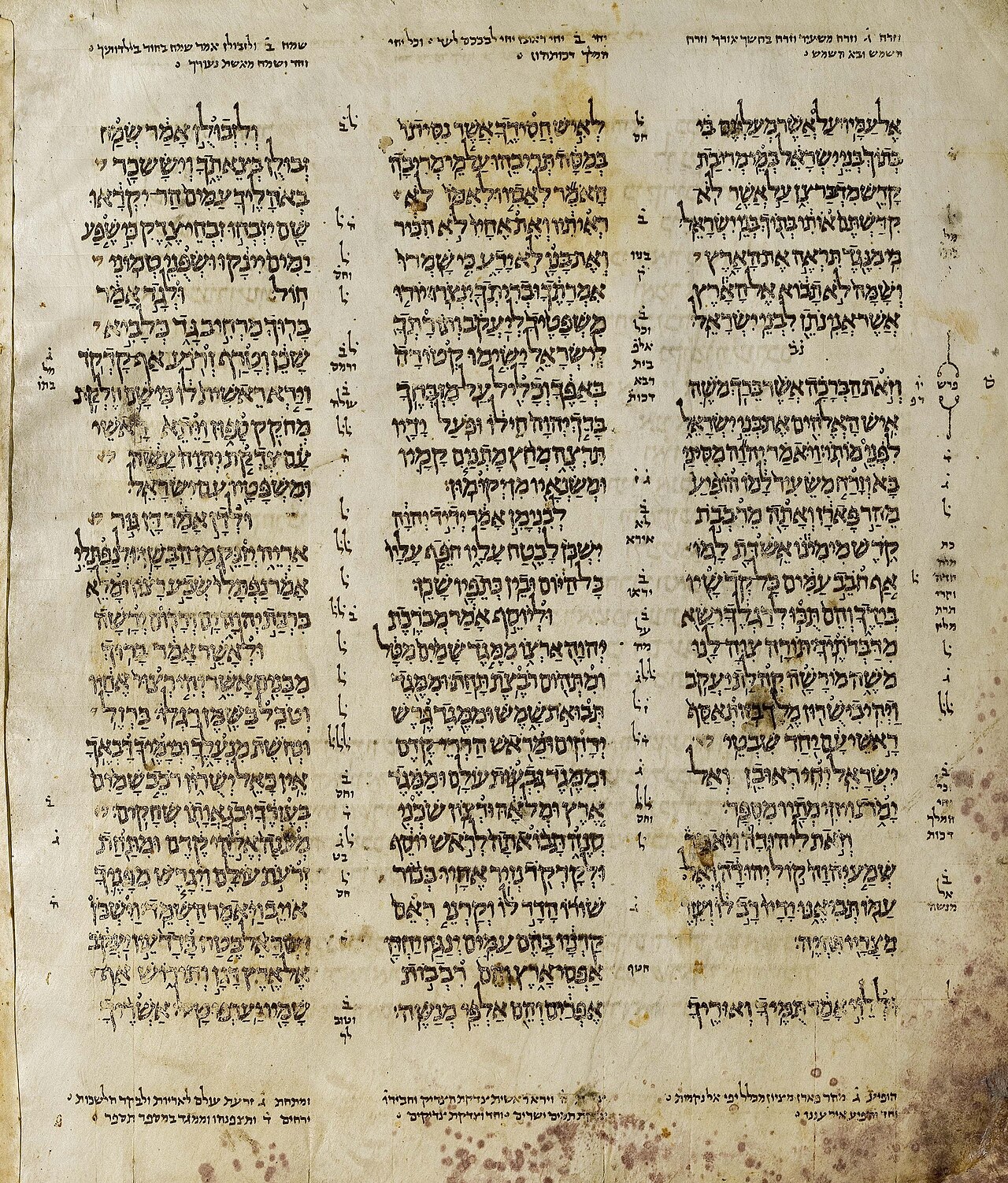
The real fragment photograph is © Israel Antiquities Authority (PAM negative 43.094; museum plate 153), held at the Rockefeller Museum and served through the Leon Levy Digital Library behind a zoom viewer; no public standalone image of 4Q116 is freely downloadable. The plate below carries a direct link to the library. Embedded photographs are genuine Dead Sea Scrolls imagery used as honestly-captioned context — never a mock-up.
The honest concession is made up front, not buried: no surviving scroll preserves the 490-year Messianic oracle of Daniel 9:24–27. The Qumran community clearly knew and interpreted it (it is reworked in 11QMelchizedek), but that is an echo, not a copy. This document states exactly what the stones and leather do and do not show.
| 4QDanᵉ | 4Q116 | Dan 9:12–17 |
| Cave | Qumran Cave 4 | |
| Date | Hasmonean · 2nd–1st c. BCE | |
| Language | Hebrew (the prayer) | |
| Extent | 5–6 scraps · mostly reconstructed | |
| 9:24–27 | on NO scroll | |
- Daniel at Qumran — eight copies of a persecuted prophet
- The full roster of Daniel manuscripts (≤ 50 CE)
- The oldest copy — 4QDanᶜ, within ~50 years of the book
- The one Daniel-9 fragment — 4QDanᵉ (4Q116) ★
- Daniel's prayer — 9:12–17 transcribed
- The honest gap — the Seventy Weeks (9:24–27)
- Reliability — how close are the scrolls to our Bible?
- Honest verdict — what Qumran does & doesn't prove

1Daniel at Qumran — a book they could not stop copying
If any book should be scarce at Qumran, it is Daniel. Yet the community that hid the scrolls left behind eight separate copies of it across three caves — more than they left of most books of the Hebrew Bible. They also cited it as scripture: 4QFlorilegium quotes "what is written in the book of Daniel the prophet," and 11QMelchizedek reworks Daniel's Seventy-Weeks timetable into a sequence of jubilees. Daniel was not a fringe text at Qumran; it was authoritative, studied, and demonstrably central to how the community read history and the future.
Collectively the eight manuscripts attest portions of every chapter of Daniel except chapter 12, and they even preserve — exactly where the Masoretic Text has them — the book's famous language seams, where Daniel switches from Hebrew to Aramaic (2:4b) and back to Hebrew (ch. 8). Chapter 9, the great penitential prayer and the Seventy-Weeks oracle, is written in Hebrew, and it is attested by a single, fragile witness.
2The full roster — every Daniel scroll, and which touches chapter 9
| Siglum | No. | Cave | Verses preserved | Paleographic date | Ch. 9? |
|---|---|---|---|---|---|
| 1QDanᵃ | 1Q71 | 1 | 1:10–17; 2:2–6 | Herodian | — |
| 1QDanᵇ | 1Q72 | 1 | 3:22–30 | Herodian | — |
| 4QDanᵃ | 4Q112 | 4 | 1–5, 7, 8, 10, 11 (portions) | mid-1st c. BCE | — |
| 4QDanᵇ | 4Q113 | 4 | 5–8 (portions) | c. 20–50 CE | — |
| 4QDanᶜ | 4Q114 | 4 | 10:5–11:29 (portions) | late 2nd c. BCE (~125 BCE) | — |
| 4QDanᵈ | 4Q115 | 4 | 3, 4, 7 (portions) | mid-1st c. BCE | — |
| 4QDanᵉ ★ | 4Q116 | 4 | 9:12–17 (the prayer) | Hasmonean, 2nd–1st c. BCE | YES |
| 6QpapDan | 6Q7 | 6 | 8, 10, 11 (portions, papyrus) | c. 50 CE | — |
Contents per Eugene Ulrich (DJD XVI). Exactly one of the eight — 4QDanᵉ — preserves any text of chapter 9, and it preserves only the middle of the prayer (vv. 12–17). None preserves the opening of the prayer (9:4–11) or the Seventy-Weeks oracle (9:24–27).
3The oldest copy — startlingly close to the book itself
Here is one of the strongest facts the Daniel scrolls deliver — stated carefully, because it is easy to overstate. Critical scholarship dates the final composition of Daniel to the 160s BCE. The oldest Daniel manuscript at Qumran, 4QDanᶜ (4Q114), is dated paleographically by Frank Moore Cross to the late 2nd century BCE (~125–100 BCE) — only about half a century after the book was composed. For an ancient document, that gap between origin and surviving copy is astonishingly small. A 2025 radiocarbon study pushed its physical date potentially earlier still (ranges of 230–160 BCE or 355–285 BCE), though that method is new and contested, and the two dating approaches do not perfectly agree.
4The one Daniel-9 fragment — 4QDanᵉ (4Q116) ★
This is the entire physical case for "a Dead Sea Scroll of Daniel 9." It is five or six fragments of leather, recovered from Qumran Cave 4, inked in a Hasmonean Hebrew hand, every scrap from the penitential prayer of chapter 9. The editor of record is Eugene Ulrich (DJD XVI, Qumran Cave 4·XI: Psalms to Chronicles).

Ulrich's description: "five tiny fragments, all from the prayer in chapter 9, but none with more than one complete word." So the surviving ink is scattered letters and, at most, isolated whole words — their spacing and letterforms matching Daniel 9:12–17. The full prayer text is reconstructed from the Masoretic Text (next section), shown greyed to mark it as restoration rather than continuous reading.
5Daniel's prayer — 9:12–17, transcribed
Below is the prayer the fragment carries, verse by verse: the Hebrew (greyed, because for 4QDanᵉ it is reconstructed from the Masoretic text the scraps match) beside a literal English rendering. It is the confession at the heart of Daniel 9 — Daniel pleading guilty for his people and asking God to turn His face back toward the desolate sanctuary.
6The honest gap — the Seventy Weeks (9:24–27)
The most important thing a careful reader should know is also a concession: no surviving Dead Sea Scroll preserves Daniel 9:24–27, the Seventy-Weeks / Seventy-Sevens prophecy — the passage that counts out 490 years "until Messiah the Prince" and foretells that "an anointed one shall be cut off." The earliest physical witnesses to those four verses remain the great Greek and Masoretic codices, centuries later. 4QDanᵉ stops at verse 17; nothing at Qumran carries vv. 24–27.
What the scrolls do show is that the Qumran community knew and used the Seventy-Weeks schema: 11QMelchizedek recasts Daniel's jubilee count into ten jubilees climaxing in a final Day of Atonement and a heavenly deliverer. That is strong evidence the community had Daniel 9 in full and read its chronology messianically — but it is an interpretation echoing the oracle, not a copy of the oracle's text. The honest statement is therefore: the prophecy was known and interpreted at Qumran before the time of Christ; its text is not among the fragments that physically survive. Known & interpreted Text not preserved
7Reliability — how close are the scrolls to our Bible?
Where the Daniel fragments overlap the Masoretic Text, they confirm it: Ulrich's verdict on the Qumran Daniel manuscripts as a whole is that "most of the variants are orthographic, phonological, or morphological" rather than substantive — spelling, not substance. That is one case of a result that runs across the whole biblical corpus.
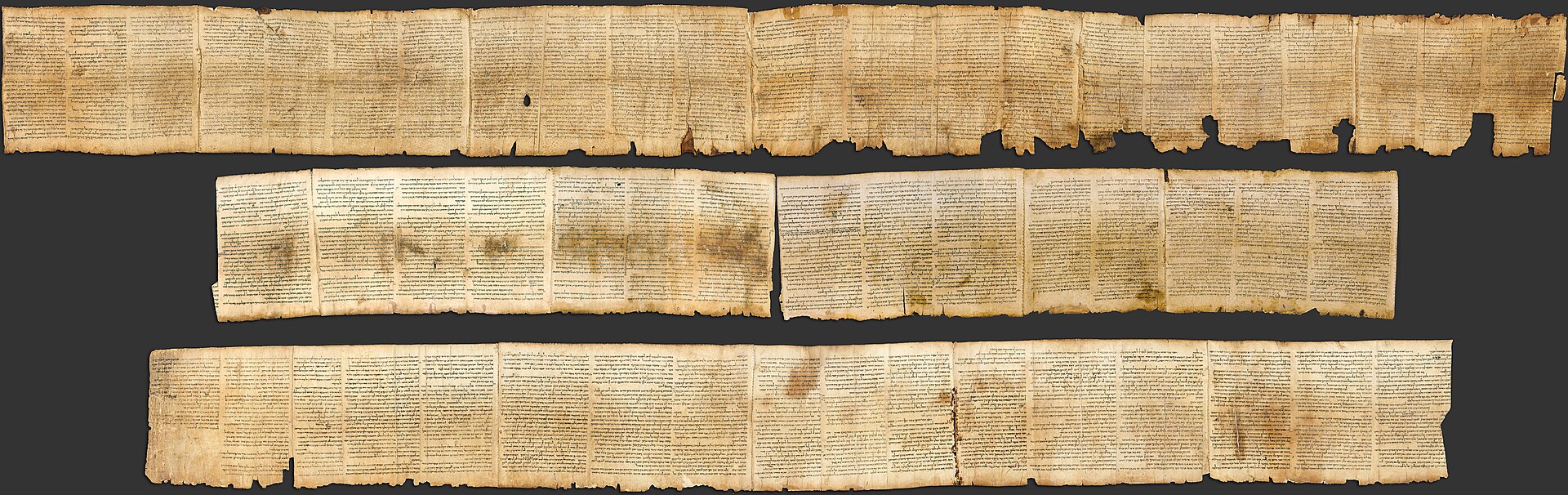
The popular figure — "more than 95% word-for-word identical" — is Gleason Archer's description of the Great Isaiah Scroll, the variation "consist[ing] chiefly of obvious slips of the pen and variations in spelling." It is directionally true but is a scholar's approximation, not a computed statistic (the Isaiah scroll carries 2,600+ variants, nearly all orthographic). The more defensible number is Emanuel Tov's measurement of the proto-Masoretic scrolls from the Judean Desert sites: their divergence from the medieval Leningrad Codex is "in the region of up to 2% of the text words" — ~98% consonantal agreement across a thousand years.
8Honest verdict — what Qumran does & doesn't prove
- Daniel was authoritative scripture at Qumran — eight copies, cited as "Daniel the prophet," its Seventy-Weeks schema reused in 11QMelchizedek.
- The oldest Daniel copy (4QDanᶜ) sits within ~50 years of the book's critical composition date — an extraordinarily short gap for an ancient text.
- Chapter 9's prayer is attested at Qumran in Hebrew (4QDanᵉ) and agrees with the Masoretic Text so far as it can be read.
- No pre-50-CE scroll preserves the Seventy Weeks (9:24–27). You cannot say "a Dead Sea Scroll contains the 490-year Messiah prophecy." It does not survive on any scroll.
- 4QDanᵉ is not the oldest Daniel copy, and it is too fragmentary to establish variants on its own — its value is corroborative and cumulative.
The fair conclusion: the Dead Sea Scrolls place the book of Daniel — chapter 9 included — in Jewish hands, copied and treated as scripture, generations before Christ, and show its text transmitted with the same fidelity the whole Masoretic stream displays. They do not hand us a first-century copy of the Messianic timetable; that prophecy's earliest surviving text is later, even as its presence and messianic interpretation at Qumran is beyond doubt. Stated that way, the evidence is strong, clean, and honest.
Manuscript data & transcription after E. Ulrich, DJD XVI (Qumran Cave 4·XI); Hebrew base text per the Leningrad tradition (Sefaria). Fragment photograph © Israel Antiquities Authority / Leon Levy Dead Sea Scrolls Digital Library (PAM 43.094). Context images: Wikimedia Commons. Reliability figures: E. Tov, Textual Criticism of the Hebrew Bible; G. Archer.
Established · Reconstructed · Not-preserved — graded honestly. Local study document.