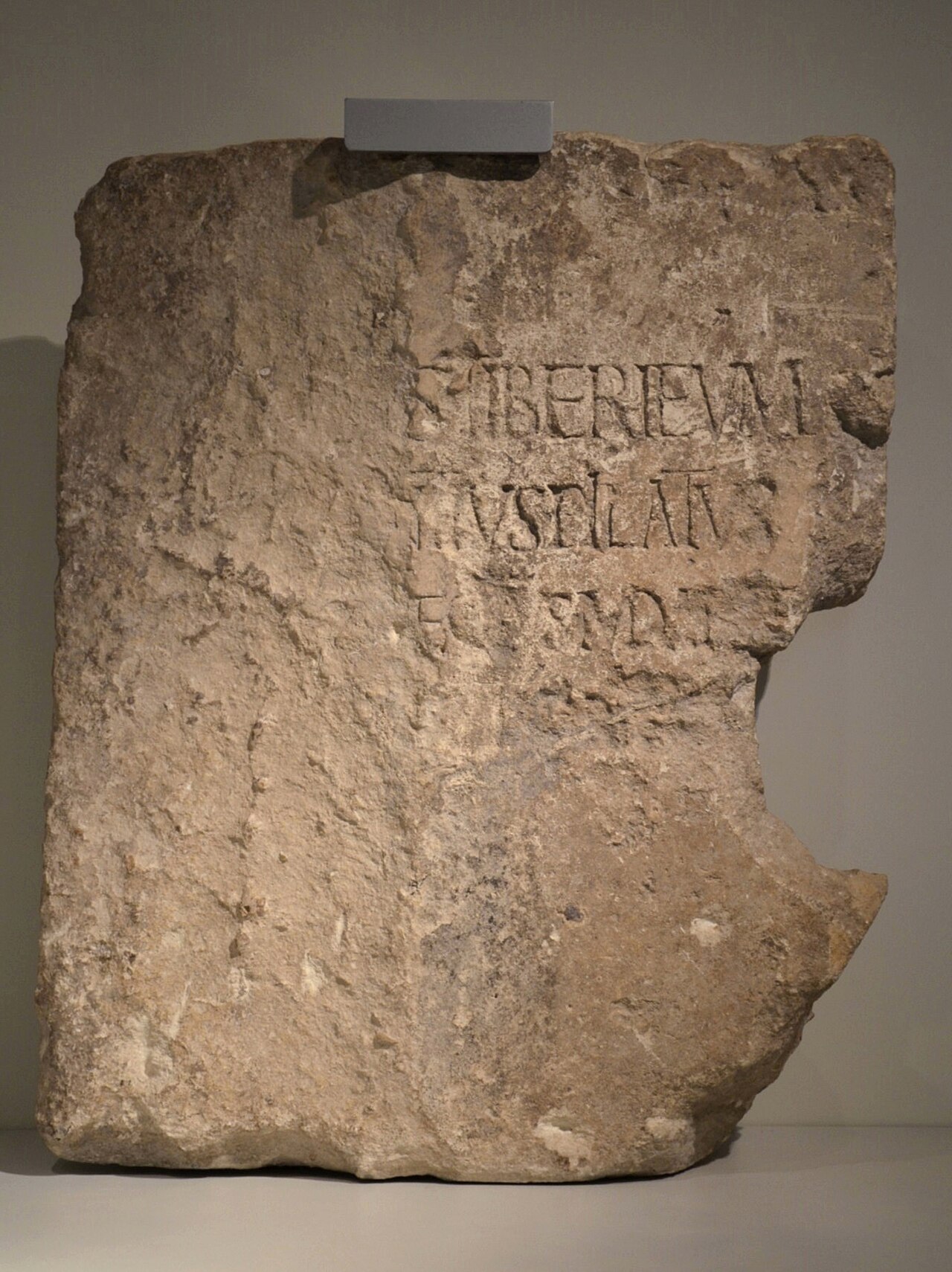
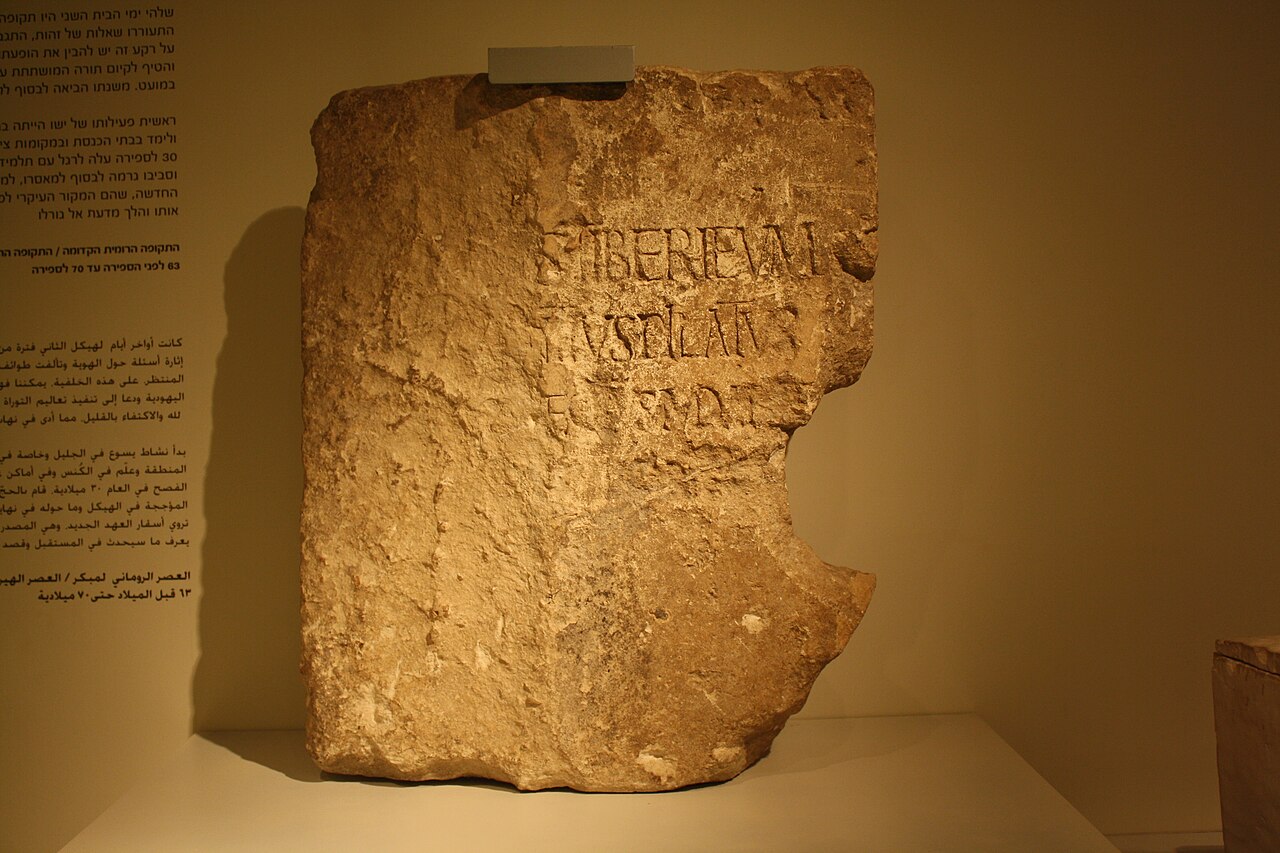
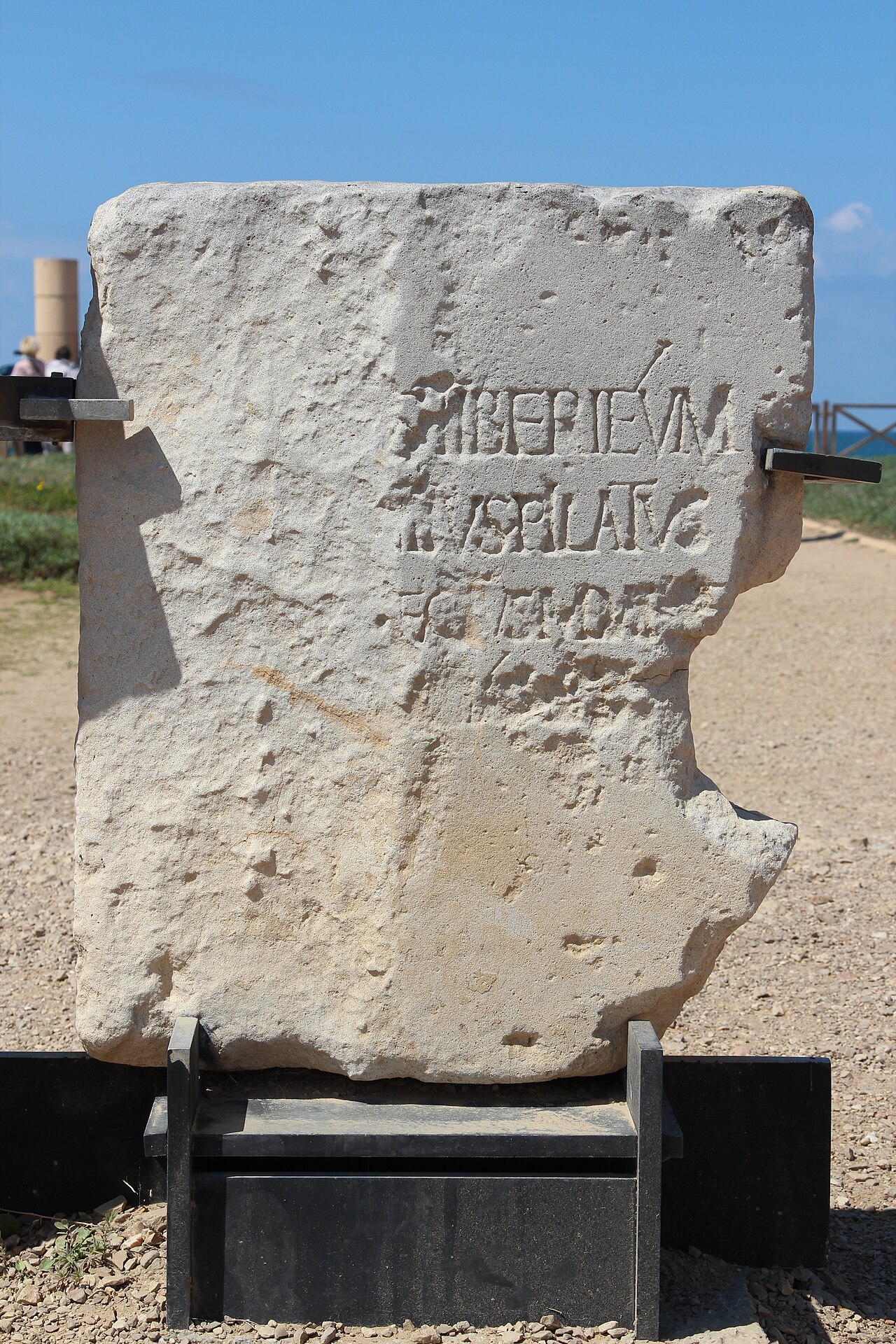
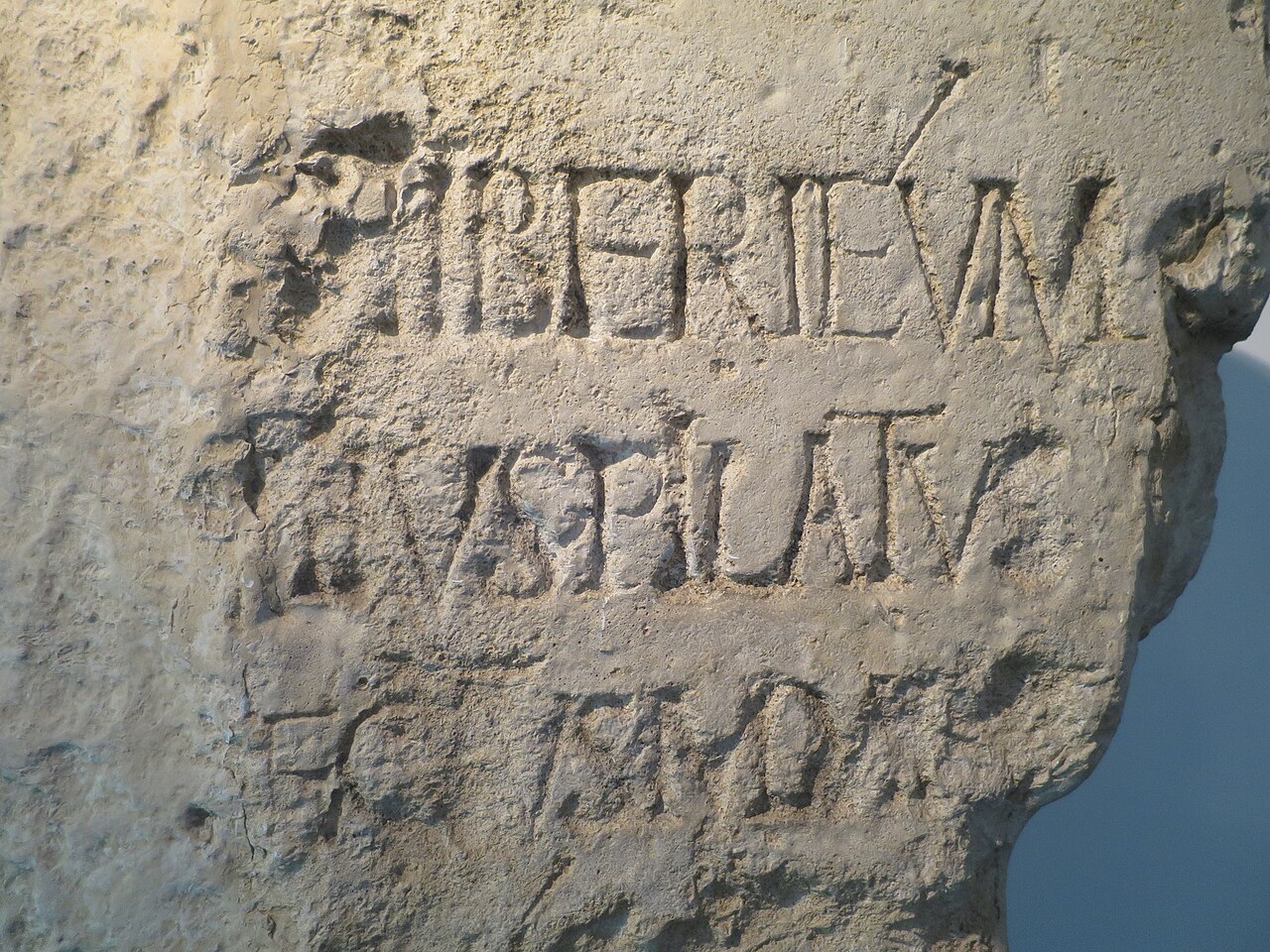
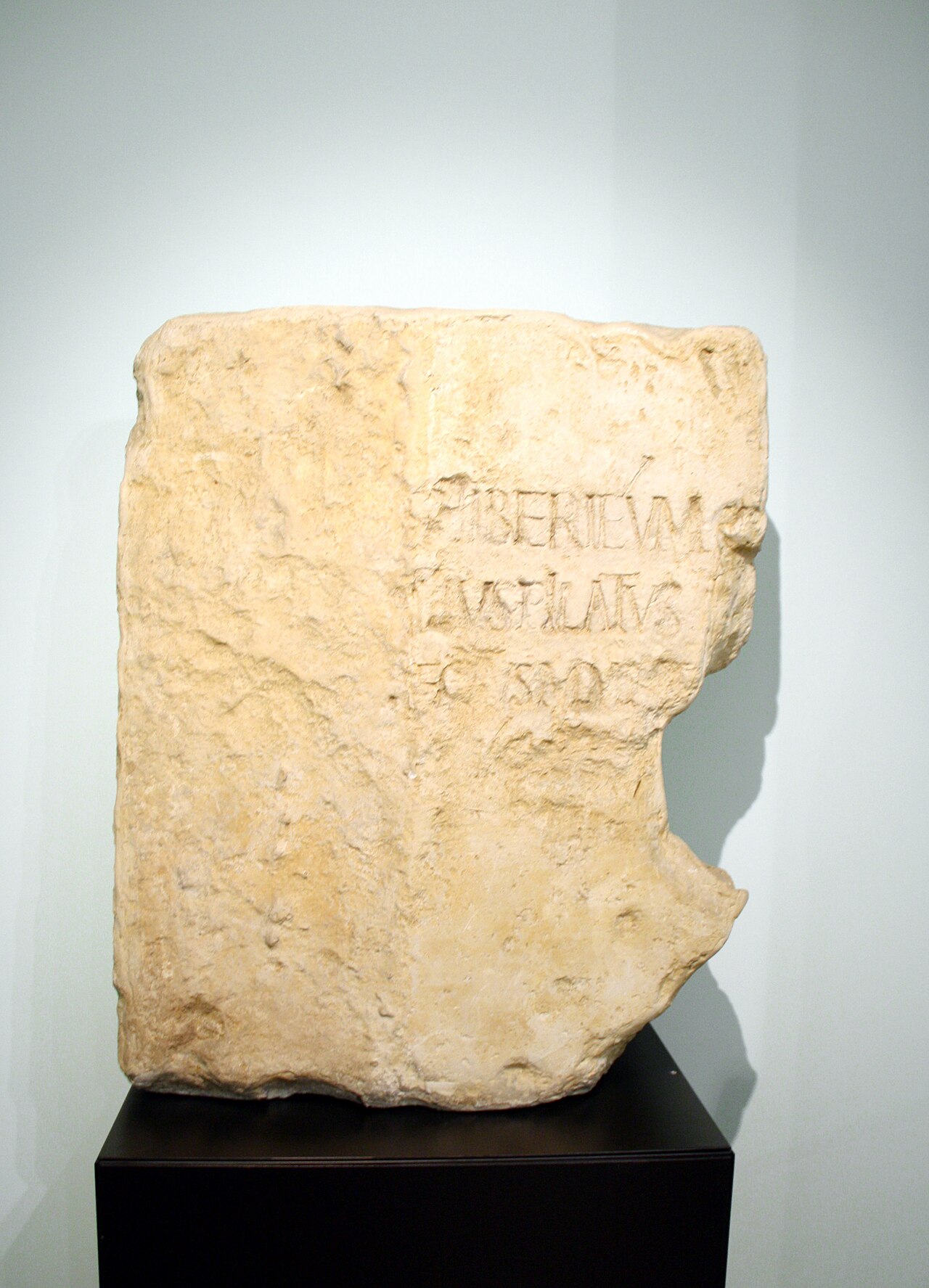
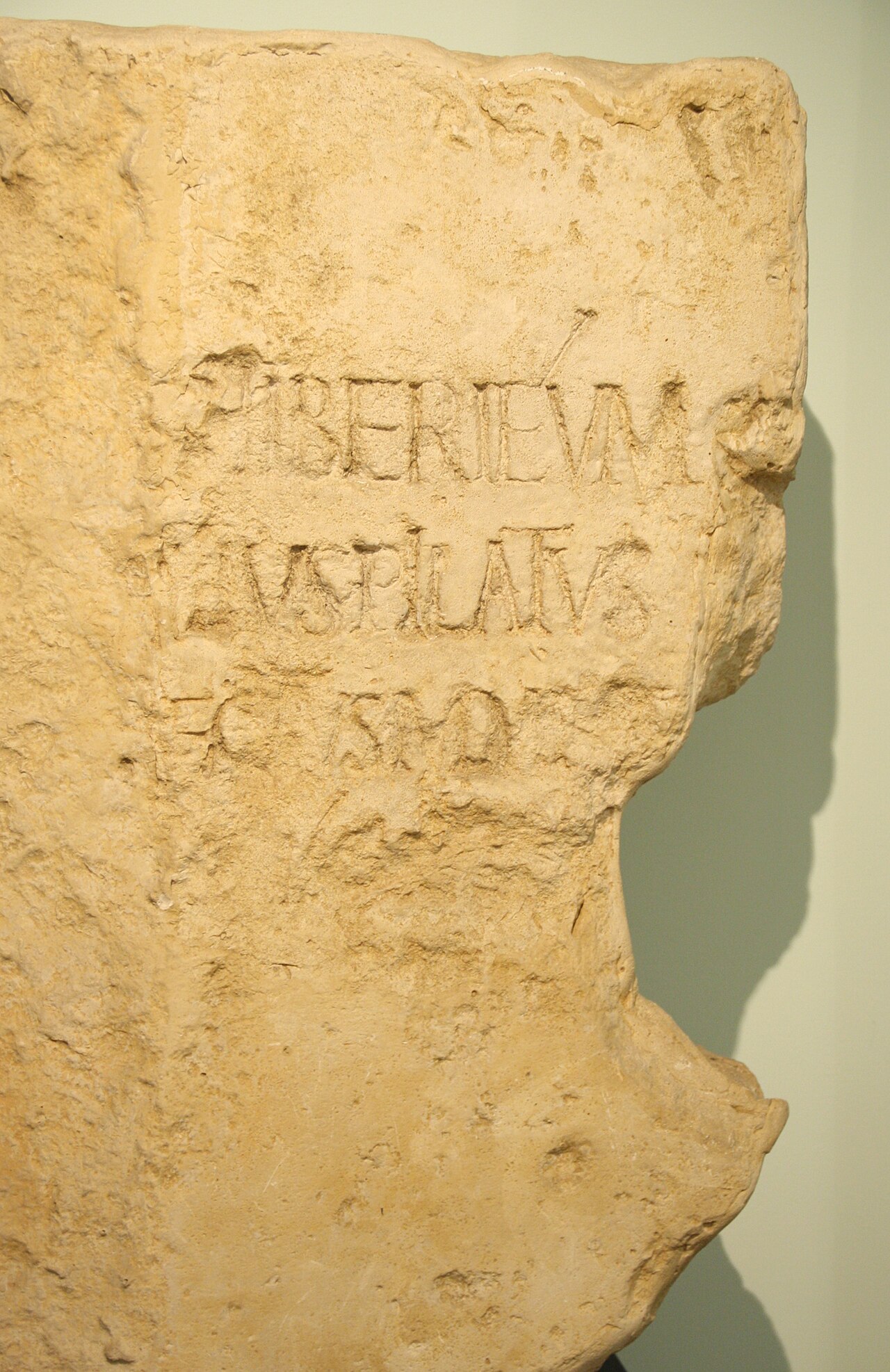
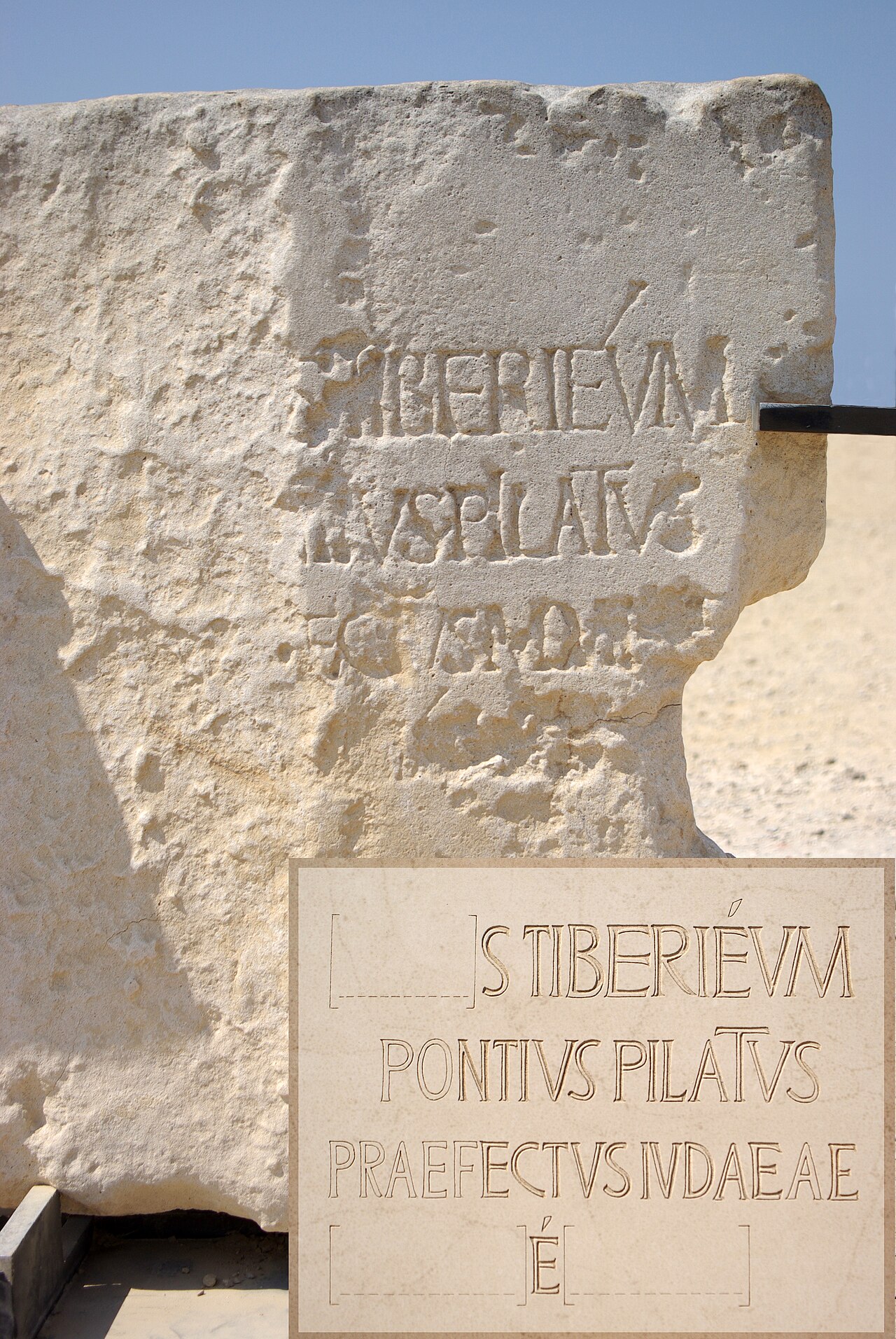
A limestone inscription from Caesarea names Pontius Pilate — the Roman governor who condemned Jesus — and confirms his exact title.
Confirms · Pontius Pilate, who sentenced Jesus — Matthew, Mark, Luke & John; Luke 3:1
AD 26–36
Pilate's prefecture
1961
found at Caesarea Maritima
“Praefectus”
his title — exactly right
Israel Museum
replica at Caesarea
What it is
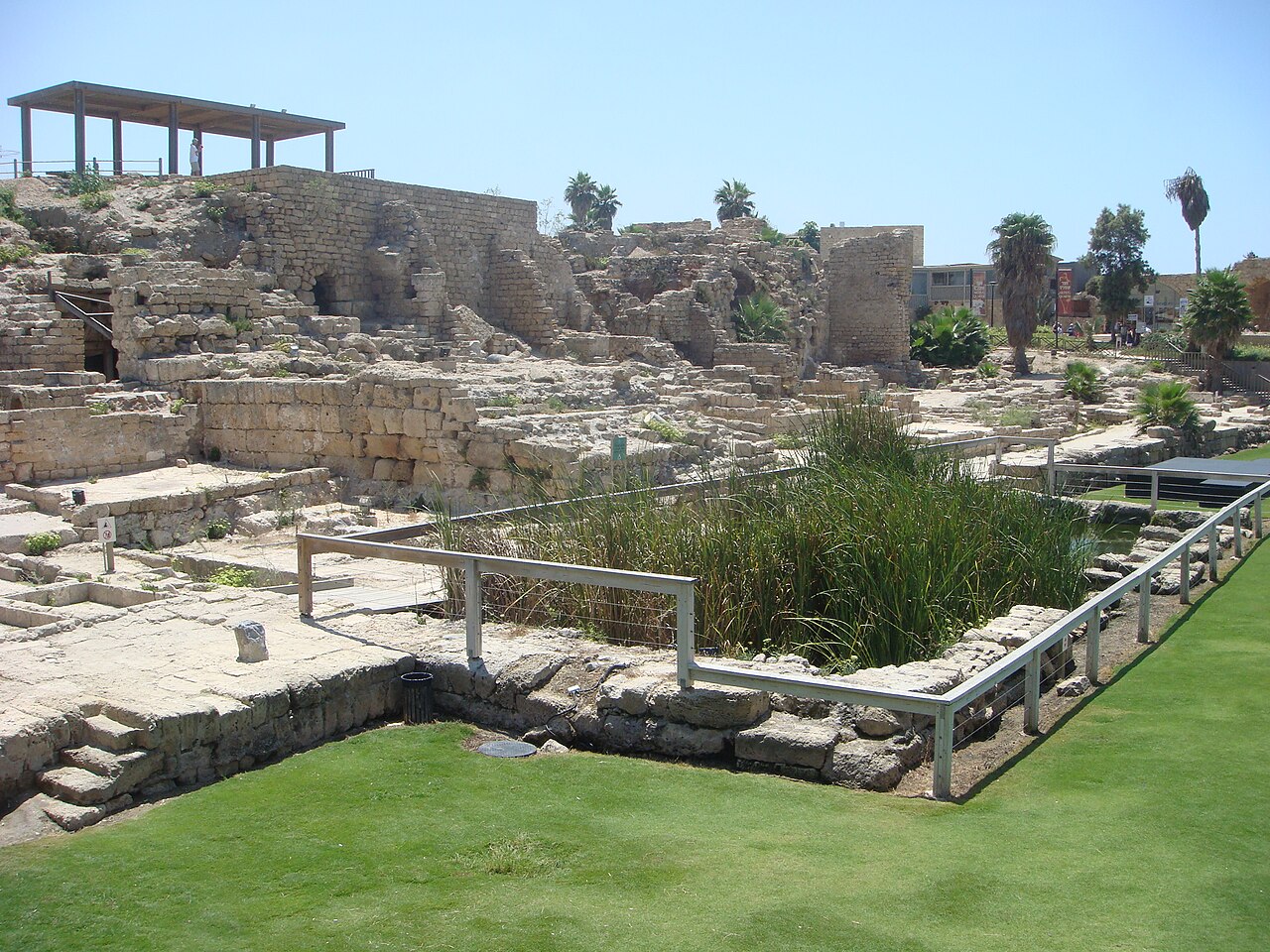
In 1961, an Italian archaeological team led by Antonio Frova, excavating the
Roman theatre at Caesarea Maritima, turned over a block of limestone that had been reused as a
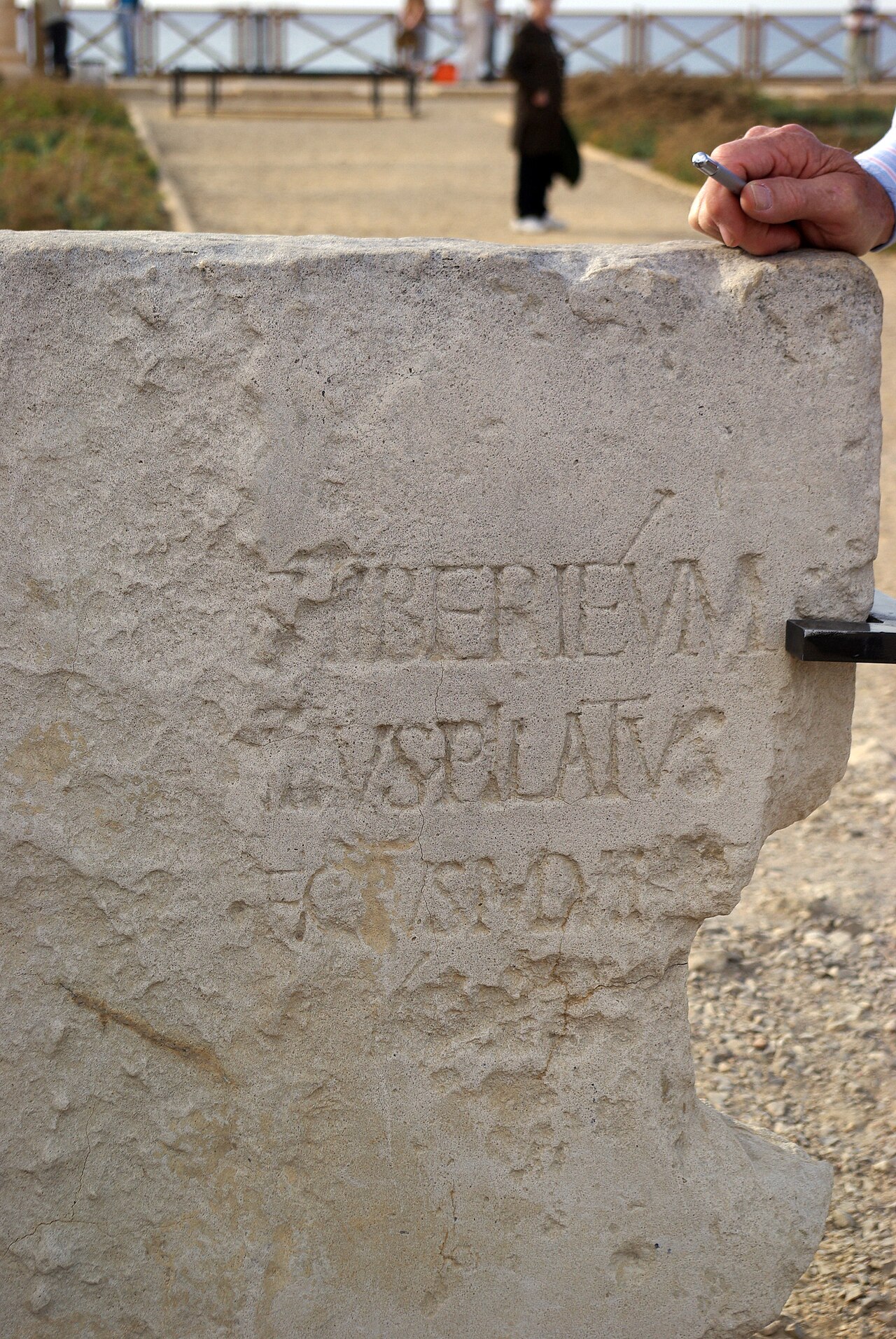
building step. On its face was a Latin dedication naming “[Po]ntius Pilatus, [Praef]ectus
Iuda[ea]e” — Pontius Pilate, Prefect of Judea — who had dedicated a building (a
Tiberieum) in honour of the emperor Tiberius.
It is the first and only inscription ever found bearing the name of Pontius Pilate.
How it confirms the Bible
Pilate is one of the most consequential figures in the Gospels — the Roman
official who tried and condemned Jesus (Matthew 27; Mark 15; Luke 23; John 18–19), and
the man Luke uses to date the start of Jesus' ministry (Luke 3:1). He is also named by the Roman historian
Tacitus and the Jewish historian Josephus. The Pilate Stone turns him from a
figure known only from texts into an official attested in his own stone, in the very province he
governed.
The inscription also settles a fine point of accuracy: it calls Pilate a prefect
(praefectus) — the correct title for a Roman governor of Judea in the AD 20s–30s, before
the office was later restyled “procurator.” The Gospel writers and their sources placed exactly the
right man, with the right rank, in the right place and time.
Read honestly: the stone confirms Pilate's existence, office, and title —
it does not itself describe the trial of Jesus. Its value is that it removes any doubt that the governor of the
Passion narratives was a real Roman official, precisely as the Gospels, Tacitus, and Josephus all independently
report.
The evidence in pictures
Every image links to the full-size original — click any photo to open it.
The Pilate Stone — the limestone dedication block from Caesarea (Israel Museum).Close-up of the Latin inscription naming Pilate and his title.The replica set in place at the Caesarea theatre.The Roman theatre at Caesarea Maritima, where the stone was reused.The stone on display.A cast (calco) of the inscription.Caesarea, Pilate's provincial seat on the Judean coast.A bronze prutah minted under Pilate, AD 26–36.The Pilate inscription and Caesarea Maritima, Pilate's provincial seat (further views).The Pilate inscription and Caesarea Maritima, Pilate's provincial seat (further views).
Hosted on GodExamined.com as a plain-language summary of published archaeology,
with links to the authoritative sources above for independent verification. Each claim is stated at the
strength the evidence supports — no more.