 GOD EXAMINED
Psalm 22 Before the Masoretes מִזְמוֹר לְדָוִד · תְּהִלִּים כ״ב
Abstract — Long before the oldest complete Hebrew Bibles (the Aleppo Codex, c. 925 CE, and the Leningrad Codex, 1008 CE), Psalm 22 was already being copied in the Judean Desert. This study assembles every ancient witness to the Psalm that dates to roughly 50 CE or earlier, sets each actual fragment beside its transcription, and examines the single most disputed word in the Psalter — the clause rendered in English Bibles "they pierced my hands and my feet" (Ps 22:16). The honest headline: of the Qumran/Judean-Desert manuscripts, two Hebrew scrolls preserve any part of Psalm 22, and only one — the Nahal Hever Psalms scroll (~50 CE) — clearly carries the verbal reading כָּארוּ ("they dug/bored"). The oldest witness of all is neither scroll but the pre-Christian Greek Septuagint (ὤρυξαν, ~2nd c. BCE). Together they show the "pierced/dug" reading is ancient and demonstrably pre-Christian — not a later Christian invention — while the fragments' near-perfect agreement with the medieval text is a working demonstration of how faithfully the Hebrew Bible was transmitted across a thousand years.
Transcriptions are from the scholarly editions (the Discoveries in the Judaean Desert series — DJD XVI for 4QPsf, DJD XXXVIII for the Nahal Hever scroll), with the consonantal Hebrew shown as the scrolls carry it (no vowel points — the Masoretes added those ~1,000 years later) alongside the pointed Masoretic text and a literal English rendering. Where a fragment is damaged, the printed text is an editorial reconstruction and is flagged as such.
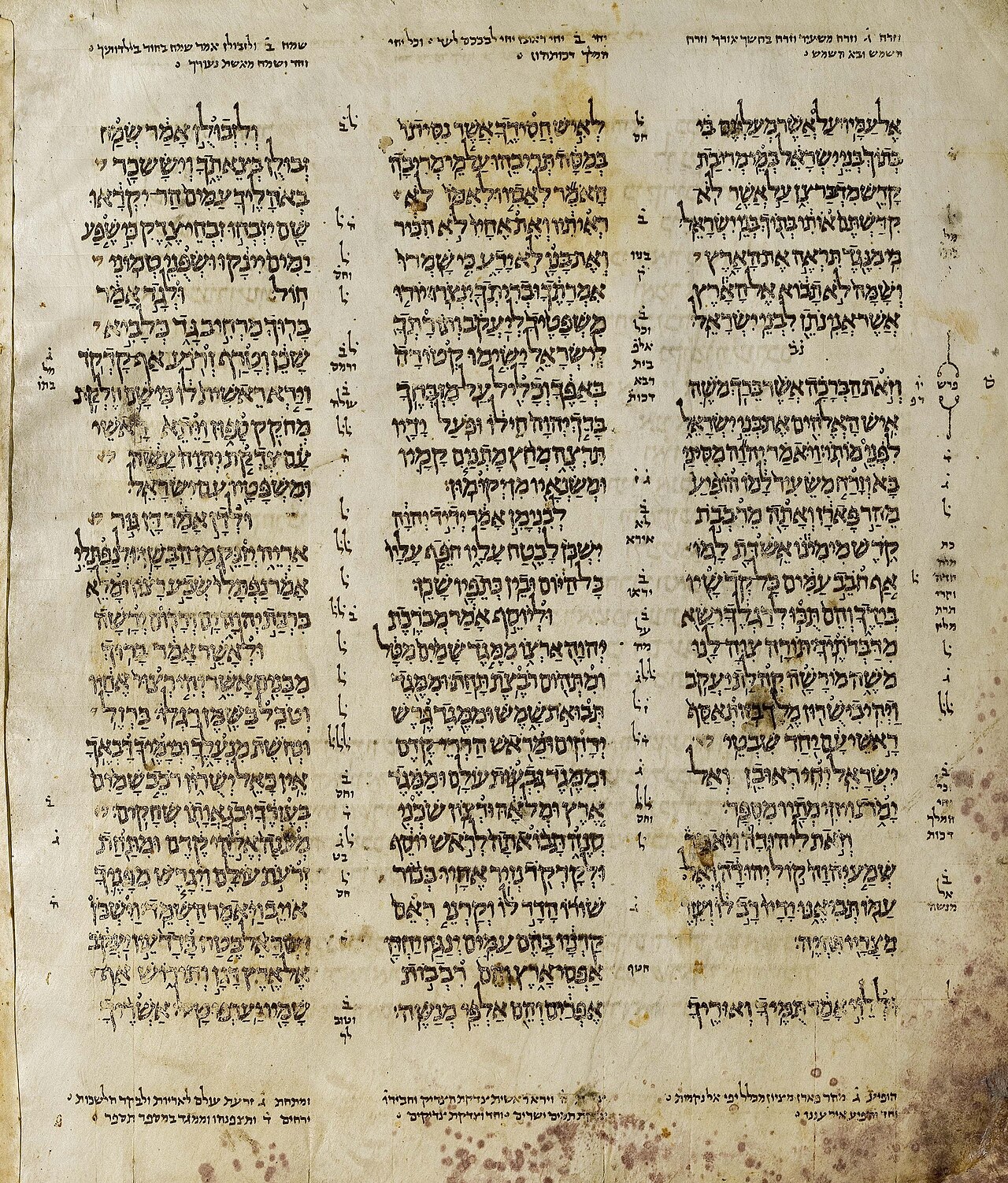
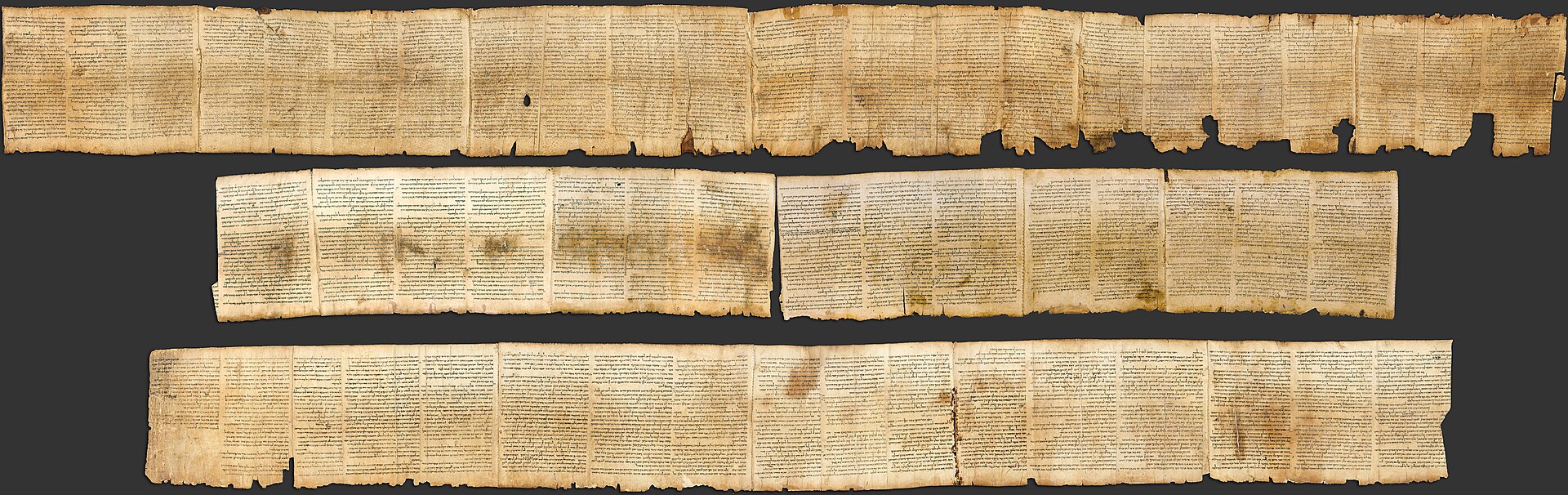
The actual fragment photographs are © Israel Antiquities Authority and are served through the Leon Levy Dead Sea Scrolls Digital Library behind a zoom viewer; they are not freely redistributable, so each plate below carries a direct link to view the real fragment at ultra-high resolution at the source. The embedded photographs are genuine Dead Sea Scrolls imagery used as honestly-captioned context (a real Cave-4 Hebrew fragment of the exact era, the Great Psalms Scroll, the caves, the Masoretic codices) — never a mock-up.
Nothing here is inflated into proof. The strongest defensible claim is stated at the end, together with the five honest limitations a careful skeptic will (rightly) raise.
| 4QPsf | 4Q88 | c. 50 BCE |
| 5/6ḤevPs ★ | Nahal Hever | c. 50 CE |
| Septuagint | Ps 21 LXX | ~2nd c. BCE |
| (Masoretic) | Aleppo/Leningrad | 925–1008 CE |
- The one disputed word — "like a lion" vs "they pierced"
- Finding I — 4QPsf (4Q88), Qumran Cave 4, c. 50 BCE
- Finding II — 5/6ḤevPs, Nahal Hever, c. 50 CE ★
- Finding III — the Septuagint (ὤρυξαν), the oldest witness
- The crux, letter by letter
- A thousand-year timeline
- Reliability — how close are the scrolls to our Bible?
- Honest verdict & the five limitations

1The one word the whole debate turns on
Psalm 22 is the great Psalm of the suffering righteous one. It opens with the cry Jesus spoke from the cross — "My God, my God, why have you forsaken me?" (22:1) — and moves through a catalogue of torments that reads like an eyewitness account of crucifixion centuries before the Romans adopted it: mockers who "wag the head" (v.7), bones out of joint (v.14), a tongue cleaving to the jaws (v.15), and enemies who "divide my garments among them and cast lots for my clothing" (v.18) — the very act John records at Golgotha (John 19:24).
At the center sits the most contested word in the Hebrew Bible. In the clause at Psalm 22:16 (English) — 22:17 in the Hebrew, which counts the superscription as verse 1 — the medieval Masoretic Text reads כָּאֲרִי (kaʾărî), parsed "like a lion my hands and my feet." But the pre-medieval witnesses read a verb ending in waw — כָּארוּ (kāʾărû), "they dug / bored (→ pierced)." The entire difference is the final letter: a short waw (ו) versus an almost-identical short yod (י). The question this document answers from the physical evidence is simply: which letter did the oldest copies actually write?
The two oldest streams (first-century Hebrew + pre-Christian Greek) read a verb; the "like a lion" vocalization is attested only in the far later Masoretic pointing. Established that both readings are genuinely ancient; which is original is Disputed.
2Finding I — 4QPsf (4Q88) · Qumran Cave 4 · c. 50 BCE
The only manuscript from Qumran proper that contains any of Psalm 22. 4QPsf is a non-standard "liturgical" Psalter that also carries three non-canonical hymns. It was copied in a late-Hasmonean semicursive hand around 50 BCE — a full century before the Nahal Hever scroll, and unambiguously before the 50 CE cut-off. It preserves Psalm 22:14–17 (Hebrew) = 22:13–16 (English), which means the crux verse falls on this fragment — at its broken bottom edge.

3Finding II — 5/6ḤevPs · Nahal Hever · c. 50 CE ★
This is the pivotal manuscript. The Nahal Hever Psalms scroll was excavated by Yigael Yadin in 1960–61 from the "Cave of Letters," a refuge of the Bar Kokhba revolt in the Judean Desert cliffs. The scroll was deposited c. 132–135 CE but was copied earlier, in a Herodian formal bookhand of the mid-first century (~50 CE). It preserves Psalm 22:3–8 and 14–20 (English) — and the crux, English 22:16, sits squarely inside the preserved block, as does the "cast lots for my garments" verse.

The DJD editors judged the reading "assured." Their decisive paleographic observation: the last letter of kāʾărû is "without doubt a vav when compared with the beginning letter of the next word, which is clearly a yod" — the two near-identical strokes stand side by side on the same line in the same hand, so the scribe's own writing settles which is which. Modern IAA infrared imaging (2012) is what tipped scholarly confidence from "too faded to tell" to "assured."
4Finding III — the Septuagint (ὤρυξαν): the oldest witness of all
The honest "third finding" is not a Dead Sea Scroll at all — it is the Greek Septuagint, the Jewish translation of the Hebrew Bible made in Alexandria in the 2nd century BCE, well before Christ. Its translators, working from a Hebrew text older than either surviving Hebrew scroll, rendered Psalm 21:17 (LXX numbering) ὤρυξαν χεῖράς μου καὶ πόδας — "they dug / bored through my hands and my feet." A verb. The later Latin Vulgate followed with foderunt ("they pierced/dug"), and the Syriac Peshitta with "they pierced."
This matters because it removes the entire "Christians invented it" objection: a Jewish translation, pre-Christian, already read the clause as piercing. The three ancient witnesses — Greek (~2nd c. BCE), 4QPsf (~50 BCE, reconstructed), Nahal Hever (~50 CE) — form a line of verbal "dug/pierced" readings that all predate the Masoretic "like a lion" by centuries to a millennium. Established: pre-Christian.
✓ The LXX reads ὤρυξαν ("they dug/bored → pierced") — a verb — at Ps 21:17 (LXX) = 22:16 (Eng).
✓ Independently corroborated by the Hebrew Nahal Hever scroll (כארו, ~50 CE) — so the verb is not a lone Greek quirk.
⚠ The honest limit (what keeps the claim airtight): it is the translation that is 2nd-c.-BCE, not a surviving physical copy of this verse. The oldest physical Greek Psalters are the 4th-c.-CE uncials (Vaticanus, Sinaiticus); the oldest LXX Psalms papyrus, P.Oxy 5101 (~50–150 CE), does not include Psalm 22. So the oldest physical copy of the "pierced" verb in any language is the Hebrew Dead Sea Scroll (Nahal Hever ~50 CE; 4QPsf ~50 BCE, reconstructed). Net: the "pierced" reading is a verified pre-Christian, Jewish reading — it cannot be a Christian invention; what is not claimable is a pre-Christian Greek manuscript of the verse. Pre-Christian: verified Pre-Christian Greek copy of the verse: no
| Witness | Language / type | Date | Reads | Sense |
|---|---|---|---|---|
| Septuagint (Ps 21:17) | Greek translation | ~2nd c. BCE | ὤρυξαν | they dug/bored → pierced |
| 4QPsf (4Q88) | Hebrew · Qumran Cave 4 | c. 50 BCE | כׇּרוּ (reconstructed) | they dug (damaged) |
| 5/6ḤevPs ★ | Hebrew · Nahal Hever | c. 50 CE | כארו | they dug/bored → pierced |
| Vulgate (Gallican) | Latin translation | late 4th c. CE | foderunt | they pierced/dug |
| Masoretic Text | Hebrew · vocalized | c. 925–1008 CE | כָּאֲרִי | like a lion |
5The crux, letter by letter
Strip away the controversy and the whole thing reduces to two short vertical strokes. In the Herodian script of the Nahal Hever scribe, waw (ו) is a slightly longer downstroke and yod (י) a shorter one; they are genuinely easy to confuse, which is exactly why the reading was debated for decades. The Masoretes, adding vowel points a thousand years later, read the ambiguous consonant as yod and vocalized "like a lion"; the first-century scribe — and the Greek translators three centuries before him — read (or wrote) a waw, a verb. The scrolls do not end the debate, but they move the verbal reading from "a Christian gloss" to "the older, better-attested tradition."

6A thousand-year timeline
7Reliability — how close are the scrolls to our Bible?
Psalm 22 is one data point in a far larger result. The Dead Sea Scrolls pushed the oldest Hebrew biblical manuscripts back ~1,000 years — from the medieval codices to before 70 CE — and the headline is that the consonantal text proved remarkably stable. But the honest picture is more precise, and more interesting, than the popular slogan.
The famous claim — "more than 95% word-for-word identical" — comes from Gleason Archer's description of the Great Isaiah Scroll, "the 5% of variation consist[ing] chiefly of obvious slips of the pen and variations in spelling." It is directionally true but is a scholar's approximation, not a computed statistic; the Isaiah scroll in fact carries 2,600+ catalogued variants, overwhelmingly orthographic. The more defensible number is Emanuel Tov's measurement of the proto-Masoretic scrolls from the Judean Desert sites (Masada, Nahal Hever, Wadi Murabbaʿat): their divergence from the medieval Leningrad Codex is "in the region of up to 2% of the text words" — i.e. ~98% consonantal agreement across a thousand years.
8Honest verdict & the five limitations
The strongest claim the evidence will bear — true, and strong, and not inflated:
And the five limitations a careful reader must hold alongside it:
- One Hebrew manuscript clearly carries כארו, and its scribe erred in the same clause (ידיה for ידי).
- The intrusive aleph makes kāʾărû morphologically contested; reputable critics still defend the MT "like a lion."
- "Dug/bored" ≠ "pierced with nails" lexically — the crucifixion sense is a natural extension, not the bare meaning.
- 4QPsf is too damaged at the crux to serve as independent confirmation; its כרו is a reconstruction.
- The Nahal Hever date (~50 CE) sits right at the cut-off — most-cited as mid-first-century, but part of the plausible range runs later.
None of these dissolve the point; they discipline it. The Dead Sea evidence does not prove "pierced" was original — but it decisively refutes the claim that "pierced" was invented by Christians, and it shows the reading behind the crucifixion Psalm was already in Jewish hands before the cross. That is the honest, and still powerful, bottom line.
Transcriptions after DJD XVI (4QPsf) & DJD XXXVIII (5/6ḤevPs); Hebrew base text per the Leningrad tradition (Sefaria). Fragment photographs © Israel Antiquities Authority / Leon Levy Dead Sea Scrolls Digital Library. Context images: Wikimedia Commons. Reliability figures: E. Tov, Textual Criticism of the Hebrew Bible; G. Archer; Geisler & Nix.
Established · Reconstructed · Disputed — graded honestly. Local study document.