 GOD EXAMINED
What Is the Septuagint? Ἡ τῶν Ἑβδομήκοντα · "The Seventy" · LXX
- It contains the whole Hebrew Old Testament (all 39 books) — plus about 10 extra books.
- It was the everyday Bible of Greek-speaking Jews, and then of the early Christian Church.
- When the New Testament quotes the Old Testament, it usually quotes the Septuagint.
- Because it's older than Christianity, it proves key prophecies weren't invented by Christians.
📊How consistent is all of it, really?
This is the heart of it. When you line up these witnesses across the centuries — early Greek scraps, the complete 4th-century codices, the Hebrew Dead Sea Scrolls, and the standard Jewish Hebrew Bible — they agree to an extraordinary degree. There is no single honest "X% for everything" (the number depends on what you count, and a few books genuinely vary) — but every documented head-to-head comparison lands very high:
Per-book scorecard — the earliest copy of each book vs the later standard text, with an honest read on how much each was edited or could have been tampered with:
| Book / passage | Earliest copy — exists? | Gap | % accuracy vs later | Editing frequency | Tampering likelihood | Honest note |
|---|---|---|---|---|---|---|
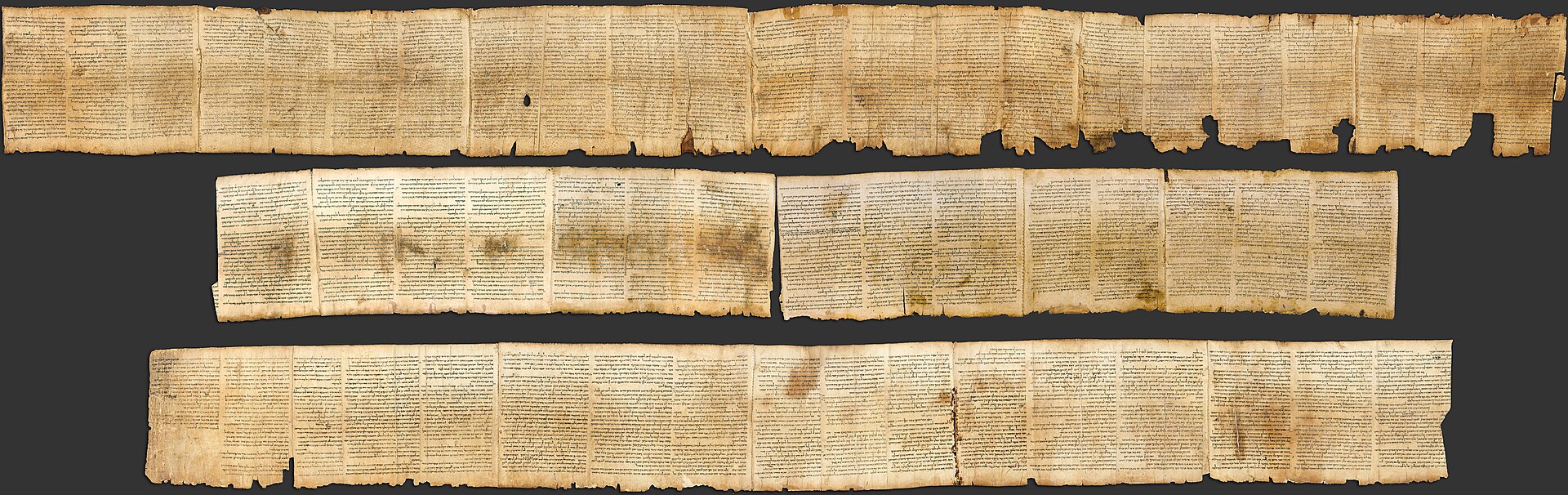
| Isaiahincl. Isaiah 53 | ✓ Yes — Great Isaiah Scroll, complete, ~125 BCE | ~1,000 yrs | ~95% word-for-word | Low | Very low | Isa 53 = 166 words, ~17 letters in doubt — mostly spelling (+ "light" in v.11). Complete in Hebrew and Greek before Christ. |
| Psalm 22the "pierced" psalm | ✓ Yes — 4QPsf ~50 BCE + Nahal Hever ~50 CE | ~1,000 yrs | ~99% (1 notable variant) | Low | Very low | Matches the MT except v.16: "pierced/dug" (DSS + Greek) vs "like a lion" (medieval Hebrew). That variant is pre-Christian — so it can't be a Christian edit either way. |
| Daniel 9prayer + 70 Weeks | ✓ Yes — Hebrew 4QDanᵉ ~50 BCE (9:12–17); Greek P967 ~210 CE (incl. 9:24–27) | ~1,000 yrs | ~99% where preserved | Low–Mod. | Low | Hebrew 9:12–17 matches the MT; 9:24–27 isn't preserved in any Hebrew scroll (it survives in Greek). Greek Daniel has two editions (Old Greek vs Theodotion) — the biggest "editing" story here. |
| TorahGenesis–Deuteronomy | ✓ Yes — Hebrew & Greek from ~250 BCE | ~1,000 yrs | ~98% | Low–Mod. | Very low | Mostly proto-Masoretic; a few copies expand/harmonize (paleo-Exodus, Samaritan type). Core text unchanged. |
| Jeremiahhonest contrast | ✓ Yes — 4QJerᵃ (long) & 4QJerᵇ (short), ~200 BCE | ~1,000 yrs | ~87% (1 edition ~⅛ longer) | High | Low | The clearest case of real editing: a short (Greek) and a long (Hebrew) edition both circulated in antiquity. Editorial growth — not doctrinal forgery; both are ancient and Jewish. |
| Whole Old Testamentoverall | ✓ Yes — ~2,000 manuscripts, 3rd c. BCE onward | ~1,000 yrs | ~98% consonantal (Tov) | Low | Very low | Three independent streams — Hebrew (Masoretic), Greek (Septuagint), Dead Sea Scrolls — converge. No single party could have altered all three. |
▸ Click each passage to expand the in-depth consistency estimate, why it holds, and the independent witnesses — in different languages, lands and cultures — that carry the same text. Badge key: Independent = its own text-line · From Greek = a daughter translation of the Septuagint (shows geographic spread, not a separate source) · Quotation.
Psalm 22— ≈99% consistent · the "pierced" reading testified in 4 languages across 4 lands▸
Why it holds
- Four languages, four regions independently carry the psalm — Hebrew (Judea), Greek (Egypt), Syriac (Syria), Latin (Rome/N. Africa).
- Three of the oldest version-lines read "pierced" (Greek, Syriac, Latin) — centuries before the medieval Hebrew read "lion." The reading is demonstrably pre-Christian.
- The New Testament independently quotes Psalm 22 at the crucifixion ("My God, my God…"; soldiers casting lots) — a separate 1st-century line.
Who independently testifies — different lands, cultures, languages
| Witness | Language | Place / culture | Date | What it reads | Source-line |
|---|---|---|---|---|---|
| Nahal Hever (5/6ḤevPs) | Hebrew | Judean Desert | ~50 CE | v.16 כארו "pierced/dug" | Independent |
| 4QPsf (Qumran) | Hebrew | Qumran, Judea | ~50 BCE | Ps 22 (v.16 damaged) | Independent |
| Septuagint (Ps 21) | Greek | Alexandria, Egypt | ~2nd c. BCE | ὤρυξαν "they dug/pierced" | Independent |
| Peshitta | Syriac | Edessa / Syria | ~2nd c. CE | "they pierced" | Independent* |
| Vetus Latina / Vulgate | Latin | Rome / N. Africa | 2nd–4th c. CE | "foderunt" (they pierced) | From Greek |
| Masoretic (Aleppo / Leningrad) | Hebrew | Tiberias, Galilee | ~925–1008 CE | v.16 כארי "like a lion" | Independent |
| Matt 27:46 · John 19:24 | Greek | (NT) | ~1st c. CE | quotes Ps 22 (forsaken; garments/lots) | Quotation |
Honest note: the Latin/Coptic lines descend from the Greek, so they aren't fully independent of it — but Hebrew, Greek, and (largely) Syriac are three genuinely independent streams, and they converge. The one divergence (MT "lion") is itself ancient, so neither reading is a late invention.
Isaiah— ≈95% word-for-word (≈99.5% by meaning) · Hebrew + Greek + Aramaic + Syriac agree▸
Why it holds
- ~21 Hebrew copies of Isaiah were found at Qumran alone — the most-attested prophet there.
- In 53:11 the Qumran Hebrew (1QIsaᵃ) and the Greek (LXX) independently agree on "he shall see light" — two separate streams against the medieval Hebrew.
- An independent Jewish Aramaic line (Targum Jonathan) carries Isaiah too — and reads chapter 53 messianically.
Who independently testifies
| Witness | Language | Place / culture | Date | Attests | Source-line |
|---|---|---|---|---|---|
| Great Isaiah Scroll (1QIsaᵃ) | Hebrew | Qumran, Judea | ~125 BCE | complete Isaiah incl. 53 | Independent |
| 1QIsaᵇ + ~19 more 4QIsa copies | Hebrew | Qumran, Judea | 2nd–1st c. BCE | Isaiah (closer to MT) | Independent |
| Septuagint Isaiah | Greek | Egypt | ~140 BCE | Isaiah incl. 53 ("light") | Independent |
| Targum Jonathan | Aramaic | Jewish (Babylon/Palestine) | early centuries CE | Aramaic Isaiah; 53 = Messiah | Independent |
| Peshitta | Syriac | Syria | ~2nd c. CE | Isaiah | Independent* |
| Vulgate (Jerome, from Hebrew) | Latin | Bethlehem | ~400 CE | Isaiah | Independent* |
Honest note: "~17 letters in Isa 53" is a popular count (disputed in detail), but the chapter is strikingly stable; the real headline is that complete Isaiah exists in Hebrew and Greek before Christ.
Daniel 9— ≈99% where preserved · the 70 Weeks carried in Greek, Syriac, Latin & Hebrew▸
Why it holds
- Daniel was copied heavily — 8 manuscripts at Qumran, more than most Bible books.
- The 70-Weeks prophecy is carried independently in Greek (Old Greek + Theodotion), Syriac, Latin, and the Hebrew Masoretic — all converging on the same 490-year schema.
- The oldest Daniel copy (4QDanᶜ, ~125 BCE) sits within ~50 years of the book's critical date — little room for legendary growth.
Who independently testifies
| Witness | Language | Place / culture | Date | Attests | Source-line |
|---|---|---|---|---|---|
| 4QDanᵉ | Hebrew | Qumran, Judea | ~50 BCE | Dan 9:12–17 (prayer) | Independent |
| Old Greek (Papyrus 967) | Greek | Egypt | ~210 CE | Daniel incl. 9:24–27 (70 Weeks) | Independent |
| Theodotion | Greek | Jewish reviser | ~2nd c. CE | Daniel (the dominant Greek) | Independent |
| Peshitta | Syriac | Syria | ~2nd c. CE | Daniel incl. ch. 9 | Independent* |
| Vulgate (uses Theodotion) | Latin | Bethlehem | ~400 CE | Daniel incl. ch. 9 | From Greek |
| Masoretic | Hebrew/Aram. | Tiberias | ~925–1008 CE | complete Daniel 9 | Independent |
Honest note: Daniel is the one passage here with a real two-edition Greek complication — stated plainly. But the 70-Weeks text is consistent across every version that preserves it.
Torah— ≈98% · four independent lines (Jewish, Samaritan, Greek, Aramaic) converge▸
Who independently testifies
| Witness | Language | Place / culture | Date | Attests | Source-line |
|---|---|---|---|---|---|
| Dead Sea Torah scrolls | Hebrew | Qumran, Judea | 3rd c. BCE–1st CE | Torah (mostly proto-MT) | Independent |
| Samaritan Pentateuch | Hebrew | Samaritans, Mt Gerizim | text ancient | Torah — separate Hebrew line | Independent |
| Septuagint Pentateuch | Greek | Alexandria, Egypt | ~250 BCE | Torah | Independent |
| Targum Onkelos | Aramaic | Jewish | early centuries CE | Aramaic Torah | Independent |
| Masoretic | Hebrew | Tiberias | ~925–1008 CE | Torah | Independent |
Honest note: some Qumran/Samaritan copies expand (harmonizing pluses), which is why editing is Low–Moderate — but the core wording is stable across all four independent lines.
Jeremiah— the honest contrast: ≈87% · two genuine editions (short & long)▸
Why it's still not "tampering"
- Both editions are ancient and Jewish — and the Dead Sea Scrolls contain both, proving the Greek short form is a real Hebrew edition, not Greek abridgment.
- The divergence is growth/arrangement (a longer edition adding headings and expansions), not a changed message.
The two families
| Witness | Language | Edition | Date | Source-line |
|---|---|---|---|---|
| 4QJerᵇ | Hebrew | Short (= LXX) | ~2nd c. BCE | Independent |
| Septuagint Jeremiah | Greek | Short (~1/8 shorter) | 2nd c. BCE | Independent |
| 4QJerᵃ | Hebrew | Long (= MT) | ~200 BCE | Independent |
| Masoretic | Hebrew | Long | ~925–1008 CE | Independent |
Included deliberately for brutal honesty — this is what a book that was edited looks like, and even here it's editorial, not doctrinal.
Whole OT— ≈98% consonantal · up to 7 independent streams cross-check each other▸
The independent streams
| Stream | Language | People / place | Covers | Source-line |
|---|---|---|---|---|
| Masoretic Text | Hebrew | Rabbinic Jews, Tiberias | whole OT | Independent |
| Dead Sea Scrolls | Hebrew/Aram. | Qumran sect, Judea | most of the OT | Independent |
| Samaritan Pentateuch | Hebrew | Samaritans, Gerizim | Torah | Independent |
| Septuagint | Greek | Hellenistic Jews, Egypt | whole OT | Independent |
| Targums | Aramaic | Jewish | most of the OT | Independent |
| Peshitta | Syriac | Syriac Christians/Jews | whole OT | Independent* |
| Vetus Latina / Vulgate | Latin | Western church | whole OT | From Greek / Hebrew |
Honest note: some of these descend from others (the Latin partly from the Greek), so they aren't all fully independent — but at least four lines (Hebrew MT, Samaritan Hebrew, Greek, Aramaic) are genuinely separate, and they converge. *Peshitta = largely from Hebrew, with some Greek influence.
- Professional scribes copied under strict rules — counting letters and lines, checking each column against the exemplar.
- Many independent copies, from different places and centuries, agree — they could not all have colluded.
- "Late" doesn't mean "changed": the 4th-c. codices turned out to be faithful copies of 2nd-c. exemplars (Papyrus 75 → Vaticanus proved it directly).
- Three independent streams converge — the Hebrew (Masoretic), the Greek (Septuagint), and the Dead Sea Scrolls — a built-in cross-check no forger could rig.
The other Jewish Bibles — how stable is the Hebrew?
The "other Jewish Bible" is the Masoretic Text (MT) — the official Hebrew Bible finalized by Jewish scribes (the Masoretes) between about the 7th and 10th centuries CE (the Aleppo Codex, ~925 CE; the Leningrad Codex, 1008 CE). Its stability is staggering:
- The Dead Sea Scrolls are ~1,000 years older than those Hebrew codices — yet the proto-Masoretic scrolls match them at ~98% of the consonants. A thousand years of copying changed almost nothing.
- The Samaritan Pentateuch (the Samaritans' independent Hebrew Torah) differs from the Jewish MT in ~6,000 details — but the vast majority are spelling/grammar, with only a handful doctrinally meaningful.
- So across the Jewish witnesses — Masoretic, Samaritan, and the Dead Sea Scrolls — plus the Greek Septuagint, the text lands in the same place again and again.
- No single global percentage exists. Each figure above is a specific comparison; the result shifts with what you count (letters vs words, whether spelling counts).
- The biggest real exception is Daniel: the codices use the later Theodotion version, while the older Papyrus 967 preserves the Old Greek — here the copies genuinely differ. Jeremiah likewise circulated in a short (Greek) and a long (Hebrew) edition.
- Septuagint-vs-Masoretic is a translation compared to an original, so it's measured differently than copy-to-copy agreement — high, but not the same kind of number.
📖So what is it, exactly?
- The name: "Septuagint" is Latin for seventy (written LXX = 70), from a tradition that ~70 Jewish elders made the translation.
- The thing itself: the Hebrew Scriptures rendered into Koine Greek — the common language of the ancient Mediterranean. For millions of Jews who spoke Greek and no longer read Hebrew, this was their Bible.
- It's a translation, not a different religion's book: same Scriptures, new language — like having an ancient "Greek edition" of the Old Testament.

🧐"Did they literally find a whole Bible?"

📚What's actually inside it?
Part 1 — every book of the Hebrew Bible (the 39 books in your Old Testament), grouped like this:
Law (5)
History
Poetry & Wisdom
Prophets
Part 2 — about 10 extra books the Septuagint added that are not in the Hebrew Bible (called the deuterocanon or "Apocrypha"):
- Tobit & Judith — Jewish short stories of faith and courage.
- 1 & 2 Maccabees — the real history of the Jewish revolt (origin of Hanukkah).
- Wisdom of Solomon & Sirach (Ecclesiasticus) — wisdom writings.
- Baruch & the Letter of Jeremiah — from Jeremiah's circle.
- Extra parts of Esther and Daniel — e.g. Susanna, and Bel and the Dragon.
- In the biggest copies: 1 Esdras, 3–4 Maccabees, Prayer of Manasseh, Psalm 151.
| Tradition | OT books | Includes the extra (Septuagint) books? |
|---|---|---|
| Jewish & Protestant | 39 | No — Hebrew canon only |
| Roman Catholic | 46 | Yes — 7 extra books + additions to Esther & Daniel |
| Eastern Orthodox | ~49 | Yes — the Catholic set plus a few more |
🏛️Where & when did it come from?
- The place: Alexandria, home to a huge Greek-speaking Jewish community and the famous Library.
- The story (Letter of Aristeas): King Ptolemy II (285–246 BCE) asked Jerusalem for scholars; 72 elders came and translated the Law. Later legend said they worked separately yet produced identical texts — a pious embellishment.
- The history: the Torah was translated ~250 BCE; the rest followed through the 2nd century BCE.

🎯Why it matters — the evidence
- Of the ~300 Old Testament quotations in the New Testament, roughly two-thirds follow the Septuagint — often word-for-word.
- One detailed count (Archer & Chirichigno): the NT matches the Septuagint in 340 places vs the Hebrew in only 33.
- So when the Gospels and Paul say "it is written," they're usually quoting the Greek Old Testament.
Because the whole Greek OT predates Jesus, nobody could have edited these readings in later to "fit" Christianity:
- Isaiah 7:14 — the Septuagint says παρθένος = "virgin" (the Hebrew word just means "young woman"). Matthew 1:23 quotes the Greek.
- Psalm 22:16 — the Septuagint says ὤρυξαν = "they pierced / dug" my hands and feet — centuries before the medieval Hebrew read "like a lion."
- Isaiah 53 — the whole Suffering Servant prophecy ("pierced for our transgressions") stands complete, in Greek, long before Christ.
- A Hebrew Jeremiah from Qumran (4QJerᵇ) matches the Septuagint's shorter edition — proving the Greek followed a real Hebrew text.
- A Hebrew Samuel (4QSamᵃ) repeatedly agrees with the Greek against the later standard Hebrew.
- So the Septuagint isn't sloppy paraphrase — it preserves genuinely ancient readings.
⚖️Being honest about it
- It's a collection, not one book — many translators over ~250 years; some books rendered literally, some freely.
- It differs from the Hebrew in real places — Jeremiah is ~1/8 shorter, the Psalms are numbered differently, Samuel and Daniel diverge. Some of this reflects a different ancient Hebrew original (confirmed by the Scrolls), not mistakes.
- Its oldest complete copies are 4th-century — the translation is centuries older, but the whole bound Bibles are from the 300s AD.
- Later Jewish revisions (Aquila, Symmachus, Theodotion) pulled the Greek back toward the Hebrew; Theodotion's Daniel later replaced the original Greek Daniel in most Bibles.
- The extra books' status is genuinely disputed between Jews/Protestants and Catholics/Orthodox. This page describes that difference — it doesn't settle it.
The Septuagint is the Old Testament in Greek, made by Jews before Jesus. It holds the whole Hebrew Bible plus about ten extra books; no one found a complete copy from 250 BCE, but complete bound Bibles survive from the 300s AD and the full text is secured by ~2,000 manuscripts. It gave the early Church its Scriptures, supplied most of the New Testament's Old Testament quotes, and stands as proof that the great messianic prophecies were already in Jewish hands, in two languages, before Christ.
Go deeper: the Evidence Ledger (every manuscript ≤300 AD, sortable) · the Psalm 22 "pierced" study.
Dating per standard scholarship (Seeligmann; the Sirach prologue c. 132 BCE). NT-quote counts: Archer & Chirichigno. Images: Wikimedia Commons (public domain). Legend separated from history; canon differences described, not adjudicated. Local study document.