 GOD EXAMINEDBible← Back to The Proof
Jude is verifiable precisely by its modesty: the author calls himself merely ‘brother of James’ rather than claiming the grander ‘brother of Jesus,’ and he quotes 1 Enoch (Jude 14-15) — choices a later forger hunting for authority would avoid, marking it an authentic Palestinian-Jewish voice.
Paul corroborates the family Jude belonged to: he speaks of ‘the brothers of the Lord’ as known, traveling missionaries (1 Cor 9:5) and names James the Lord’s brother directly (Gal 1:19) — the very James whose brother Jude declares himself to be. Jesus’ family, Jude included, stands inside Paul’s firsthand knowledge of the 50s.
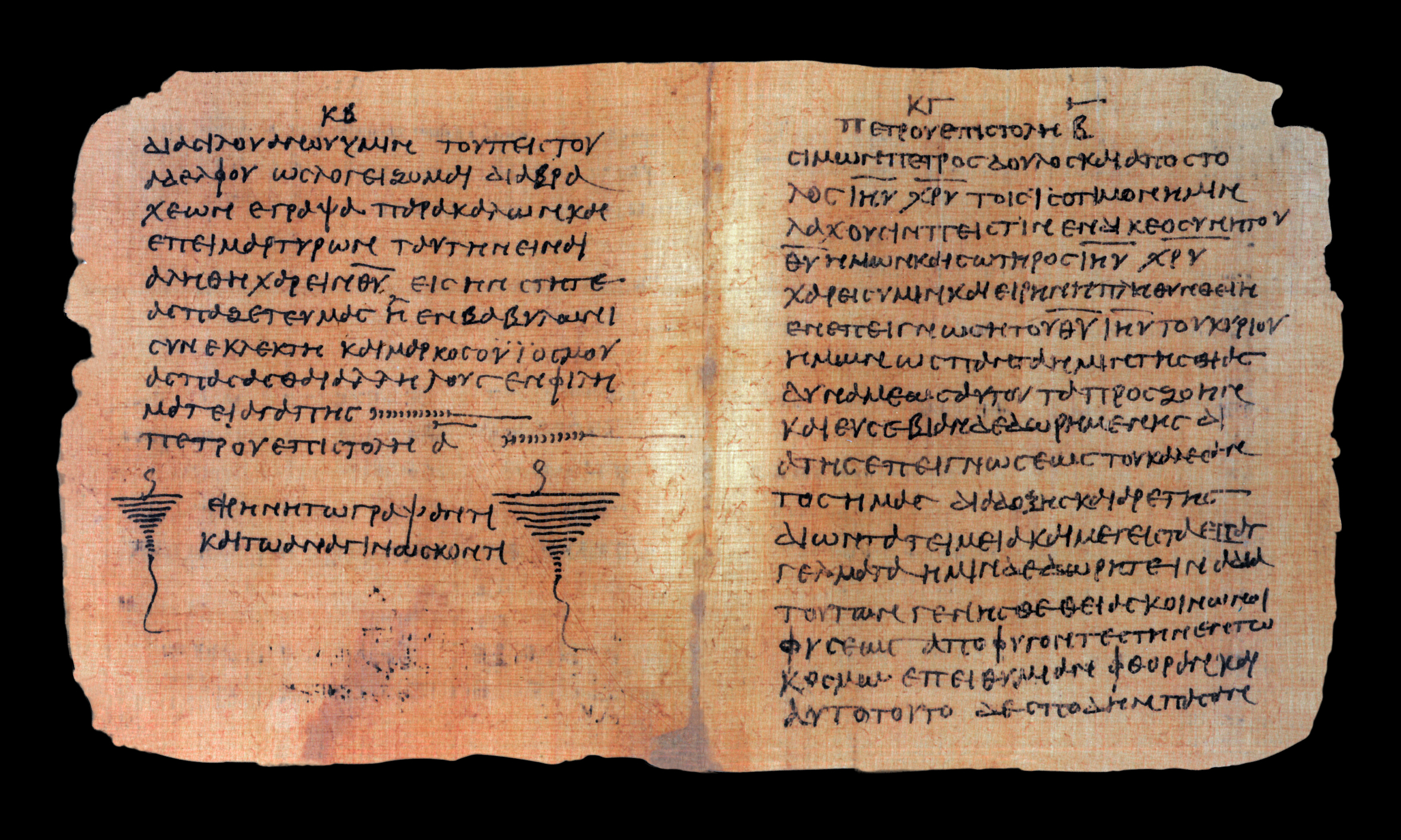
On dating: Jude is early and Jewish (c.50-80); 2 Peter appears to draw on it; the Muratorian Fragment and Tertullian accept it; and P72 preserves it by the 3rd-4th century. Because its canonical standing was contested in the East, we grade it Mixed.
Film stills are copyrighted, so these are listed as references rather than reproduced here.

Click any ▸ Scripture reference to expand the verse (World English Bible).
| The point | The telling detail | Reference |
|---|---|---|
| Jude was one of Jesus' four named brothers, giving him lifelong domestic access to Jesus' family. | Mark 6:3 records the Nazareth townspeople naming the family: 'Is not this the carpenter, the son of Mary and brother of James and Joses and Judas and Simon? And are not his sisters here with us?' Matthew 13:55 gives the same roster ('James and Joseph and Simon and Judas'). The 'Judas'/'Jude' of the epistle is drawn from this list. | Mark 6:3Isn’t this the carpenter, the son of Mary, and brother of James, Joses, Judah, and Simon? Aren’t his sisters here with us?” They were offended at him. (WEB) Matt 13:55Isn’t this the carpenter’s son? Isn’t his mother called Mary, and his brothers, James, Joses, Simon, and Judas? (WEB) |
| The Gospels candidly record that Jesus' own brothers did NOT believe in him during his ministry — an embarrassing detail a family author would not invent. | John 7:5 states flatly, 'For not even his brothers believed in him.' This meets the criterion of embarrassment: the tradition is not sanitized family public-relations, which strengthens its claim to be reporting fact. | John 7:5For even his brothers didn’t believe in him. (WEB) |
| After the resurrection the brothers are found among the very earliest believers. | Acts 1:14 places the apostles in prayer 'together with the women and Mary the mother of Jesus, and with his brothers.' The unbelief of John 7:5 has become allegiance; Jude belongs to this founding circle. | Acts 1:14All these with one accord continued steadfastly in prayer and supplication, along with the women, and Mary the mother of Jesus, and with his brothers. (WEB) |
| Paul, writing in the 50s, treats 'the brothers of the Lord' as a recognized, active class of missionaries. | 1 Cor 9:5 — 'Do we not have the right to be accompanied by a believing wife, as do the other apostles and the brothers of the Lord and Cephas?' Jesus' brothers were known, married, traveling workers of the mission — a public group, not a legend. | 1 Cor 9:5Have we no right to take along a wife who is a believer, even as the rest of the apostles, and the brothers of the Lord, and Cephas? (WEB) |
| The event that turned the family's unbelief into leadership was a resurrection appearance to Jude's own brother James. | 1 Cor 15:7 — 'Then he appeared to James.' James then leads the Jerusalem church (Acts 15:13) and is called by Paul 'James the Lord's brother' (Gal 1:19). Jude's letter derives its weight precisely by attaching itself to this James. | 1 Cor 15:7Then he appeared to James, then to all the apostles, (WEB) Gal 1:19But of the other apostles I saw no one, except James, the Lord’s brother. (WEB) |
| Jude's own grandsons were still remembered church figures at the end of the first century — a preserved family memory of a real man. | Hegesippus (quoted by Eusebius) reports that the grandsons of 'Jude, who is said to have been the Lord's brother according to the flesh,' were hauled before Domitian as descendants of David, displayed the calloused hands of working farmers, described their small plot, and were released as harmless. This anchors Jude as a historical person with a traceable, remembered line. | Hegesippus via Eusebius, HE 3.19-20Eusebius, reporting Hegesippus, writes: 'There were still living of the family of the Lord the grandchildren of Jude, who is said to have been the Lord's brother according to the flesh.' Denounced to Domitian as descendants of David, they confessed their Davidic descent but said they owned only a small plot of some thirty-nine plethra of land, which they farmed with their own hands; they showed the emperor the callouses on their hands as proof of their labor. Seeing they were poor working men who expected only a heavenly kingdom, Domitian dismissed them as harmless. Eusebius, *Church History* (HE) 3.19–20, drawing on Hegesippus — tr. NPNF2 vol. 1 (public domain). Opening sentence quoted; remainder faithfully summarized. |
| The letter breathes the Palestinian-Jewish world its author grew up in. | It cites Jewish apocalyptic literature (1 Enoch, the Assumption of Moses) as familiar reference points and reasons entirely through Hebrew-Scripture types — Cain, Balaam, Korah, Sodom, the wilderness generation. This is the mental furniture of a Jewish family from Galilee/Judea, not of a later Hellenistic writer. | Jude 5-11Now I desire to remind you, though you already know this, that the Lord, having saved a people out of the land of Egypt, afterward destroyed those who didn’t believe. Angels who didn’t keep their first domain, but deserted their own dwelling place, he has kept in everlasting bonds under darkness for the judgment of the great day. Even as Sodom and Gomorrah, and the cities around them, having, in the same way as these, given themselves over to sexual immorality and gone after strange flesh, are shown as an example, suffering the punishment of eternal fire. Yet in the same way, these also in their dreaming defile the flesh, despise authority, and slander celestial beings. But Michael, the archangel, when contending with the devil and arguing about the body of Moses, dared not bring against him an abusive condemnation, but said, “May the Lord rebuke you!” But these speak evil of whatever things they don’t know. They are destroyed in these things that they understand naturally, like the creatures without reason. Woe to them! For they went in the way of Cain, and ran riotously in the error of Balaam for hire, and perished in Korah’s rebellion. (WEB) |
| Find / site | What it confirms | Reference |
|---|---|---|
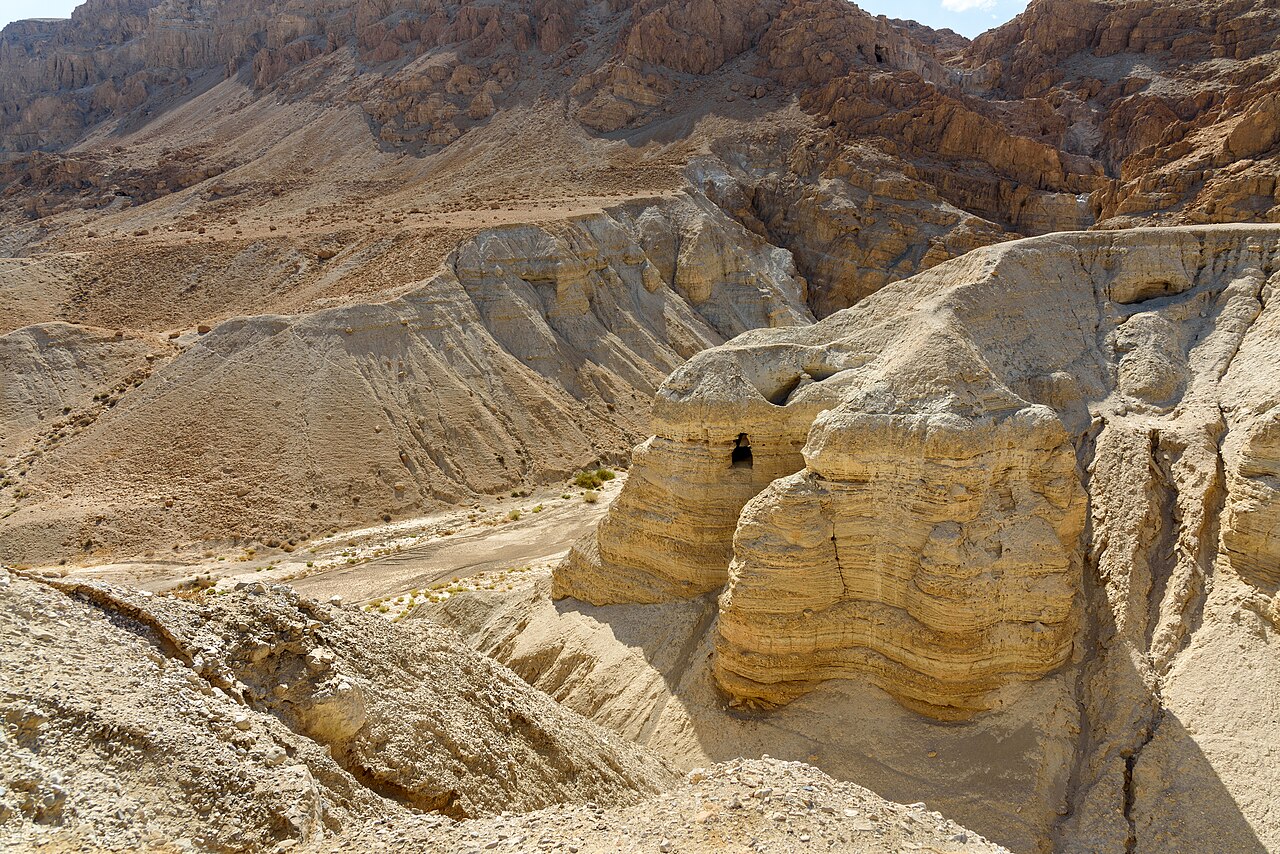
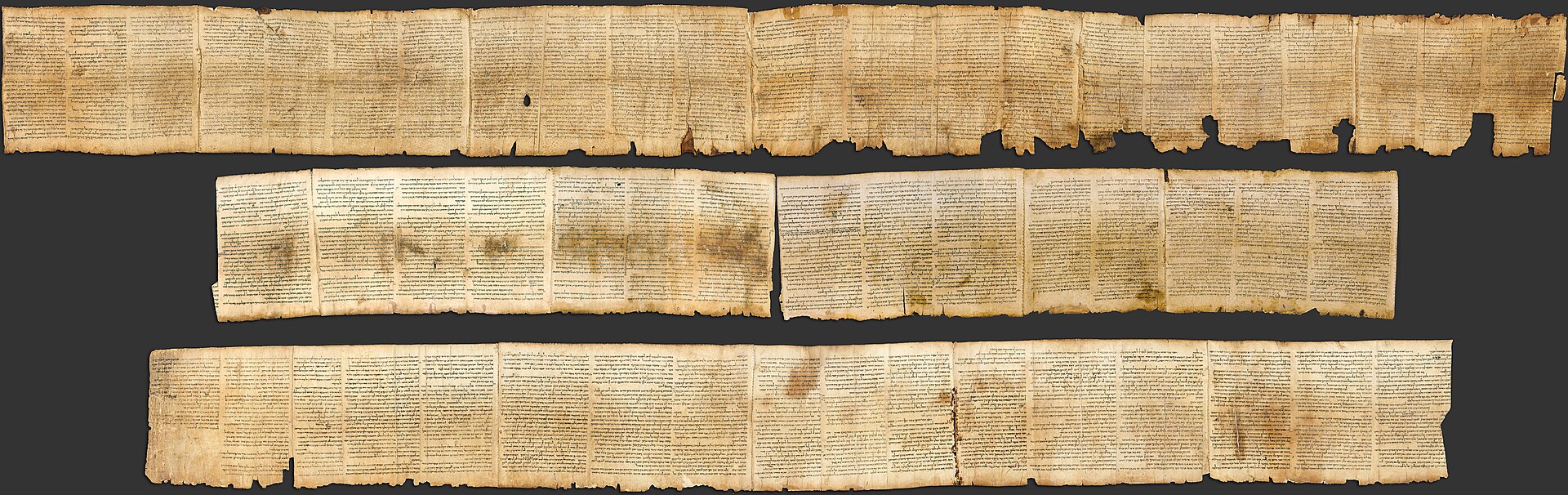
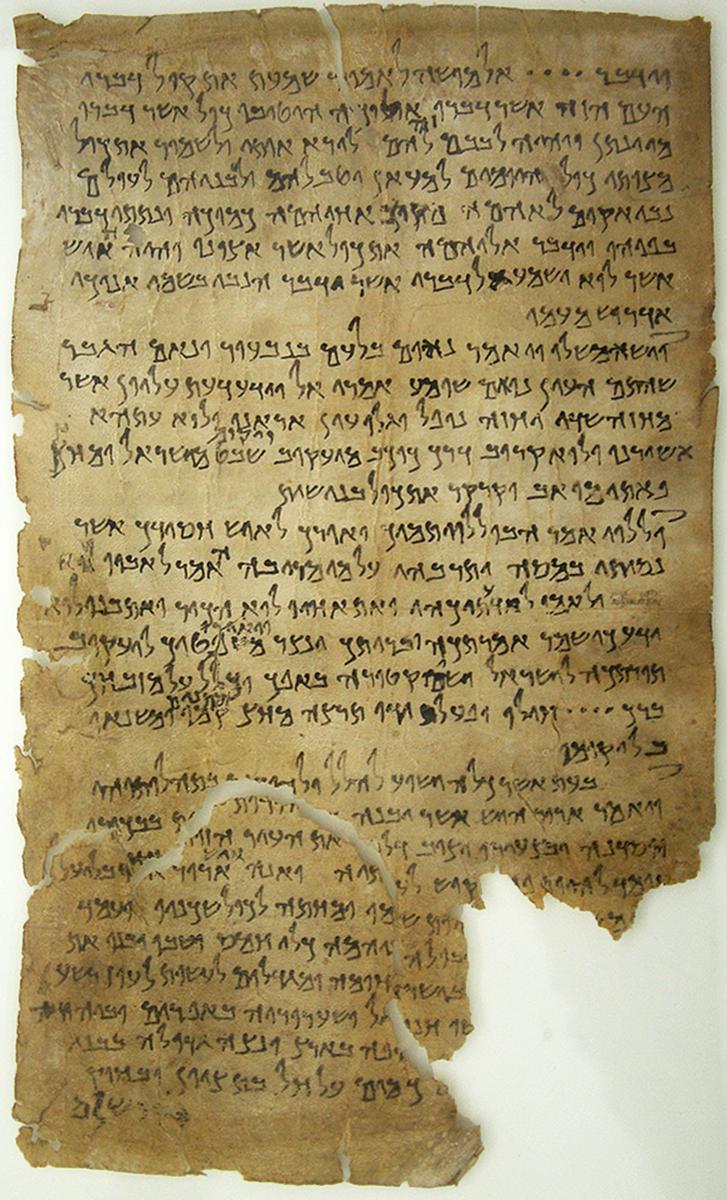
| Aramaic manuscripts of 1 Enoch among the Dead Sea Scrolls (Cave 4 — 4QEn = 4Q201-4Q212), edited by J.T. Milik. | That 1 Enoch genuinely existed and circulated in Aramaic in pre-Christian Palestinian Judaism — exactly the literature Jude 14-15 quotes (1 Enoch 1:9). It plants the letter's most distinctive feature in a real, datable Jewish milieu rather than a late invention, matching an author raised in that setting. | 4QEn (4Q201-4Q212), Qumran Cave 4; J.T. Milik, 'The Books of Enoch: Aramaic Fragments of Qumrân Cave 4' (1976)These are the Aramaic fragments of 1 Enoch recovered from Qumran Cave 4 (sigla 4Q201–4Q212), with the oldest copies dating to roughly the early-to-mid second century BC. They preserve substantial portions of 1 Enoch — including material from the opening oracle (1 Enoch 1:9) that Jude 14–15 quotes — proving the book circulated in Aramaic in pre-Christian Palestinian Judaism. They are the earliest physical witnesses to the very work Jude treats as prophecy. 4QEnoch fragments, Qumran Cave 4; critical edition J.T. Milik, *The Books of Enoch: Aramaic Fragments of Qumrân Cave 4* (Oxford, 1976). Factual description of the manuscripts; the modern edition's text is not reproduced. |
| First-century Jewish dwellings and rock-cut tombs at Nazareth (2009 Israel Antiquities Authority excavation under Yardenna Alexandre; Ken Dark's study of the 'Sisters of Nazareth' house). | Nazareth was a real, inhabited Jewish agricultural village in the early first century — the hometown where the neighbors name Jesus' brothers 'James, Joses, Judas and Simon' (Mark 6:3). It grounds the physical setting of the family Jude belonged to. | Yardenna Alexandre, IAA Nazareth excavation 2009; Ken Dark, 'The Sisters of Nazareth Convent' (2020)In 2009 an Israel Antiquities Authority excavation directed by Yardenna Alexandre uncovered a first-century Jewish house in Nazareth, along with associated rock-cut tombs and pottery, showing the site was an inhabited Jewish agricultural village in the early first century. Ken Dark's separate long-term study of the 'Sisters of Nazareth' site documented a further first-century dwelling and tombs beneath the convent. Together they establish Nazareth as a real, modest Jewish village of Jesus' day — the setting of the family to which Jude belonged. IAA Nazareth excavation (2009), dir. Yardenna Alexandre; Ken Dark, *The Sisters of Nazareth Convent: A Roman-period, Byzantine and Crusader site in central Nazareth* (2020). Factual description; the modern study is not reproduced. |
| The onomastic (name-frequency) data recovered from first-century Jewish ossuaries and documents of Palestine (Tal Ilan's Lexicon, applied by Richard Bauckham). | The names of Jesus' brothers — Jacob (James), Joseph (Joses), Judas, Simon — are among the very most common male Jewish names in first-century Palestine, matching the regional distribution precisely. This 'name fingerprint' fits an authentic Palestinian family; a later Diaspora forger would be unlikely to reproduce it. | Tal Ilan, 'Lexicon of Jewish Names in Late Antiquity' (2002); Richard Bauckham, 'Jesus and the Eyewitnesses' (2006)Tal Ilan, *Lexicon of Jewish Names in Late Antiquity, Part I: Palestine 330 BCE–200 CE* (2002): a statistical catalogue of attested Jewish names showing that Simon, Joseph, Judas, and Jacob/James were among the most common male names in first-century Palestine. Richard Bauckham, *Jesus and the Eyewitnesses* (2006): applies this name-frequency data to argue the Gospels' names match an authentic Palestinian distribution that a later Diaspora forger would be unlikely to reproduce. |
| The 'James Ossuary' — a first-century limestone bone-box inscribed in Aramaic 'Ya'akov bar Yosef akhui di Yeshua' ('James son of Joseph, brother of Jesus'), surfaced 2002. | If authentic, it is a physical artifact naming exactly the family configuration the NT describes — a Jesus with a brother James (hence with brothers such as Jude). Honesty demands the caveat: its provenance is unknown, Oded Golan was tried for forgery and acquitted (2012) only on reasonable doubt, and scholars remain split on whether the 'brother of Jesus' clause is ancient. It is suggestive of Jude's family world, not probative. | James Ossuary; André Lemaire, BAR 2002; Israel v. Golan forgery verdict, Jerusalem District Court, 2012The James Ossuary is a first-century limestone bone-box carrying an Aramaic inscription: 'Ya'akov bar Yosef akhui di Yeshua' — 'James son of Joseph, brother of Jesus.' It surfaced on the antiquities market in 2002 with no documented find-spot. If authentic in full it names exactly the family configuration the New Testament describes (a Jesus with a brother James, hence with brothers such as Jude), but its unknown provenance and the contested authenticity of the 'brother of Jesus' clause make it suggestive rather than probative. First publicized by André Lemaire, *Biblical Archaeology Review* (Nov/Dec 2002). Owner Oded Golan was tried for forgery and acquitted in *Israel v. Golan* (Jerusalem District Court, 2012) on reasonable doubt; scholars remain divided on the inscription. |
| Ancient witness | What they say | Reference |
|---|---|---|
| The Muratorian Fragment (Muratorian Canon), c. 170-200, Western/Rome | Explicitly lists an epistle of Jude among the writings received in the catholic church ('epistola sane Iudae...') — one of the earliest canon lists, and it accepts Jude by name. | Muratorian Fragment, lines 68-69The Muratorian Fragment (c. 170–200) is the oldest known list of New Testament books, surviving in a 7th–8th-century Latin manuscript copied from a Greek original. Its canon list names Jude explicitly; in the standard public-domain translation (Tregelles, 1867), the relevant lines read: 'Moreover, the epistle of Jude, and two bearing the name of John, are counted (used) in the catholic [Church].' This places Jude among the received writings at a very early date in the West. Muratorian Fragment (Muratorian Canon), c. 170–200, lines 68–69; Latin text rendered in the public-domain translation of S.P. Tregelles (1867). |
| Tertullian of Carthage, c. 200 | Cites and defends Jude — and does so precisely because Jude quotes Enoch: he argues the book of Enoch should be honored since 'Enoch possesses a testimony in the Apostle Jude,' treating Jude as apostolic Scripture. | Tertullian, De cultu feminarum 1.3Defending the Book of Enoch, Tertullian appeals to Jude's use of it: 'To these considerations is added the fact that Enoch possesses a testimony in the Apostle Jude.' He thereby treats the Epistle of Jude as apostolic authority whose citation vouches for Enoch. Tertullian, *On the Apparel of Women* (De cultu feminarum) 1.3 — tr. ANF vol. 4 (Roberts-Donaldson, public domain). |
| Clement of Alexandria, c. 200 | Quotes and expounds Jude (e.g. Paedagogus 3.8) and, per Eusebius, wrote brief commentaries (Hypotyposes / the Latin Adumbrationes) on the catholic epistles 'not passing over the disputed books — I mean Jude and the rest' — treating Jude as authoritative. | Clement, Paedagogus 3.8; Adumbrationes in Ep. Judae; Eusebius HE 6.14.1Eusebius records that Clement treated Jude as Scripture: 'In the Hypotyposes, to sum up the matter briefly, he has given concise explanations of all the canonical Scriptures, not passing over even the disputed writings, — I mean the Epistle of Jude and the other catholic epistles, and the Epistle of Barnabas, and the so-called Apocalypse of Peter.' Clement also quotes Jude directly in his *Paedagogus* (3.8) and wrote running notes on the epistle preserved in the Latin *Adumbrationes*. Eusebius, *Church History* 6.14.1 — tr. NPNF2 vol. 1 (public domain); with Clement of Alexandria, *Paedagogus* 3.8 (quotes Jude) and the Latin *Adumbrationes in Epistolam Judae* (his commentary notes). Eusebius passage quoted; the other two described. |
| Origen, c. 230 | Praises Jude warmly — 'Jude wrote a letter of few lines, it is true, but one filled full of the powerful words of heavenly grace' — while elsewhere candidly noting that some doubted it. | Origen, Commentary on Matthew 10.17Origen praises the letter and names its author: 'And Jude wrote a letter of few lines, it is true, but filled with the healthful words of heavenly grace, who said in the preface, "Jude, the servant of Jesus Christ, and brother of James."' He treats Jude as authoritative Scripture, even while elsewhere noting that some doubted it. Origen, *Commentary on Matthew* 10.17 — tr. ANF vol. 9 (public domain). |
| Eusebius of Caesarea, c. 325 | Places Jude among the 'disputed' books (antilegomena), noting 'not many of the ancients have mentioned it,' yet reporting that it is nevertheless 'used publicly with the rest in most churches.' An honest witness to both the real dispute and the broad use. | Eusebius, HE 3.25.3; cf. HE 2.23.25In his catalogue of New Testament writings Eusebius places Jude among the disputed books: 'Among the disputed writings, which are nevertheless recognized by many, are extant the so-called epistle of James and that of Jude, also the second epistle of Peter, and those that are called the second and third of John, whether they belong to the evangelist or to another person of the same name.' He thus witnesses both the genuine dispute over Jude and its wide use. Eusebius, *Church History* 3.25.3 (the list of antilegomena / disputed books); cf. 2.23.25 — tr. NPNF2 vol. 1 (public domain). |
| Papyrus 72 (P72 = Bodmer VII-VIII), 3rd-4th century, with the manuscript title (inscriptio) | The earliest surviving copy of Jude preserves its complete text bound together with 1 and 2 Peter — physical proof that Jude circulated and was copied as Scripture very early, carrying its authorial title. This is also the codex that displays 2 Peter and Jude side by side, the two letters whose wording so heavily overlaps. | P72 (Bodmer VII-VIII), Bibliotheca BodmerianaPapyrus 72 (P72), part of the Bodmer Papyri (Bodmer VII–VIII), is a codex of the later 3rd or early 4th century and the earliest surviving copy of the Epistle of Jude. It preserves the complete text of Jude bound together with 1 and 2 Peter, carrying the letter's title (inscriptio). It demonstrates that Jude was copied and transmitted as Scripture very early, and it physically sets 2 Peter and Jude — the two heavily overlapping letters — side by side. P72 = Papyrus Bodmer VII–VIII, 3rd/4th century; Bibliotheca Bodmeriana (Fondation Martin Bodmer), Cologny-Geneva. |
Critical scholars (e.g. Bart Ehrman, and a long line of continental critics) argue Jude is probably pseudonymous, or at minimum too contested to secure the Lord's brother as its author. The steelman: (1) the book was genuinely disputed in the East — Eusebius lists it among the antilegomena and Jerome says 'very many' rejected it; (2) its competent Greek and tidy rhetorical structure look advanced for a Galilean laborer; (3) verse 17 — 'remember the predictions of the apostles of our Lord Jesus Christ' — seems to look BACK on the apostolic age as a bygone era, hinting at a later date and a writer using Jude's name; (4) 'brother of James' does not by itself prove the Lord's brother, since Judas and James were among the commonest Jewish names; (5) the quotation of the non-canonical 1 Enoch as genuine prophecy troubled ancients and moderns alike about the letter's reliability and origin.
Concede what is fair: Jude was truly disputed in the East, so unanimous early reception cannot be claimed; and the Greek is capable — though a bilingual Galilean near the trade routes of Sepphoris/Tiberias, or an amanuensis (as with 1 Peter), accounts for that. On verse 17, reminding readers of what the apostles 'told you' need not place the apostles in a distant past; Jude can write within their lifetime, recalling teaching his audience had personally heard. The decisive positive point is the one the skeptic must explain away: the letter's features argue AGAINST forgery, not for it. A pseudepigrapher manufacturing authority would claim 'brother of the Lord,' not the humbler 'brother of James' — and would avoid a citation (1 Enoch) that nearly kept the book out of the canon. Forgers reach for big names — Peter, Paul, John — not an obscure, non-apostolic brother. As Jerome frankly recorded (De viris illustribus 4), Jude was doubted precisely BECAUSE it quotes Enoch, 'yet by age and use it has gained authority and is counted among the Holy Scriptures' — the church kept a book it found awkward, which is what happens with a genuine document, not a convenient forgery. Add Hegesippus's report of Jude's remembered grandsons: the family line was real. Authenticity is the more probable reading, though certainty is beyond reach.
See also: the directory · the full roster · verified by outsiders · how we verify the NT.