 GOD EXAMINEDBible← Back to The Proof
Peter is the best-attested of the Twelve — the leading eyewitness — verifiable through the vivid Petrine detail preserved in Mark (his interpreter) and through his own remembered failure, the denial, which no inventor of a hero would fabricate.
Decisively, Paul personally vouches for him, writing within living memory: he spent fifteen days with Cephas in Jerusalem (Gal 1:18), names him first among the resurrection witnesses (1 Cor 15:5), lists him a ‘pillar’ of the church (Gal 2:9), notes he traveled with a believing wife (1 Cor 9:5), and even reports opposing him to his face at Antioch (Gal 2:11) — an embarrassing clash that proves Peter was a real, independent figure, not a legend.
On dating: Peter’s footprint is early and layered — Mark’s Gospel (his testimony at one remove) c.65-70; 1 Peter from ‘Babylon’ (Rome) in the early 60s; Paul’s references in the 50s; and 1 Clement (c.96) already recording his martyrdom. 2 Peter is the one genuinely disputed strand, which is why the writer as a whole is graded Mixed.
Film stills are copyrighted, so these are listed as references rather than reproduced here.

Click any ▸ Scripture reference to expand the verse (World English Bible).
| The point | The telling detail | Reference |
|---|---|---|
| Eyewitness of the Transfiguration as one of the inner circle of three | 2 Peter appeals explicitly to firsthand memory: 'we did not follow cleverly devised myths... but we were eyewitnesses of his majesty. For he received honor and glory from God the Father... and we ourselves heard this very voice borne from heaven, for we were with him on the holy mountain.' This is the strongest first-person eyewitness claim in the letters. | 2 Peter 1:16-18For we did not follow cunningly devised fables, when we made known to you the power and coming of our Lord Jesus Christ, but we were eyewitnesses of his majesty. For he received from God the Father honor and glory, when the voice came to him from the Majestic Glory, “This is my beloved Son, in whom I am well pleased.” We heard this voice come out of heaven when we were with him on the holy mountain. (WEB) Mark 9:2-8After six days Jesus took with him Peter, James, and John, and brought them up onto a high mountain privately by themselves, and he was changed into another form in front of them. His clothing became glistening, exceedingly white, like snow, such as no launderer on earth can whiten them. Elijah and Moses appeared to them, and they were talking with Jesus. Peter answered Jesus, “Rabbi, it is good for us to be here. Let’s make three tents: one for you, one for Moses, and one for Elijah.” For he didn’t know what to say, for they were very afraid. A cloud came, overshadowing them, and a voice came out of the cloud, “This is my beloved Son. Listen to him.” Suddenly looking around, they saw no one with them any more, except Jesus only. (WEB) |
| Admitted to the raising of Jairus's daughter when others were shut out | Mark records that Jesus 'allowed no one to follow him except Peter and James and John the brother of James' — an incidental detail of exclusive access that only an insider would preserve, and one that runs through the very scenes Mark reports most vividly. | Mark 5:37He allowed no one to follow him, except Peter, James, and John the brother of James. (WEB) |
| One of the three taken deeper into Gethsemane | 'And he took with him Peter and James and John, and began to be greatly distressed and troubled.' The passion-week agony is remembered from the vantage point of the small group Peter belonged to — the same trio at the Transfiguration and the raising. | Mark 14:33He took with him Peter, James, and John, and began to be greatly troubled and distressed. (WEB) |
| Called as a working fisherman on the Sea of Galilee | 'Passing alongside the Sea of Galilee, he saw Simon and Andrew the brother of Simon casting a net into the sea, for they were fishermen.' The trade is not incidental color — fishing imagery and Galilean lakeside geography saturate the material attributed to Peter's circle. | Mark 1:16-18Passing along by the sea of Galilee, he saw Simon and Andrew the brother of Simon casting a net into the sea, for they were fishermen. Jesus said to them, “Come after me, and I will make you into fishers for men.” Immediately they left their nets, and followed him. (WEB) |
| Peter's testimony frames the Gospel of Mark — the 'inclusio of eyewitnesses' | Richard Bauckham observes that Peter is the first disciple named in Mark (1:16) and the last named (16:7, 'tell his disciples and Peter'), bracketing the narrative — the ancient literary device marking the source who stands behind the account. Mark also reports a disproportionate share of Petrine scenes. | Mark 1:16Passing along by the sea of Galilee, he saw Simon and Andrew the brother of Simon casting a net into the sea, for they were fishermen. (WEB) ▸ source textRichard Bauckham, *Jesus and the Eyewitnesses: The Gospels as Eyewitness Testimony* (Eerdmans, 2006): argues the Gospels preserve named eyewitness testimony, and that Mark is bracketed by an 'inclusio of eyewitness testimony' — Peter being the first disciple named (1:16) and the last named (16:7) — a literary device marking Peter as the Gospel's principal source. |
| Writing from Rome with Mark beside him — matching the external tradition | 'She who is at Babylon... sends you greetings, and so does Mark, my son.' 'Babylon' is read as a coded name for Rome, and Mark's presence dovetails exactly with the independent tradition (Papias, Irenaeus, Clement of Alexandria) that Mark recorded Peter's preaching at Rome — an incidental convergence, not a borrowed one. | 1 Peter 5:13She who is in Babylon, chosen together with you, greets you; and so does Mark, my son. (WEB) |
| Find / site | What it confirms | Reference |
|---|---|---|
| The House of Peter at Capernaum | A modest first-century basalt insula-house, singled out and venerated from the earliest period: its central room was plastered (unique in the town), later enclosed by a first-century domus-ecclesia, and finally covered by an octagonal Byzantine church built precisely over it. Graffiti scratched into the plaster invoke Jesus and (probably) Peter. It confirms Peter had a home in Capernaum where Jesus stayed (Mark 1:29-31; 2:1) and that the site was remembered as his from living memory. | Franciscan excavations, Virgilio Corbo & Stanislao Loffreda, from 1968A modest first-century basalt courtyard house (insula) at Capernaum, excavated by the Franciscans Virgilio Corbo and Stanislao Loffreda from 1968. One central room was uniquely plastered and, by the later first century, set apart as a house-church (domus ecclesia); in the Byzantine period an octagonal church was built directly over it. Plaster graffiti in several languages invoke Jesus and (probably) Peter, and the continuous veneration from the first century supports the tradition that this was Peter's home, where Jesus lodged (Mark 1:29-31). Franciscan (Studium Biblicum Franciscanum) excavations at Capernaum, directed by V. Corbo and S. Loffreda, from 1968. |
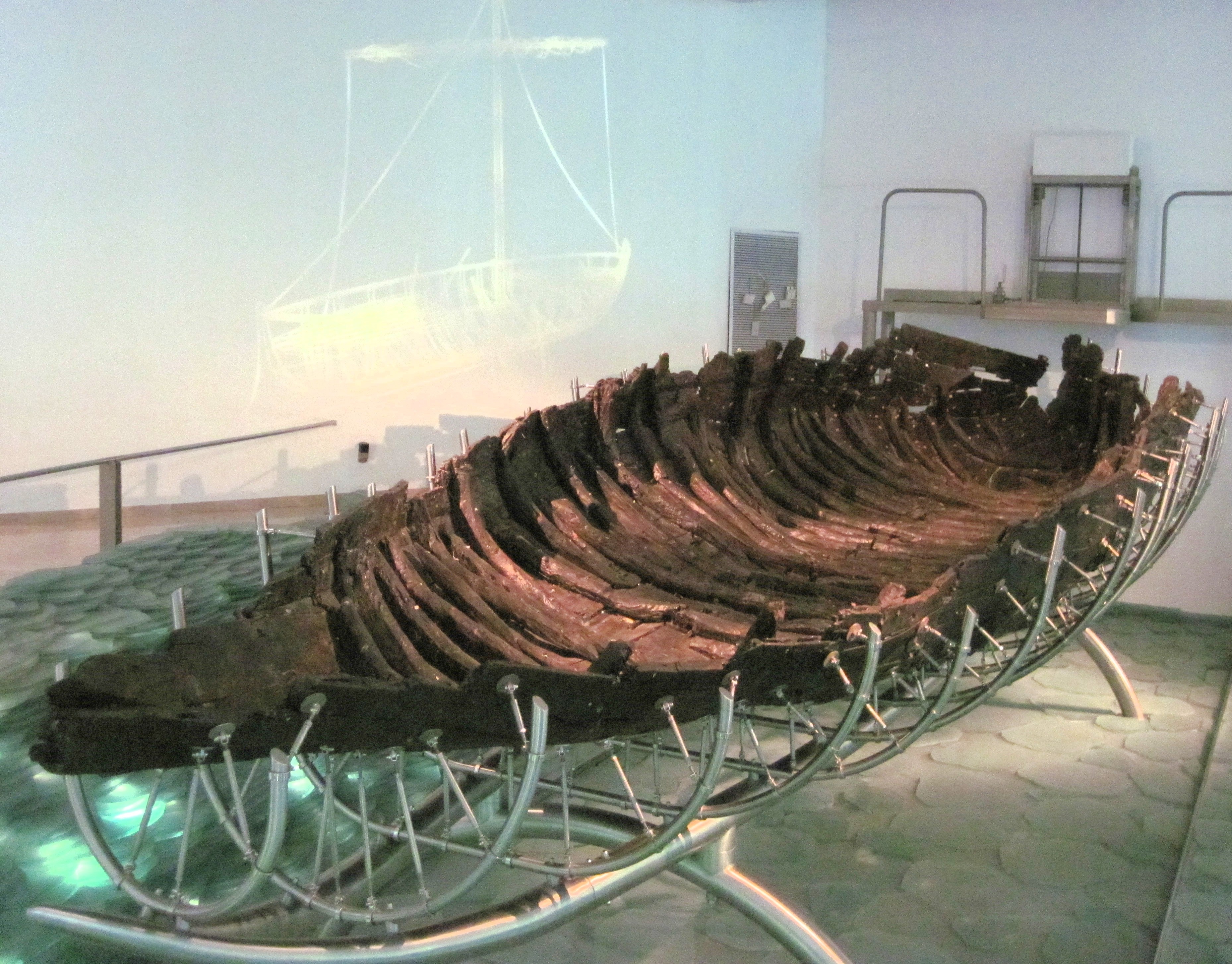
| The first-century Galilee Boat ('Jesus Boat' / Kinneret Boat) | A 27-foot wooden fishing boat recovered from the mud of the Sea of Galilee in 1986, carbon-dated and pottery-dated to roughly 40 BC – AD 70. It does not touch Peter personally, but it confirms the exact vessel type a Galilean fishing crew like Peter, Andrew, James and John would have worked — the world of Mark 1:16-20 made physical. | Kinneret Boat, discovered 1986, Ginosar; Shelley Wachsmann, IAAA roughly 27-foot (8.2 m) wooden fishing boat found in the exposed mud of the Sea of Galilee near Ginosar during a 1986 drought. Radiocarbon dating and associated pottery place its use in the range of about 40 BC to AD 70. It is not linked to Peter personally, but it is the exact vessel type a first-century Galilean fishing crew would have worked, physically illustrating the lakeside world of the fishermen-apostles. Kinneret ('Jesus') Boat, discovered 1986 at Ginosar; excavated under the Israel Antiquities Authority, study by Shelley Wachsmann. Displayed at the Yigal Allon Museum, Kibbutz Ginosar. |
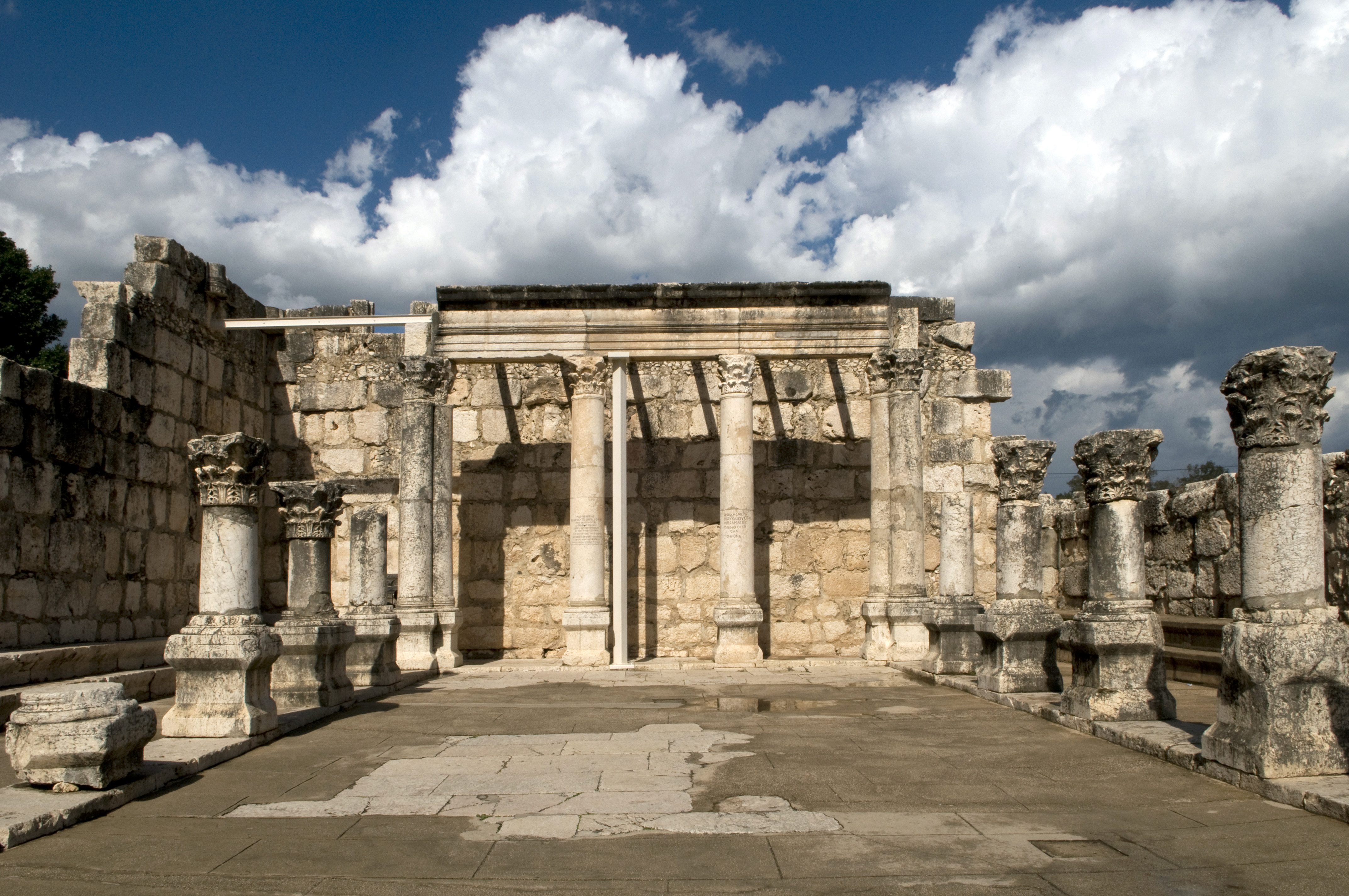
| The Capernaum synagogue | The striking white-limestone synagogue (4th–5th c.) sits directly atop the black-basalt foundation walls of a first-century synagogue — the town synagogue of Peter's home village where Jesus taught (Mark 1:21). It anchors the geography of the ministry Peter witnessed. | Basalt foundations beneath the limestone synagogue, Capernaum (Franciscan excavations)The ornate white-limestone synagogue at Capernaum (4th-5th century AD) rests on earlier black-basalt foundation walls that excavators date to the first century. These lower walls are plausibly the remains of the village synagogue of Peter's hometown, the setting of Jesus' teaching there (Mark 1:21). The stratigraphy anchors the physical geography of the ministry Peter witnessed. First-century basalt foundations beneath the limestone synagogue, Capernaum (Franciscan / Studium Biblicum Franciscanum excavations). |
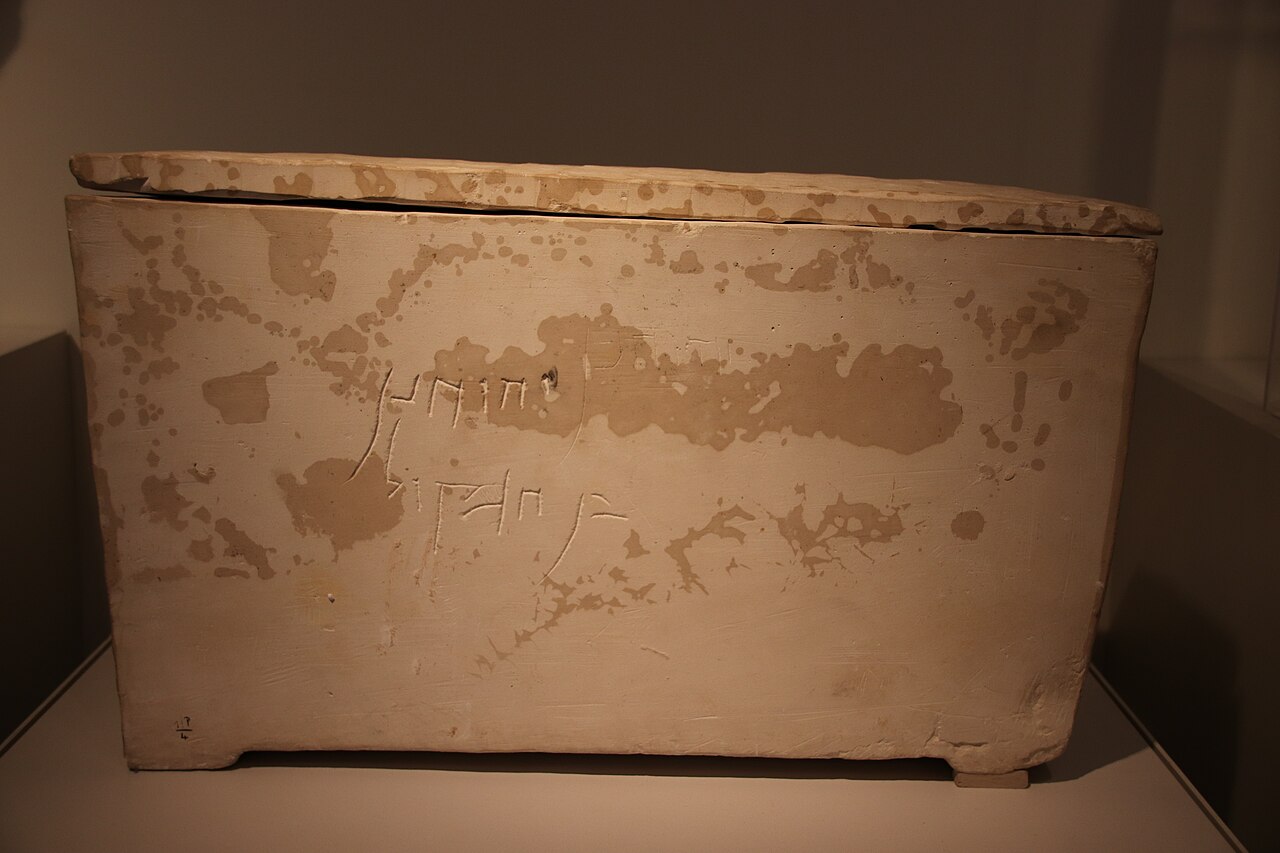
| The Vatican necropolis and the aedicula under St. Peter's Basilica | Excavations under the high altar (1940-49) uncovered a first/second-century pagan-then-Christian cemetery and the 'Trophy of Gaius,' a mid-second-century monument, with the red-wall graffito read as 'Petros eni' — 'Peter is here.' HONESTLY: this is suggestive corroboration of the ancient tradition that Peter was martyred and buried at Rome, not proof; the bone identification remains contested. | Vatican Scavi, 1940-49; graffito reading by Margherita GuarducciExcavations beneath the high altar of St. Peter's Basilica (the 'Scavi,' 1940-49) uncovered a first/second-century cemetery and the mid-second-century 'Trophy of Gaius,' a small shrine (aedicula) set against a red wall. A nearby graffito was read by the epigrapher Margherita Guarducci as the Greek 'Petros eni' — 'Peter is (with)in' / 'Peter is here.' Honestly weighed, this corroborates the ancient tradition of Peter's martyrdom and burial at Rome but does not prove it; the identification of the associated bones remains contested. Vatican Scavi excavations, 1940-49, beneath St. Peter's Basilica; graffito reading by Margherita Guarducci. |
| Bethsaida — Peter's hometown (candidate sites) | John 1:44 names Bethsaida as the town of Peter, Andrew and Philip. Both et-Tell and, more recently, el-Araj have been excavated as candidates, with el-Araj yielding a first-century fishing settlement and a Byzantine church some identify as the 'Church of the Apostles.' Presented honestly as a live archaeological question, not a settled identification. | el-Araj / et-Tell excavations; Mordechai Aviam & R. Steven NotleyPeter's hometown is named as Bethsaida (John 1:44), and two sites near the north shore of the Sea of Galilee compete for the identification: et-Tell, somewhat inland, and el-Araj, nearer the shore. El-Araj has yielded first-century fishing-village remains and a Byzantine church that some excavators propose is the 'Church of the Apostles' reported by the 8th-century pilgrim Willibald. The identification is an active, unsettled archaeological debate, presented here honestly as such. el-Araj and et-Tell excavations; el-Araj Excavation Project directed in part by Mordechai Aviam and R. Steven Notley. |
| Ancient witness | What they say | Reference |
|---|---|---|
| Clement of Rome, c. 96 | The earliest external witness to Peter's martyrdom: 'Peter, who because of unrighteous jealousy endured not one or two but many labors, and having thus borne his witness went to the place of glory that was his due' — written from Rome, implying the Roman church's own memory of him. | 1 Clement 5:4"Peter, through unrighteous envy, endured not one or two, but numerous labours; and when he had at length suffered martyrdom, departed to the place of glory due to him." Clement of Rome, *First Epistle to the Corinthians* (1 Clement) 5 — tr. Roberts-Donaldson, Ante-Nicene Fathers (public domain). |
| Ignatius of Antioch, c. 107-110 | Writing to the Roman church specifically, Ignatius says, 'I do not enjoin you as Peter and Paul did; they were apostles' — presuming the Romans knew Peter and Paul as figures with authority over their own church. | Ignatius, To the Romans 4:3"I do not, as Peter and Paul, issue commandments unto you. They were apostles; I am but a condemned man: they were free, while I am, even until now, a servant." Ignatius of Antioch, *Epistle to the Romans* 4 (shorter recension) — tr. Roberts-Donaldson, Ante-Nicene Fathers (public domain). |
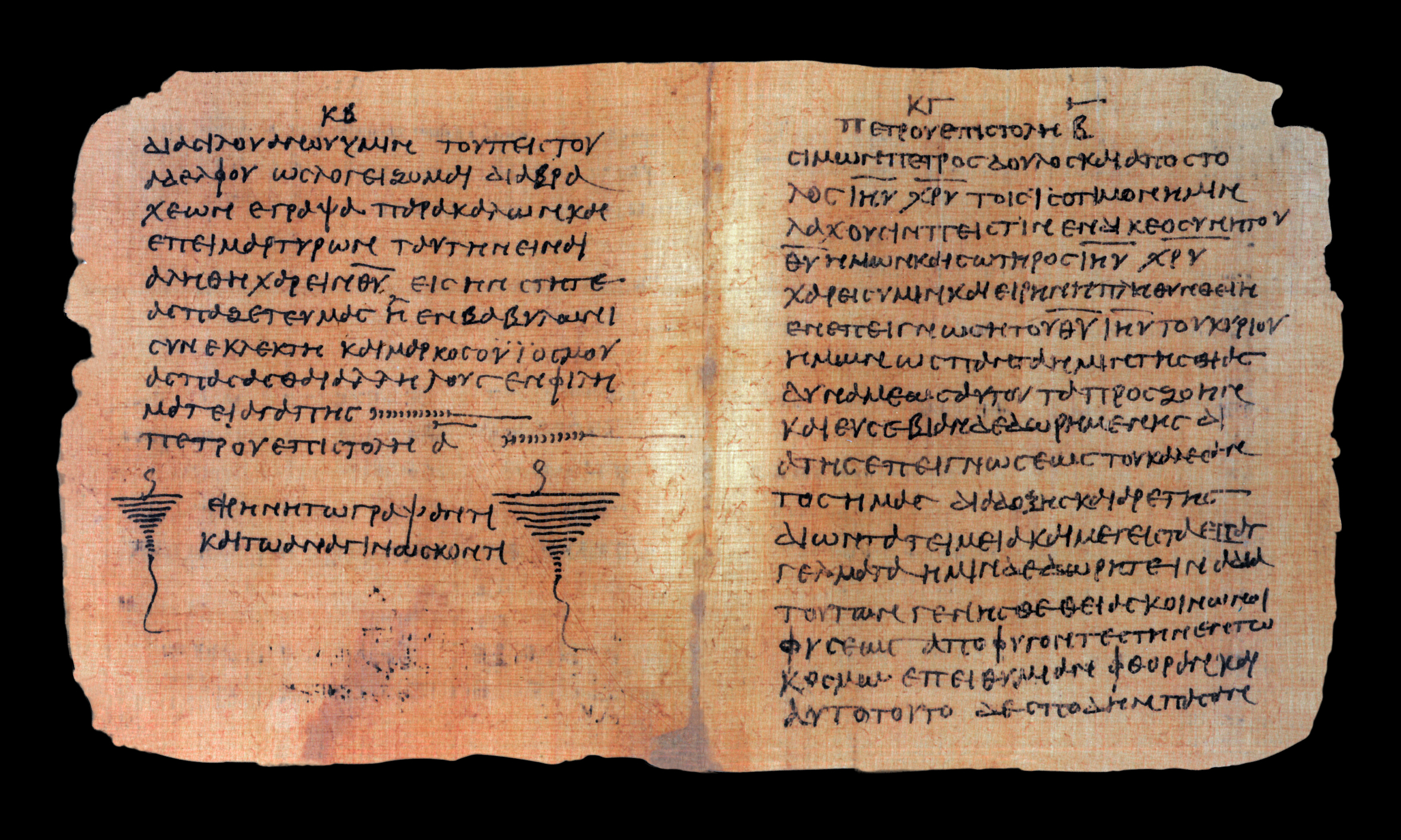
| Papias of Hierapolis, c. 125 (via Eusebius) | The foundational tradition linking Peter to a Gospel: 'Mark, having become the interpreter (hermeneutes) of Peter, wrote down accurately, though not in order, all that he remembered of the things said and done by the Lord' — Mark neither heard nor followed Jesus, but followed Peter. | Papias via Eusebius, Historia Ecclesiastica 3.39.15"Mark, having become the interpreter of Peter, wrote down accurately, though not in order, whatsoever he remembered of the things said or done by Christ. For he neither heard the Lord nor followed him, but afterward, as I said, he followed Peter, who adapted his teaching to the needs of his hearers, but with no intention of giving a connected account of the Lord's discourses." Papias of Hierapolis, preserved in Eusebius, *Church History (Historia Ecclesiastica)* 3.39.15 — tr. McGiffert, Nicene & Post-Nicene Fathers, 2nd series (public domain). |
| Irenaeus of Lyons, c. 180 | 'While Peter and Paul were preaching at Rome and founding the church... after their departure, Mark, the disciple and interpreter of Peter, did also hand down to us in writing what had been preached by Peter.' Independently corroborates both the Roman residence and the Peter→Mark chain. | Irenaeus, Adversus Haereses 3.1.1"Matthew also issued a written Gospel among the Hebrews in their own dialect, while Peter and Paul were preaching at Rome, and laying the foundations of the Church. After their departure, Mark, the disciple and interpreter of Peter, did also hand down to us in writing what had been preached by Peter." Irenaeus of Lyons, *Against Heresies (Adversus Haereses)* 3.1.1 — tr. Roberts-Donaldson, Ante-Nicene Fathers (public domain). |
| Muratorian Fragment, c. 170-200 | HONEST NOTE: this earliest canon list receives 'the Apocalypse... of Peter only... which some of us do not wish to be read in the church,' but its (damaged) text does NOT clearly list the Petrine epistles — a real early gap that shows the epistles' path into the canon was not frictionless. Included precisely because honesty requires reporting the silences, not only the confirmations. | Muratorian Fragment, lines 71-73The Muratorian Fragment is the oldest known list of New Testament writings (its original Greek usually dated c. 170-200, surviving in a 7th/8th-century Latin copy found by L. A. Muratori). At lines 71-73 it reads, in Tregelles's public-domain rendering: "We receive also the Apocalypses of John and Peter only, which [latter] some of us will not allow to be read in church." The fragment's damaged text does not clearly list the Petrine epistles, a real early gap. Muratorian Fragment (Muratorian Canon), lines 71-73; original c. AD 170-200 — English tr. S. P. Tregelles, 1867 (public domain). |
| Origen (c. 240) & Eusebius (c. 325) | The ancient church itself graded the two letters differently. Origen: 'Peter... has left one acknowledged epistle, and perhaps also a second — but this is disputed.' Eusebius classes 1 Peter among the acknowledged books (homologoumena) and 2 Peter among the disputed (antilegomena), though studied by many. The critical doubt about 2 Peter is not a modern invention. | Origen via Eusebius HE 6.25.8; Eusebius HE 3.3.1-4Origen, quoted by Eusebius: "Peter... on whom the Church of Christ is built, against which the gates of hell shall not prevail, has left one acknowledged epistle; perhaps also a second, but this is disputed." Eusebius himself ranks 1 Peter among the acknowledged books (homologoumena) and 2 Peter among the disputed (antilegomena): the first epistle "is acknowledged as genuine" and was freely used by the ancient elders, while the second "we have learned... does not belong to the canon; yet, as it has appeared profitable to many, it has been used with the other Scriptures." Origen, preserved in Eusebius, *Church History* 6.25.8; and Eusebius, *Church History* 3.3.1-4 — tr. McGiffert, Nicene & Post-Nicene Fathers, 2nd series (public domain). |
2 Peter is the single most disputed book in the New Testament for authenticity, and the doubt is old and serious. (1) Its Greek style differs sharply from 1 Peter — a fact Jerome already noticed. (2) It appears to depend literarily on Jude, borrowing much of Jude's polemic. (3) It refers to a collection of Paul's letters treated 'as the other Scriptures' (3:16), which reads like a later moment when Paul's corpus was already gathered and canonized. (4) '[E]ver since the fathers fell asleep' (3:4) sounds like a generation writing after the eyewitnesses had died. On these grounds Richard Bauckham (Word Biblical Commentary) reads it as a pseudonymous 'testament' in Peter's name, and Bart Ehrman classes it as forgery; the ancient church itself filed it among the antilegomena (Origen, Eusebius). A prior, blunter objection also targets 1 Peter: how could an 'unschooled, ordinary' Galilean fisherman (Acts 4:13, agrammatos) produce any literary Greek at all?
Concede the honest distinction. On 1 Peter the case is strong: it is echoed in 1 Clement and used clearly by Polycarp, named by Irenaeus, and ranked among the acknowledged books by Eusebius; the 'agrammatos' objection is answered by the text itself — 'by Silvanus I have written' (5:12) — and agrammatos in Acts 4:13 means untrained in the rabbinic schools, not illiterate. On 2 Peter, do not overclaim. The style difference can be explained by a different amanuensis (Jerome's own solution); the letter presents itself as Peter's and grounds its authority in the Transfiguration he witnessed (1:16-18); dependence on Jude and reference to Paul's letters are not by themselves decisive. But the honest verdict is that 2 Peter cannot be established with the confidence 1 Peter enjoys — which is exactly why even conservatives divide (Michael Kruger defends Petrine authorship; many careful evangelicals accept pseudonymity). Integrity requires holding the two letters at different levels of certainty.
See also: the directory · the full roster · verified by outsiders · how we verify the NT.