 GOD EXAMINEDBible← Back to The Proof
Hebrews is formally anonymous and will almost certainly remain so; the ancient Pauline attribution that eased it into the canon does not survive the evidence of its style, and every named candidate — Paul, Barnabas, Apollos, Luke, Priscilla, Clement — is a reasoned inference, not a proof. What we CAN honestly claim is a first-century, apostolic-circle document: early-cited by 1 Clement, linked to Timothy, self-consciously second-generation, and written while the Temple still stood. That the canon retained a book whose author it admits it cannot name is not a weakness but a testament to honest judgment — the church weighed it by content, not by name.
The author is anonymous — there is no screen portrayal to show.

Click any ▸ Scripture reference to expand the verse (World English Bible).
| The point | The telling detail | Reference |
|---|---|---|
| The author openly places himself in the SECOND generation, receiving the message from eyewitnesses rather than seeing it himself. | He brackets himself with his readers as recipients ('us') of a salvation 'declared at first by the Lord, and was attested to us by those who heard him.' A forger reaching for apostolic authority would not volunteer that he stands one step removed from the eyewitnesses — the disclaimer is itself a mark of honesty in the text. | Heb 2:3how will we escape if we neglect so great a salvation—which at the first having been spoken through the Lord, was confirmed to us by those who heard; (WEB) |
| Personal, incidental knowledge of the readers' own history of persecution and generosity. | He 'recalls the former days' when they were publicly exposed to abuse, 'had compassion on those in prison,' and 'joyfully accepted the plundering of your property.' These are specific, situational memories of a community the author knows firsthand — not generic exhortation. | Heb 10:32-34But remember the former days, in which, after you were enlightened, you endured a great struggle with sufferings; partly, being exposed to both reproaches and oppressions; and partly, becoming partakers with those who were treated so. For you both had compassion on me in my chains, and joyfully accepted the plundering of your possessions, knowing that you have for yourselves a better possession and an enduring one in the heavens. (WEB) |
| Direct link to Timothy, Paul's companion — placing the author inside the Pauline missionary circle. | 'Our brother Timothy has been released, with whom I shall see you if he comes soon.' A casual travel note, not a theological flourish; it ties the writer to the same generation and network as Paul's coworkers. | Heb 13:23Know that our brother Timothy has been freed, with whom, if he comes shortly, I will see you. (WEB) |
| An offhand geographic marker linking author and readers to Italy. | 'Those who come from Italy send you greetings' — the kind of incidental aside a real letter carries and a fiction rarely bothers to invent, hinting at a concrete Italian/Roman connection for the writer or his companions. | Heb 13:24Greet all of your leaders and all the saints. The Italians greet you. (WEB) |
| Insider command of the Temple cult described as a LIVING, ongoing system. | He speaks of priests who 'stand daily' and offer sacrifices 'continually' and 'year after year' in the present tense (Heb 7:27; 8:4; 9:6-9). He writes as one for whom the sacrificial system is contemporary reality — consistent with a pre-70 AD, apostolic-era author who knew the cult at first hand. | Heb 10:11Every priest indeed stands day by day serving and often offering the same sacrifices, which can never take away sins, (WEB) |
| Firsthand pastoral relationship with a specific, known congregation. | He promises to return — 'I urge you the more earnestly to do this, that I may be restored to you the sooner' — expecting to be reunited with a real community he has led. This is a genuine relationship, not a pseudonymous abstraction. | Heb 13:19I strongly urge you to do this, that I may be restored to you sooner. (WEB) |
| Find / site | What it confirms | Reference |
|---|---|---|
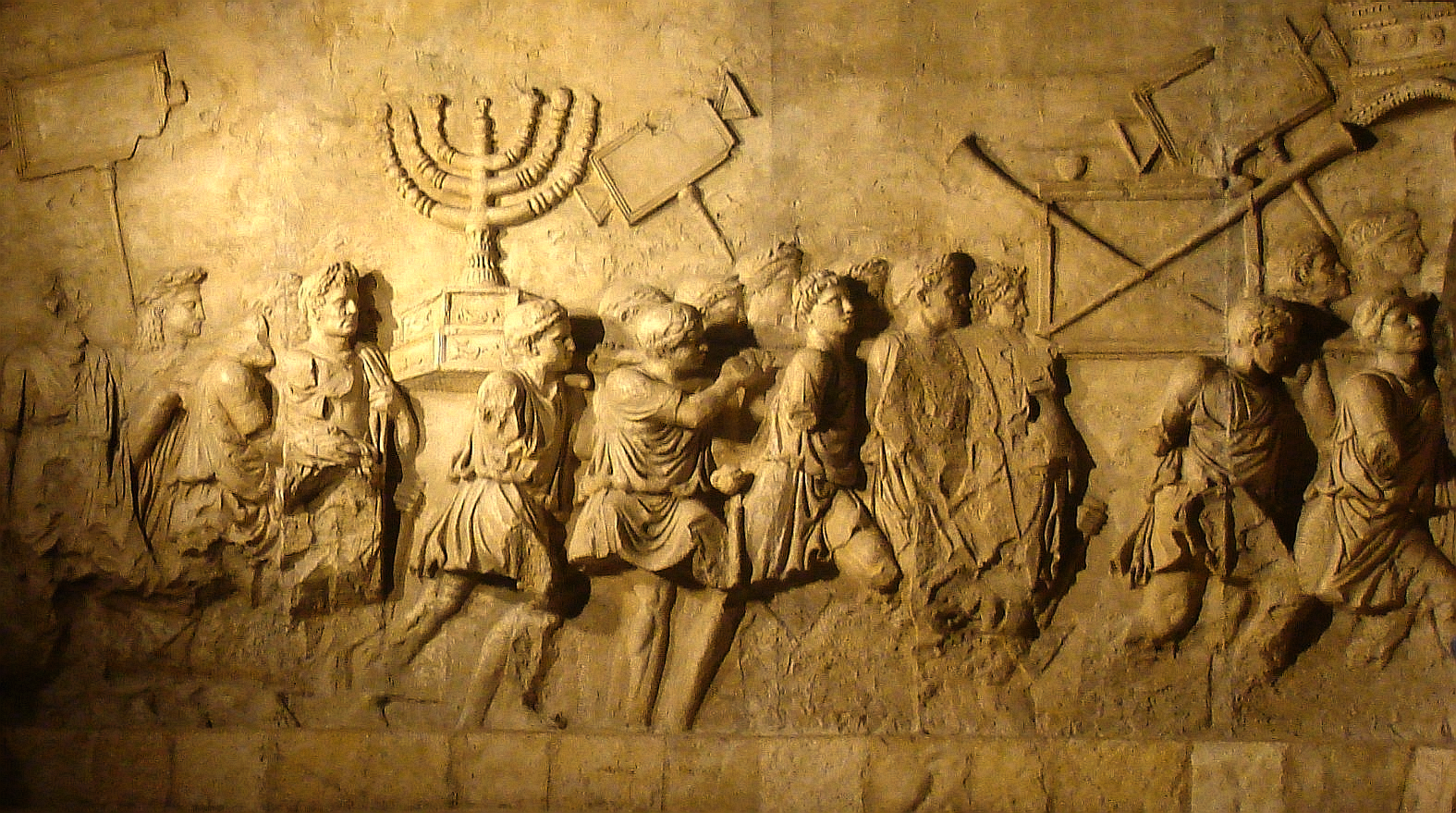
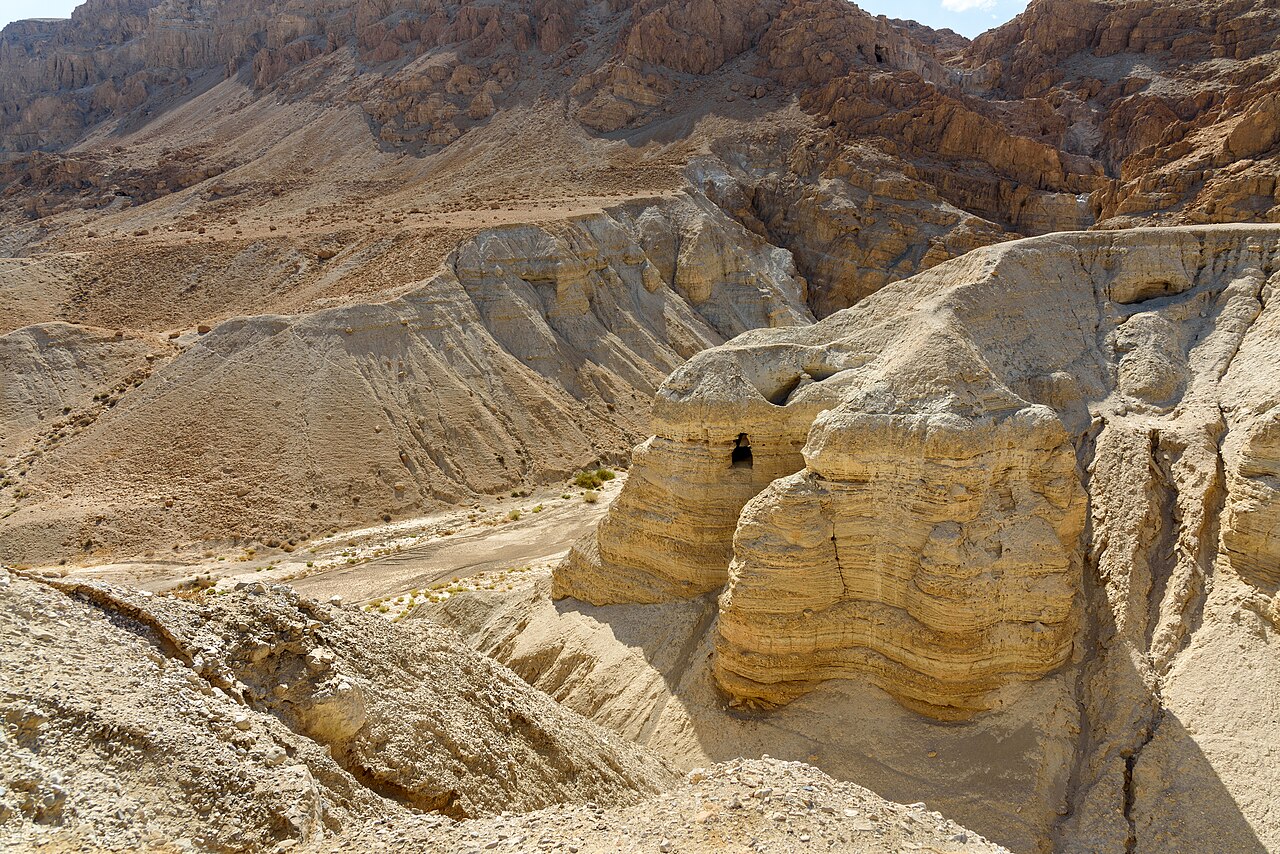
| The Arch of Titus relief, Rome (erected c. 81 AD) | Its carved panel depicts the menorah, the table of showbread, and the sacred trumpets being carried in triumph from the Jerusalem Temple — confirming the reality and appearance of the very cultic furnishings the author catalogs in Heb 9:1-5. The author describes a world archaeology independently attests. | Arch of Titus, Roman Forum (spoils-of-Jerusalem relief)A triumphal arch standing on the Via Sacra in the Roman Forum, erected c. 81-82 AD by the emperor Domitian to commemorate his brother Titus and the victory in the Jewish War. The relief on the inner south wall of the passageway depicts the triumphal procession carrying off the spoils of the Jerusalem Temple: the seven-branched golden menorah, the table of showbread, and the sacred silver trumpets. These are precisely the cultic furnishings the author of Hebrews catalogs in Heb 9:1-5, so the monument gives independent, carved confirmation of their reality and appearance. Arch of Titus, Roman Forum, Rome (c. 81-82 AD); spoils-of-Jerusalem relief panel. |
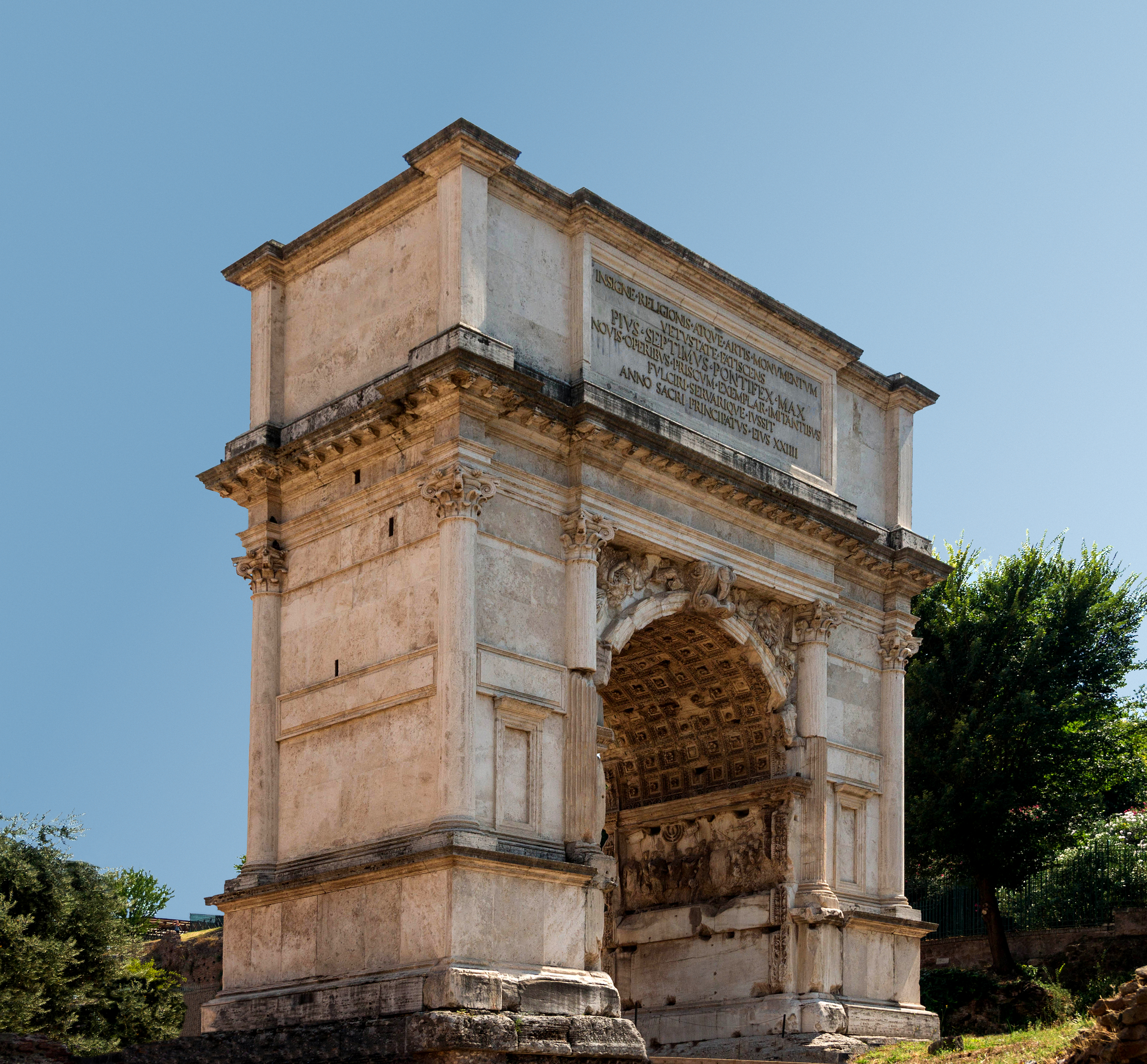
| 11QMelchizedek (11Q13), Qumran Cave 11 | This pre-Christian Jewish scroll presents Melchizedek as an exalted heavenly deliverer tied to atonement and the Jubilee — confirming that the author's elaborate Melchizedek priesthood typology (Heb 7) engages a live Second Temple tradition rather than a later Christian invention. He is writing into a real contemporary theological milieu. | 11Q13 (11QMelch), Dead Sea Scrolls, Qumran Cave 11A fragmentary Hebrew eschatological midrash recovered from Qumran Cave 11, discovered in 1956 and first published in 1965, with the surviving copy dated paleographically to the mid-first century BC. It presents Melchizedek (Hebrew Malki-tsedeq) not merely as the ancient priest-king of Genesis 14 but as an exalted heavenly deliverer and divine judge who executes the end-time atonement and the Jubilee release of Leviticus 25 and Isaiah 61. The scroll shows that a developed, exalted Melchizedek tradition was already alive in Second Temple Judaism, confirming that the elaborate Melchizedek priesthood typology of Hebrews 7 engages a genuine contemporary milieu rather than a later Christian invention. 11Q13 (11QMelchizedek), Dead Sea Scrolls, Qumran Cave 11; copy dated c. mid-1st century BC. |
| Herodian Temple Mount and the archaeology of the Second Temple sacrificial cult | Excavation of the Temple platform, the great burnt-offering apparatus, and the priestly courses matches the author's insider description of priests 'standing daily' offering repeated sacrifices (Heb 8:4-5; 10:11). The 70 AD destruction layer bookends the argument, since he writes as though the cult is still operating — pointing to a pre-70 composition. | Herodian Temple Mount excavations, JerusalemExcavations at the southern and southwestern corners of the Temple Mount, most extensively those directed by Benjamin Mazar from 1968 to 1978, exposed the massive Herodian ashlar masonry of the enclosure walls, the monumental staircase and gates, Robinson's Arch, numerous ritual immersion baths (mikva'ot) used by worshippers, and the fallen 'Trumpeting Place' inscription stone. The 70 AD destruction debris lies as a datable layer over the Herodian street. These remains match the author's insider description of a functioning sacrificial system with priests 'standing daily' to offer repeated sacrifices (Heb 8:4-5; 10:11), and the destruction layer bookends his argument, which is written as though the cult is still operating. Herodian Temple Mount excavations, Jerusalem (Benjamin Mazar, 1968-1978, and later work). |
| The Septuagint textual milieu attested by the Dead Sea Scrolls | The Scrolls demonstrate that a Greek-reading Jewish author of this era could rely on Septuagint readings that diverge from the Masoretic Hebrew — exactly what Hebrews does when it quotes Ps 40:6 as 'a body you have prepared for me' (Heb 10:5). The author's textual world is real and datable. | Dead Sea Scrolls / LXX vs. MT text-forms, QumranAmong the biblical manuscripts found at Qumran (discovered 1947-1956) are Hebrew copies whose readings at times agree with the Greek Septuagint (LXX) against the later Masoretic Text, for example certain copies of Samuel, Jeremiah, and Deuteronomy 32. This demonstrates that the Hebrew Scriptures circulated in more than one text-form in this period and that LXX readings often reflect a genuine Hebrew Vorlage rather than loose paraphrase. It supplies the real textual world in which a Greek-reading Jewish author could depend on an LXX reading such as 'a body you have prepared for me' (Ps 40:6 as quoted in Heb 10:5), the very wording the argument of Hebrews requires. Qumran biblical scrolls illustrating LXX / Masoretic text divergence (Dead Sea Scrolls, discovered 1947-1956). |
| Ancient witness | What they say | Reference |
|---|---|---|
| 1 Clement (Clement of Rome), c. 96 AD | Quotes and echoes Hebrews extensively — most clearly the chain of OT citations about the Son in Heb 1:3-13, reused in 1 Clement 36. This is the earliest external witness, proving Hebrews was circulating and valued by the end of the first century, within a generation of its writing. | 1 Clement 36:1-5 (echoing Heb 1:3-13His Son is the radiance of his glory, the very image of his substance, and upholding all things by the word of his power, who, when he had by himself purified us of our sins, sat down on the right hand of the Majesty on high; having become so much better than the angels, as he has inherited a more excellent name than they have. For to which of the angels did he say at any time, “You are my Son. Today I have become your father?” and again, “I will be to him a Father, and he will be to me a Son?” When he again brings in the firstborn into the world he says, “Let all the angels of God worship him.” Of the angels he says, “Who makes his angels winds, and his servants a flame of fire.” But of the Son he says, “Your throne, O God, is forever and ever. The scepter of uprightness is the scepter of your Kingdom. You have loved righteousness, and hated iniquity; therefore God, your God, has anointed you with the oil of gladness above your fellows.” And, “You, Lord, in the beginning, laid the foundation of the earth. The heavens are the works of your hands. They will perish, but you continue. They all will grow old like a garment does. You will roll them up like a mantle, and they will be changed; but you are the same. Your years will not fail.” But which of the angels has he told at any time, “Sit at my right hand, until I make your enemies the footstool of your feet?” (WEB) ▸ source text"...who, being the brightness of His majesty, is by so much greater than the angels, as He hath by inheritance obtained a more excellent name than they. For it is thus written, 'Who maketh His angels spirits, and His ministers a flame of fire.' But concerning His Son the Lord spoke thus: 'Thou art my Son, to-day have I begotten Thee...' And again He saith to Him, 'Sit Thou at My right hand, until I make Thine enemies Thy footstool.'" Clement here reuses the catena of Old Testament texts about the Son found in Heb 1:3-4, 1:7, 1:5, and 1:13, the earliest external evidence that Hebrews was already circulating and valued at Rome by about 96 AD. 1 Clement (Clement of Rome) 36:2-5, c. 96 AD — tr. ANF (Roberts-Donaldson, public domain). |
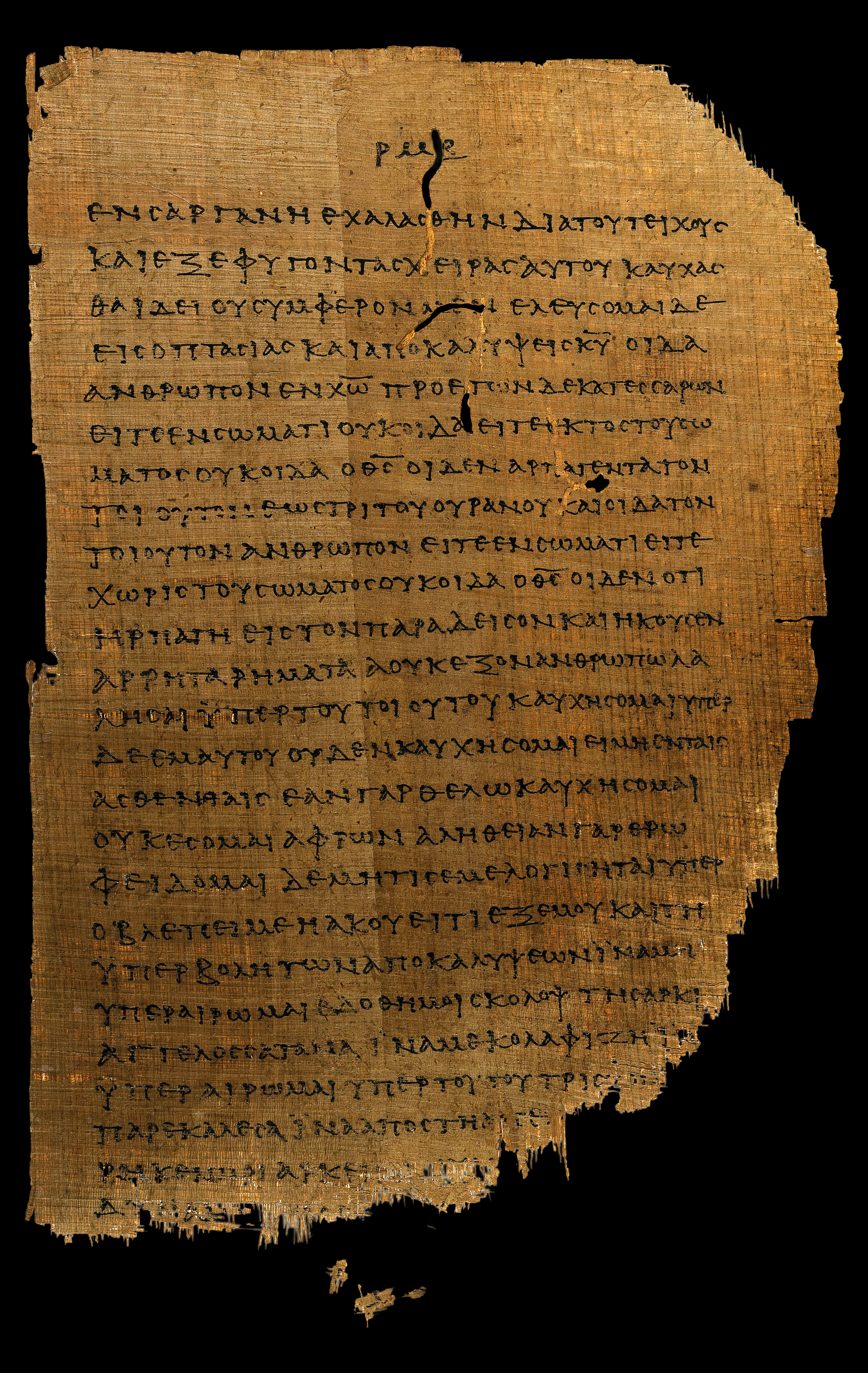
| P46 (Chester Beatty Papyrus II), c. 200 AD | The earliest surviving Pauline codex places Hebrews immediately after Romans, inside the Pauline collection — showing a very early association of the book with Paul (whatever the historical truth) and its firm place in the church's Scriptures. | P46, order: Romans → Hebrews → 1 CorinthiansP46 (Chester Beatty Papyrus II, P. Chester Beatty II with leaves at the University of Michigan) is the earliest surviving codex of the Pauline letters, a papyrus book dated c. 175-225 AD. It contains most of the Pauline corpus and places Hebrews immediately after Romans, ahead of 1 Corinthians, physically embedding Hebrews inside the collection of Paul's letters. This shows that the association of Hebrews with Paul, whatever its historical merit, is very early, and that the book held a firm place among the church's Scriptures by around 200 AD. Papyrus 46 (P. Chester Beatty II + P. Mich. inv. 6238), c. 175-225 AD. |
| Clement of Alexandria, c. 200 AD (via Eusebius) | Held that Paul wrote to the Hebrews in Hebrew and that Luke carefully translated it into Greek — an early attempt to explain why the polished Greek does not read like Paul's other letters. | Eusebius, Hist. eccl. 6.14.2-4Reporting the views of Clement of Alexandria from his lost Hypotyposes, Eusebius writes: "And the Epistle to the Hebrews he asserts was written by Paul, to the Hebrews, in the Hebrew language; but that it was carefully translated by Luke, and published among the Greeks. Whence, as a result of this translation, the same complexion of style is found in this epistle and in the Acts." Clement adds that Paul's name was probably not prefixed because, writing to Hebrews who were prejudiced and suspicious of him, he wisely did not wish to repel them at the outset by giving his name. This is an early attempt to explain why the polished Greek of Hebrews does not read like Paul's other letters. Eusebius, Church History (Hist. eccl.) 6.14.2-4 — tr. NPNF (Schaff/McGiffert, public domain). |
| Tertullian, c. 200-220 AD | Attributes the epistle not to Paul but to Barnabas — 'there is extant an Epistle to the Hebrews under the name of Barnabas.' Barnabas was a Levite (Acts 4:36), which fits the priestly theme. | Tertullian, De pudicitia 20"For there is extant withal an Epistle to the Hebrews under the name of Barnabas — a man sufficiently accredited by God, as being one whom Paul has stationed next to himself in the uninterrupted observance of abstinence..." Tertullian goes on to cite the warning of Heb 6:1, 4-8, treating the letter as the work of Barnabas rather than Paul. Since Barnabas was a Levite (Acts 4:36), the attribution fits the epistle's priestly and sacrificial theme. Tertullian, On Modesty (De pudicitia) 20, c. 200-220 AD — tr. ANF (Roberts-Donaldson, public domain). |
| Origen, c. 240 AD (via Eusebius) | Judged that the thoughts are apostolic but the Greek diction is not Paul's, and refused to name the author: 'who actually wrote the epistle, God knows.' The classic model of honest agnosticism about authorship. | Eusebius, Hist. eccl. 6.25.11-14Quoting Origen's Homilies on Hebrews, Eusebius records: "If I gave my opinion, I should say that the thoughts are those of the apostle, but the diction and phraseology are those of some one who remembered the apostolic teachings, and wrote down at his leisure what had been said by his teacher. Therefore if any church holds that this epistle is by Paul, let it be commended for this... But who wrote the epistle, in truth, God knows. The statement of some who have gone before us is that Clement, bishop of the Romans, wrote the epistle, and of others that Luke, the author of the Gospel and the Acts, wrote it." This is the classic statement of honest agnosticism about the authorship of Hebrews. Eusebius, Church History (Hist. eccl.) 6.25.11-14, quoting Origen (c. 240 AD) — tr. NPNF (Schaff/McGiffert, public domain). |
| Eusebius of Caesarea, c. 325 AD | Reports the standing dispute: he lists Hebrews among Paul's fourteen letters but records that the church of Rome did not accept it as Paul's. The Eastern church received it early; the Western church hesitated for centuries precisely over the authorship question before finally accepting it. | Eusebius, Hist. eccl. 3.3.5"Paul's fourteen epistles are well known and undisputed. It is not indeed right to overlook the fact that some have rejected the Epistle to the Hebrews, saying that it is disputed by the church of Rome, on the ground that it was not written by Paul." Eusebius thus counts Hebrews within Paul's fourteen letters while frankly recording that the Roman church did not accept it as Paul's work, documenting the standing dispute over its authorship. Eusebius, Church History (Hist. eccl.) 3.3.4-5 (cited as 3.3.5) — tr. NPNF (Schaff/McGiffert, public domain). |
The strongest skeptical case is simply that we do not know, and cannot recover, who wrote Hebrews — and that the traditional Pauline attribution which secured its canonicity in the East is almost certainly wrong on stylistic grounds. If the church misidentified the author, some argue, then its apostolic authority — and thus its place in the canon — rests on a mistake: the Western church resisted the book for centuries, the Muratorian Fragment (c. 170-200) omits it, and even Eusebius classed the authorship as disputed. Adolf von Harnack proposed Priscilla precisely because he judged the author's identity irrecoverable and the anonymity deliberate, and modern commentators such as Harold Attridge (Hermeneia) and Raymond Brown treat the authorship as genuinely unknown. In its sharpest form: a book that entered the canon under a false Pauline banner was admitted on false pretenses.
We should concede the hard part fully: the book is anonymous, the Pauline attribution almost certainly fails on the evidence of its style, and every named candidate is a reasoned guess rather than a demonstration. It is worth laying the candidates out fairly. PAUL — the ancient Eastern view, which is why the epistle sits after Paul's letters; but the polished rhetorical Greek is unlike his, and this author never names himself as Paul always does. BARNABAS — Tertullian's attribution (De pudicitia 20); a Levite (Acts 4:36), which fits the priestly theme. APOLLOS — Luther's proposal; 'an eloquent man, mighty in the Scriptures,' an Alexandrian (Acts 18:24), which fits the Philonic, LXX-drenched flavor. LUKE — Clement of Alexandria's idea that Luke translated Paul's Hebrew into Greek. PRISCILLA — Harnack's modern suggestion, which would neatly explain the anonymity. CLEMENT OF ROME — an old alternative, given how early 1 Clement quotes the book. Origen's verdict remains the honest one: 'who wrote it, God knows.' But anonymity is not inauthenticity. The book was already quoted by 1 Clement within a generation (c. 96); it self-identifies as second-generation, received from the eyewitnesses (Heb 2:3); it is tied to Timothy and the Pauline circle (13:23); and it describes the Temple cult as still operating, pointing to a pre-70 origin. Decisively, the church kept it in the canon while openly confessing it did not know the author — judgment rendered on the book's content and apostolic-era pedigree, not on a celebrity byline.
See also: the directory · the full roster · verified by outsiders · how we verify the NT.